Steve Yegge
Steve Yegge shares candid insights on software development, programming languages, and Android/iOS development challenges, blending humor with practical lessons from his career.
Phil Eaton is a staff engineer working on Postgres and software internals, sharing insights on databases, systems engineering, and life deep in the software stack.
Drew DeVault’s blog features sharp commentary on open source, software engineering, programming languages, ethics in tech, and the social impact of technology.
Philip Zucker is a physics and computer science enthusiast documenting ideas and experiments in a lab-notebook-style blog, focused on functional programming, compilers, formal methods, and scientific computation.
John Gruber — Writer, developer, and creator of Markdown, known for building influential tools and utilities for writers and developers, and for shaping modern web writing, typography, and developer workflows through elegant, minimal software.
Simon Willison — Independent developer and writer documenting practical experiments, tools, and deep analysis around large language models, generative AI, web development, security, and emerging programming workflows through detailed posts and daily TILs.
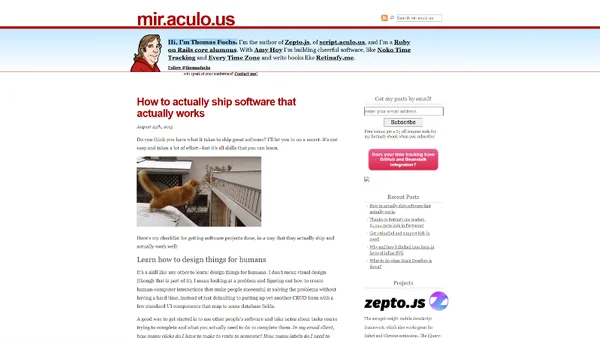
Thomas Fuchs — Software creator, author, and product builder best known for Zepto.js and script.aculo.us, and a Ruby on Rails core alumnus. Together with Amy Hoy, he builds cheerful, human-centered software like Noko Time Tracking and Every Time Zone, and writes practical books for makers.
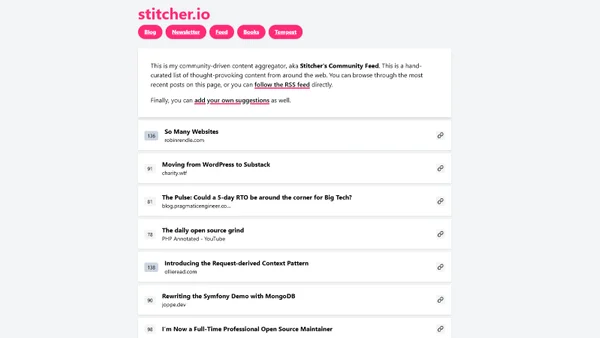
Brent — Curator of Stitcher’s Community Feed, a community-driven, hand-curated content aggregator highlighting thoughtful, high-quality writing from across the web. The feed focuses on software engineering, open source, web development, infrastructure, and the human side of building technology. Readers can browse recent picks, follow via RSS, or contribute their own suggestions.
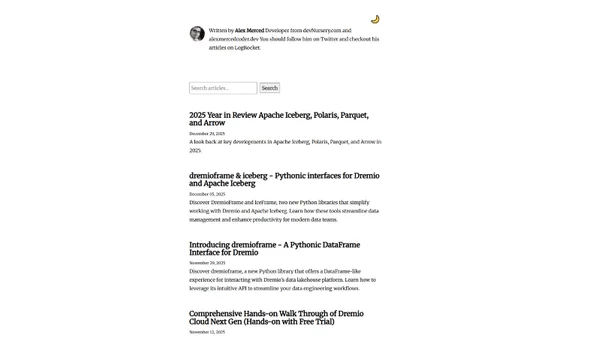
Alex Merced — Developer and technical writer sharing in-depth insights on data engineering, Apache Iceberg, data lakehouse architectures, Python tooling, and modern analytics platforms, with a strong focus on practical, hands-on learning.
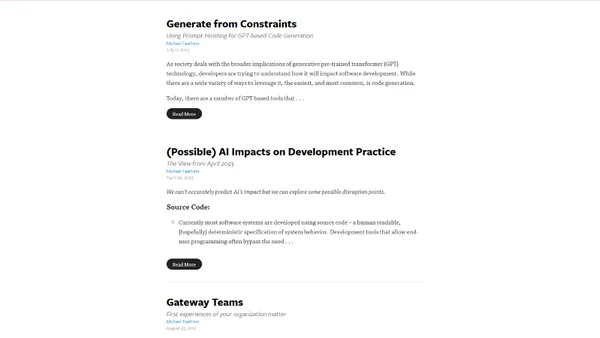
Michael Feathers — Renowned software engineer and thought leader writing deeply analytical essays on software design, legacy code, development practices, and the emerging impact of AI on how software is built and evolved.
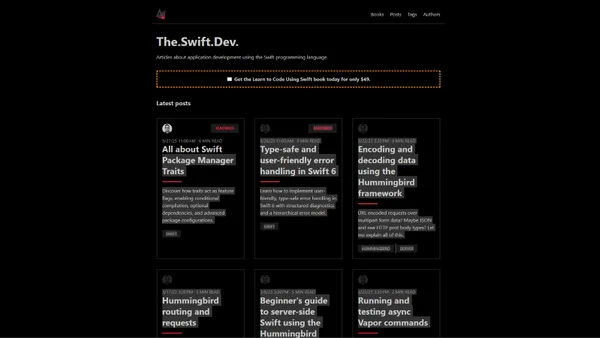
Tibor Bödecs — Swift developer and technical writer sharing in-depth articles on Swift, Swift 6, server-side Swift, and frameworks like Hummingbird and Vapor, with a focus on clean architecture, type safety, and modern language features.
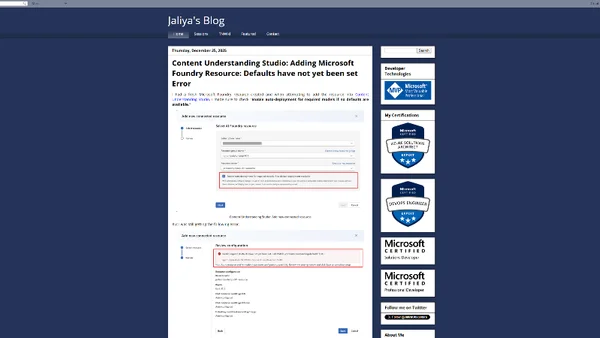
Jaliya Udagedara — Software engineer and technical blogger sharing practical insights, fixes, and deep dives on Azure, .NET, cloud services, and developer tooling, with a strong focus on real-world problem solving and Microsoft ecosystem technologies.
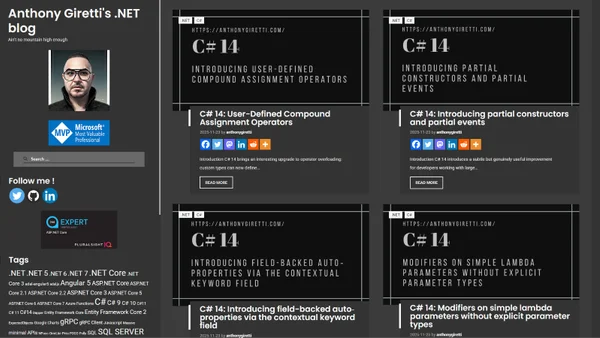
Anthony Giretti — .NET developer and technical blogger sharing deep dives, tutorials, and the latest updates on C#, ASP.NET Core, minimal APIs, and modern .NET technologies, with a strong focus on new language features and practical backend development.
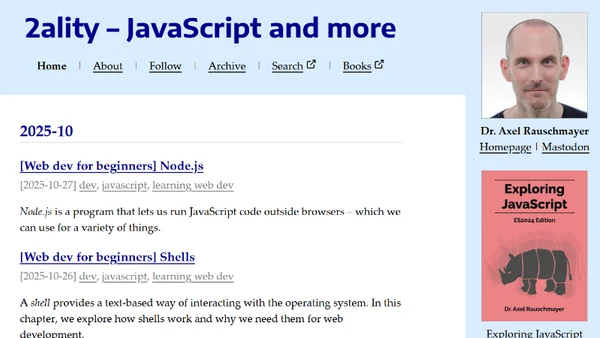
2ality.com is the long-standing blog of Dr. Axel Rauschmayer, devoted to JavaScript, TypeScript and modern web development. The blog was launched in March 2005 and remains one of the deepest and most respected resources for ECMAScript, language fundamentals and evolving JS features. Axel writes detailed, clear, and specification-aware analyses of JavaScript behavior, type system tricks in TypeScript, best practices, and the internal mechanics of web technologies. The content ranges from diving into conditional types, tuple types, ESM-based package publishing, to tutorials on Node.js and shell scripting.
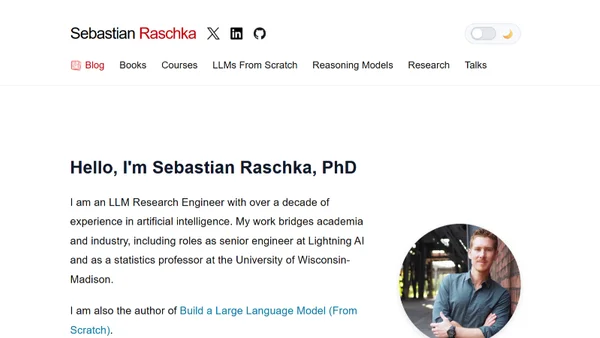
SebastianRaschka.com is the personal blog of Sebastian Raschka, PhD, an LLM research engineer whose work bridges academia and industry in AI and machine learning. On his blog and notes section he publishes deep, well-documented articles on topics such as LLMs (large language models), reasoning models, machine learning in Python, neural networks, data science workflows, and deep learning architecture. Recent posts explore advanced themes like “reasoning LLMs”, comparisons of modern open-weight transformer architectures, and guides for building, training, or analyzing neural networks and model internals.
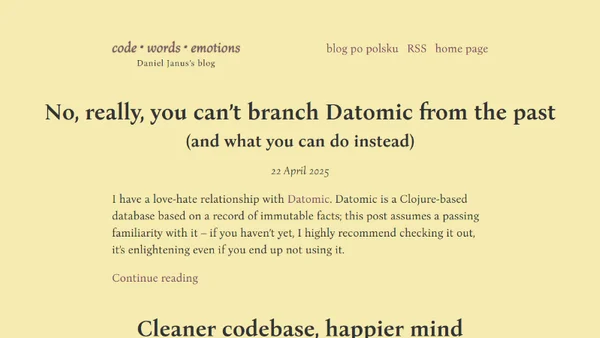
Blog.DanielJanus.pl is the personal blog of Daniel Janus, a veteran programmer from Poland who writes about Clojure, Rust, functional programming, developer culture, and personal productivity. Daniel combines deep technical insights with reflections on how code, words, and emotions interact in a developer’s life. His posts range from “Corner-cases of Comparing Clojure Numbers” to explorations of CSS compression and personal essays about ADHD and workspace clutter. The blog is bilingual (Polish and English) and features both short essays and detailed code-driven articles. With an emphasis on thinking clearly, rethinking assumptions, and learning continuously, Daniel’s writing appeals to engineers seeking both intellectual depth and human perspective.
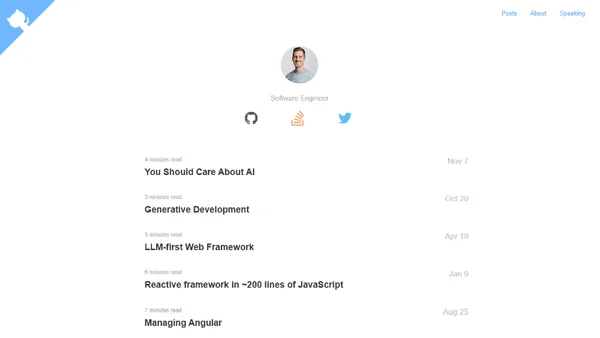
Blog.mgechev.com is the personal blog of Minko Gechev, Lead for Web Frameworks at Google and a widely recognized engineer in the JavaScript and Angular ecosystem. Minko writes about Angular, JavaScript, TypeScript, frontend architecture, web performance, and AI assisted development, mixing clear code examples with insights gained from building frameworks at scale. He is the creator of influential open source projects and has been awarded by Google and the President of Bulgaria for the impact of his contributions. His articles often explore advanced topics such as LLM powered development, predictive prefetching, reactive rendering, framework design, and large scale JavaScript tooling. Beyond engineering, he shares lessons from giving over a hundred conference talks and from leading major web initiatives at Google. Minko is also the co founder of Rhyme.com, an EdTech platform offering hands on technical training. He built the platform and engineering team starting in 2015. In 2018 Rhyme became Coursera’s first acquisition, marking a significant milestone in his career.
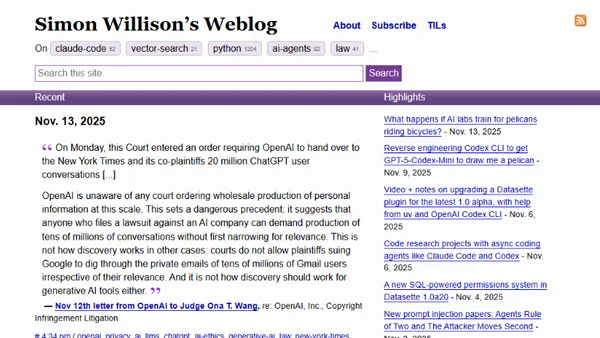
SimonWillison.net is the long-running blog of Simon Willison, a software engineer, open-source creator, and co-author of the original Django framework. He writes about Python, Django, Datasette, AI tooling, prompt engineering, search, databases, APIs, data journalism, and practical software architecture. The blog includes detailed notes from experiments, conference talks, and real projects. Readers will find clear explanations of topics such as LLM workflows, SQL patterns, data publishing, scraping, deployment, caching, and modern developer tooling. Simon also publishes frequent micro-posts and TIL entries that document small discoveries and tricks from day-to-day engineering work. The tone is practical and research oriented, making the site a valuable resource for anyone interested in serious engineering and open data.

Lea Verou is a web standards expert, developer, and designer with a PhD from MIT in Human-Computer Interaction. She has worked as Product Lead at Font Awesome, helped shape the web as a member of the W3C Technical Architecture Group, and has been part of the CSS Working Group since 2012. Her open-source tools like PrismJS and Color.js are used by millions of developers worldwide. Lea is also the author of a bestselling CSS book, a frequent conference speaker, and an advocate for making technology simpler, more usable, and open for everyone.
Michael Lynch – Developer, Indie Founder and Technical Writer Michael Lynch shares honest and detailed stories from his journey as a software engineer and indie founder. His blog covers topics like building sustainable businesses, code reviews, software craftsmanship, and lessons learned from running and selling his own startup, TinyPilot. Each post reflects a mix of engineering precision and real-world experience, written with clarity and humor. Readers can find tutorials, retrospectives, and essays that go beyond code to explore motivation, productivity, and the human side of software development. This blog is a must-read for developers, indie hackers, and anyone who enjoys thoughtful writing about technology and entrepreneurship.