Machine Learning Blogs

Page 5 of 6 (107 Blogs)
Vlad Mihalcea
1/4/2026 EN

Vlad Mihalcea

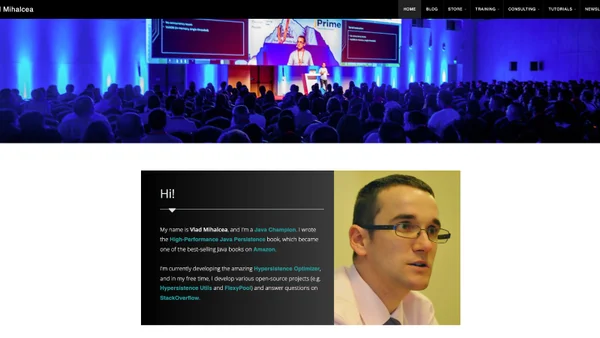
Vlad Mihalcea is a Java Champion sharing expert insights on high-performance Java, JPA, Hibernate, SQL, and databases, alongside books, courses, and open-source tools for building efficient systems.

The Pragmatic Engineer Gergely Orosz
11/29/2025 EN

The Pragmatic Engineer Gergely Orosz

PragmaticEngineer.com is the blog of Gergely Orosz, a software engineer and engineering manager known for clear, research-driven writing about the software industry. He publishes deep-dive essays on software engineering, architecture, scaling systems, engineering management, Big Tech practices, incident analysis, product delivery, and developer careers. Gergely combines experience from companies like Uber and Microsoft with interviews, data, and real examples from engineering teams around the world. His work is widely read because it explains how high-performing tech organizations actually operate, and what individual developers can learn from them. The blog is complemented by a popular weekly newsletter and books focused on practical engineering leadership.

Sebastian Raschka
11/29/2025 EN

Sebastian Raschka

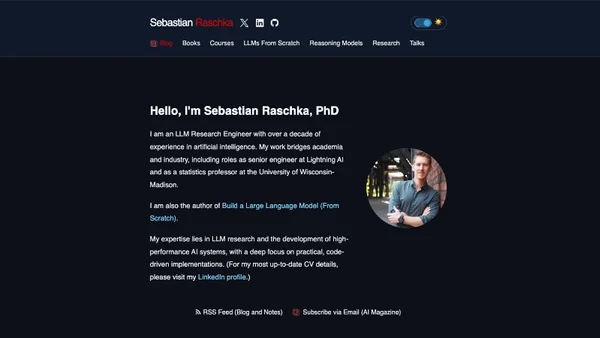
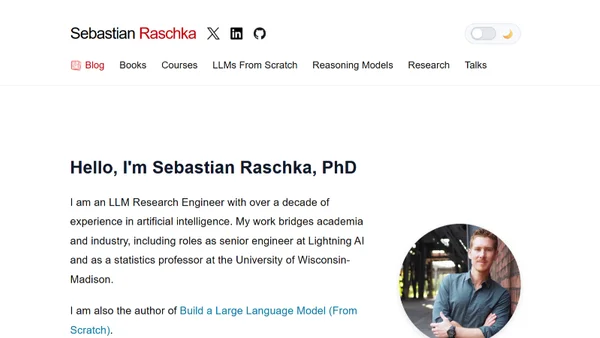
SebastianRaschka.com is the personal blog of Sebastian Raschka, PhD, an LLM research engineer whose work bridges academia and industry in AI and machine learning. On his blog and notes section he publishes deep, well-documented articles on topics such as LLMs (large language models), reasoning models, machine learning in Python, neural networks, data science workflows, and deep learning architecture. Recent posts explore advanced themes like “reasoning LLMs”, comparisons of modern open-weight transformer architectures, and guides for building, training, or analyzing neural networks and model internals.

Minko Gechev
11/15/2025 EN

Minko Gechev

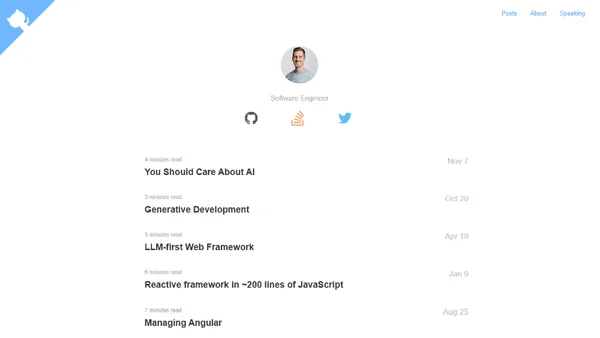
Blog.mgechev.com is the personal blog of Minko Gechev, Lead for Web Frameworks at Google and a widely recognized engineer in the JavaScript and Angular ecosystem. Minko writes about Angular, JavaScript, TypeScript, frontend architecture, web performance, and AI assisted development, mixing clear code examples with insights gained from building frameworks at scale. He is the creator of influential open source projects and has been awarded by Google and the President of Bulgaria for the impact of his contributions. His articles often explore advanced topics such as LLM powered development, predictive prefetching, reactive rendering, framework design, and large scale JavaScript tooling. Beyond engineering, he shares lessons from giving over a hundred conference talks and from leading major web initiatives at Google. Minko is also the co founder of Rhyme.com, an EdTech platform offering hands on technical training. He built the platform and engineering team starting in 2015. In 2018 Rhyme became Coursera’s first acquisition, marking a significant milestone in his career.


Simon Willison
11/13/2025 EN

Simon Willison

SimonWillison.net is the long-running blog of Simon Willison, a software engineer, open-source creator, and co-author of the original Django framework. He writes about Python, Django, Datasette, AI tooling, prompt engineering, search, databases, APIs, data journalism, and practical software architecture. The blog includes detailed notes from experiments, conference talks, and real projects. Readers will find clear explanations of topics such as LLM workflows, SQL patterns, data publishing, scraping, deployment, caching, and modern developer tooling. Simon also publishes frequent micro-posts and TIL entries that document small discoveries and tricks from day-to-day engineering work. The tone is practical and research oriented, making the site a valuable resource for anyone interested in serious engineering and open data.

Melroy van den Berg
11/10/2025 EN

Melroy van den Berg

Melroy van den Berg writes hands-on articles about GNU/Linux, networking, security, DevOps, software engineering and embedded hardware. The blog mixes step-by-step guides and deep dives, from DNS fundamentals with command-line experiments to self-hosting, servers, tooling and practical troubleshooting. Clear categories cover levels from beginner to advanced, making it useful both for learning core concepts and refining day-to-day workflows.