Cryptography and the importance of usable security
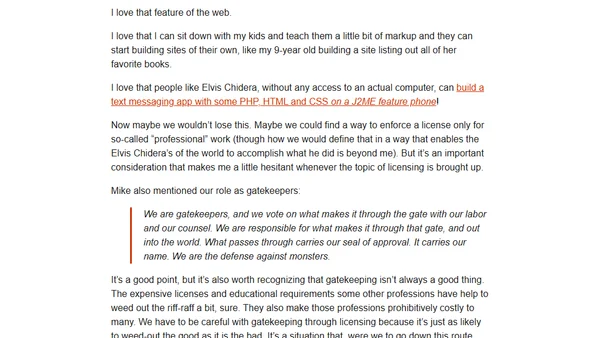
A reflection on teaching basic cryptography to children, highlighting the importance of usable security through historical ciphers like the rail fence and Caesar cipher.
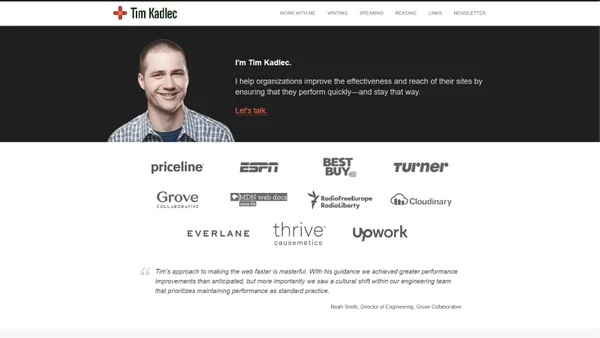
Tim Kadlec helps organizations build faster, more effective websites through sustainable web performance practices. He writes about performance culture, metrics, and real-world optimization strategies.
220 articles from this blog
A reflection on teaching basic cryptography to children, highlighting the importance of usable security through historical ciphers like the rail fence and Caesar cipher.
A critical analysis of Google AMP, focusing on its SEO incentives and impact on web performance and publisher adoption.
Explores how developer biases impact software design, using online anonymity debates to argue for inclusive, socially-aware system architecture.
A reflection on the JavaScript ecosystem's tool proliferation, the pitfalls of constantly chasing new frameworks, and the importance of stable, foundational choices.
A developer explains their decision to join Snyk, a security tool company, to lead developer relations, emphasizing the importance of accessible security.
The article critiques Google's AMP framework, arguing it restricts web development freedom, and proposes a standardized alternative for performance verification.
Explains how HSTS works with Let's Encrypt to secure websites by forcing browsers to use HTTPS, preventing man-in-the-middle attacks.
A review of the author's top five most-read blog posts from 2015, covering web standards, client-side frameworks, performance, HTTPS, and Google's AMP.
A hands-on guide to using Let's Encrypt's beta client to obtain and install a free SSL/TLS certificate on an Apache web server.
A web developer recommends and reviews two industry books: 'Adaptive Web Design, 2nd Edition' on progressive enhancement and 'Using WebPageTest' for performance analysis.
The article discusses the AMP Project, an open-source framework for building fast mobile web pages, using a story about misaligned incentives as an analogy.
A web developer discusses the stress of keeping up with rapid tech changes and argues it's about awareness, not complexity.
Explores the architecture and performance of proxy browsers, explaining their global importance and how they differ from typical browsers.
A web developer discusses building resilient websites by focusing on server control and progressive enhancement to handle unpredictable networks, devices, and user contexts.
Facebook's Instant Articles highlights the web's performance problem, analyzing why speed is a critical feature and the trend of circumventing the web for speed.
A developer announces joining Akamai's developer relations team to focus on web performance research, experiments, and standards.
Analyzing the real-world cost of website data usage globally, factoring in mobile data prices and purchasing power parity.
Analysis of Apple's influence on web standards, focusing on the adoption hurdles of the Pointer Events specification due to Apple's lack of support.
A critique of treating web accessibility and progressive enhancement as optional features, arguing they should be fundamental requirements.
Analyzes performance bottlenecks of client-side MVC frameworks like Angular, advocating for server-side rendering to improve initial page load times.