Accessible Rickrolling
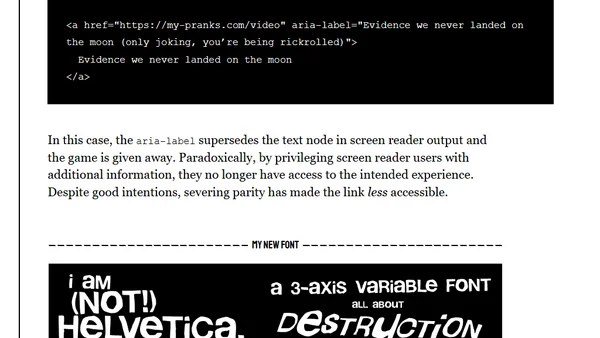
Explores web accessibility principles through the lens of rickrolling, arguing that parity of experience is more important than descriptive labels.
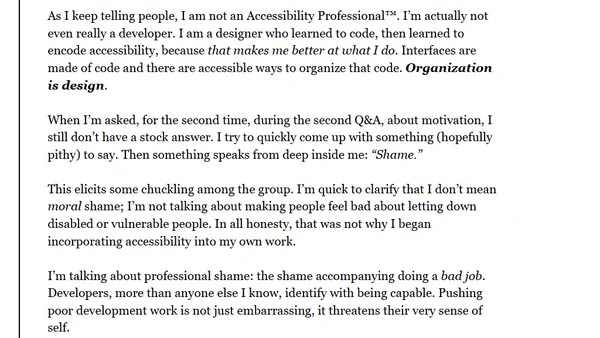
A keynote speaker explores the emotional drivers of web accessibility adoption, arguing that professional pride and shame are key motivators for developers.
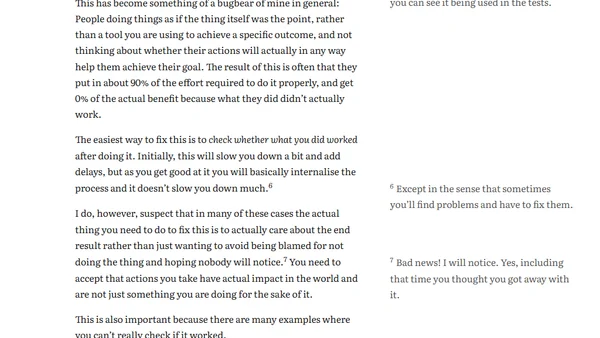
A blog post about the importance of checking your work to ensure it achieves its intended outcome, using examples from washing dishes and software development.
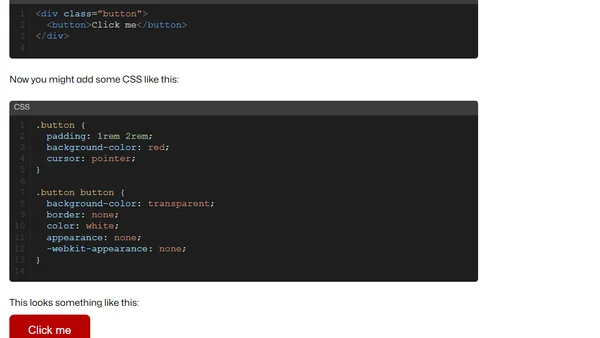
A critique of fake interactive UI elements like non-clickable 'buttons' that frustrate users, with examples and solutions for better web development.
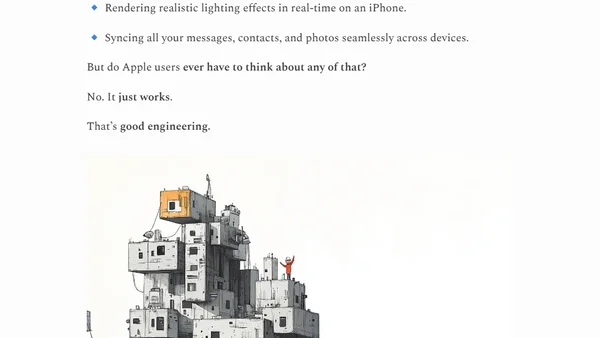
An article arguing that engineers should not use complexity as an excuse for poor design, emphasizing the importance of creating simple user experiences.
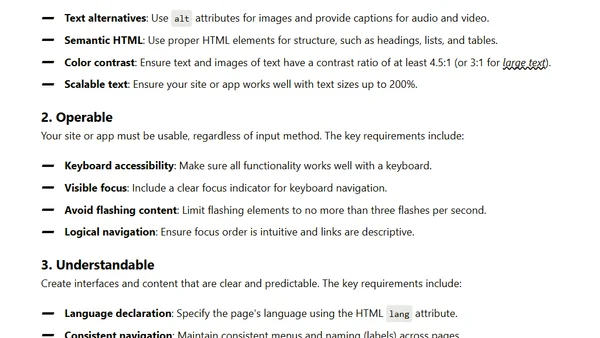
Overview of the European Accessibility Act (EAA) requirements for websites and apps, covering scope, compliance timeline, and benefits.
Critique of tech industry's forced AI adoption, arguing for user-centric innovation over disruptive 'visionary' features.
A web professional explores key principles of good vs. bad web design, focusing on usability, mobile responsiveness, and performance.
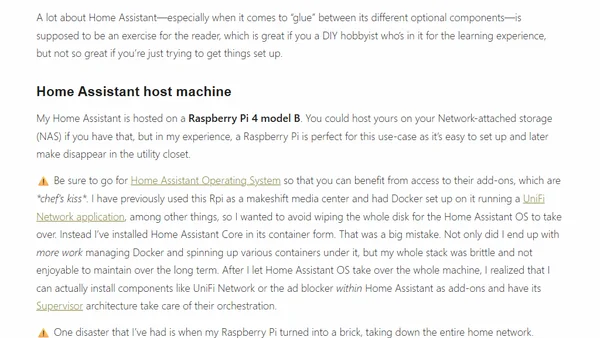
A critique of smart home fragmentation, highlighting the frustration of managing multiple unreliable apps and the need for unified protocols.
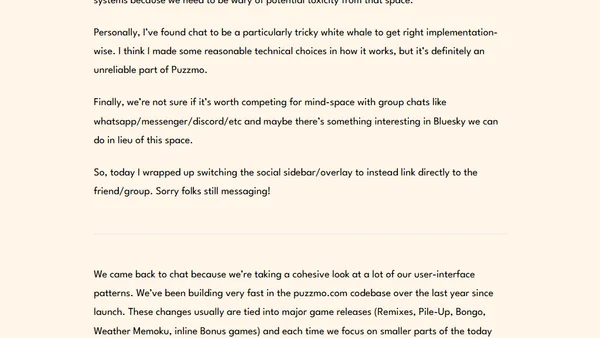
Puzzmo removes its chat feature due to low usage and technical challenges, shifting focus to core UI improvements.
Explores the role of empathy in design and the impact of personalized typography on accessibility and reading outcomes for diverse users.
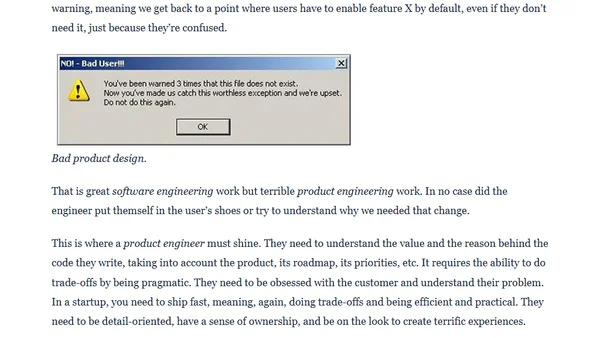
Explains the concept of a product engineer, contrasting them with traditional software engineers by emphasizing user-centric design and business value.
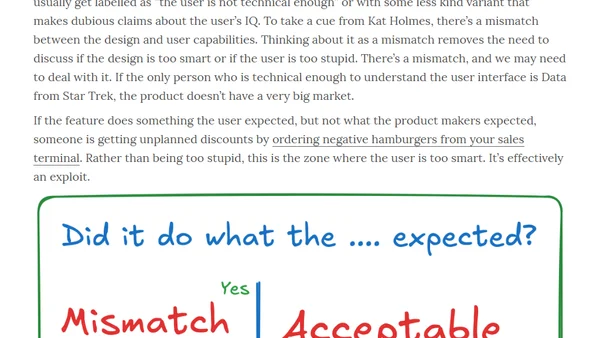
Explores the blurred line between bug reports and feature requests, arguing both reveal unmet user needs and product opportunities.
A software engineer discusses the importance of minimizing user clicks in software workflows, using a story about optimizing a test automation GUI.
The article argues that choosing between dark and light mode should be based on ambient lighting and usability, not just personal aesthetic preference.
The article critiques excessive JavaScript use harming web performance and user experience, urging teams to prioritize users and adopt better practices.
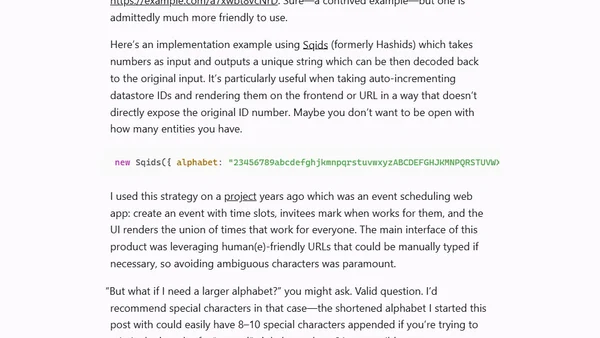
Explains the concept of humane alphabets for URLs to avoid ambiguous characters, with a practical implementation example using Sqids.
Puzzmo introduces a redesigned game completion screen, prioritizing personal play history and deemphasizing global competition to improve user experience.
Explores the development of AI-powered typography tools that assist designers with font selection, spacing, and layout to create more empathetic and accessible designs.
A developer discusses recognizing when an app's design isn't resonating with users and shares plans to experiment with improving its visual interface.