Cutting the mustard - 2018 edition
A developer argues against transpiling modern JavaScript, showing how to use native ES6+ features like async/await and modules in browsers.
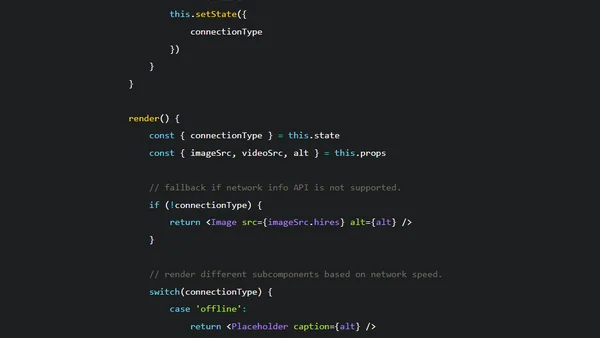
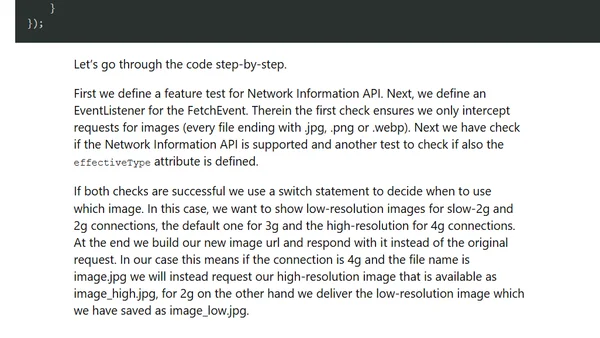
Explains how to use the Network Information API within a Service Worker to dynamically load different image resolutions based on the user's connection speed.
A summary of Jeremy Keith's book on resilient web design principles, using web history to advocate for flexibility and progressive enhancement.
A guide explaining how to convert any website into a Progressive Web App (PWA), covering the benefits and the three main steps required.
Introducing Mavo, an open-source HTML-based language for creating web applications without programming or a server backend.
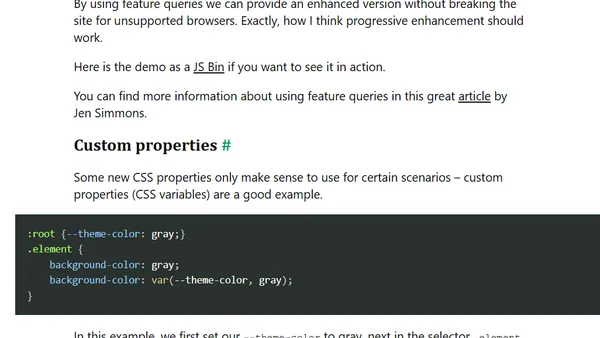
Explains how to apply progressive enhancement principles to CSS, covering fallbacks and feature queries for robust web design.
A guide for web developers on evaluating and responsibly adopting new web platform features, covering benefits, browser support, and implementation strategies.
A guide to implementing the Web Share API to enhance static social sharing links on websites, with a fallback for unsupported browsers.
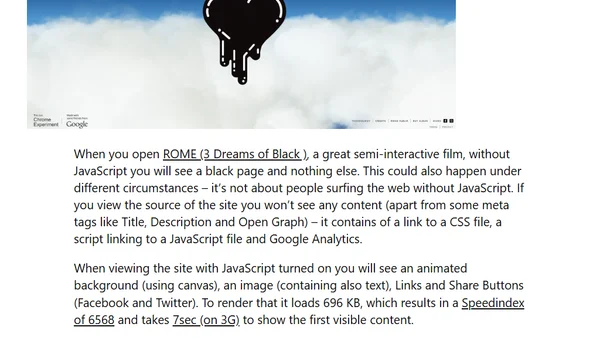
A developer's response to an article on progressive enhancement, arguing for core content delivery without JavaScript dependency.
A developer discusses the challenge of deciding when an interactive graph is core content versus a progressive enhancement, and how client requirements can shift that definition.
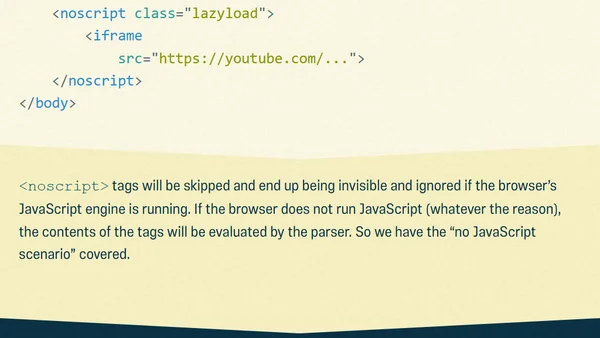
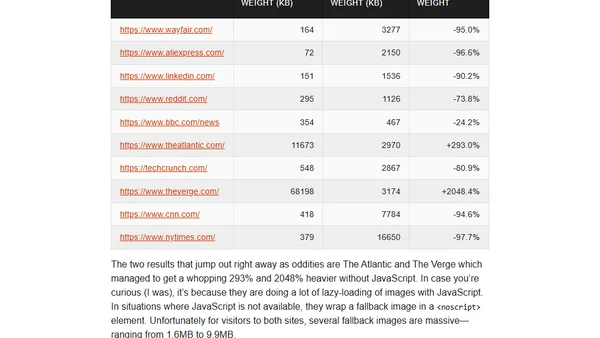
A technique for lazyloading resources like iframes and CSS using <noscript> tags to ensure progressive enhancement when JavaScript is unavailable.
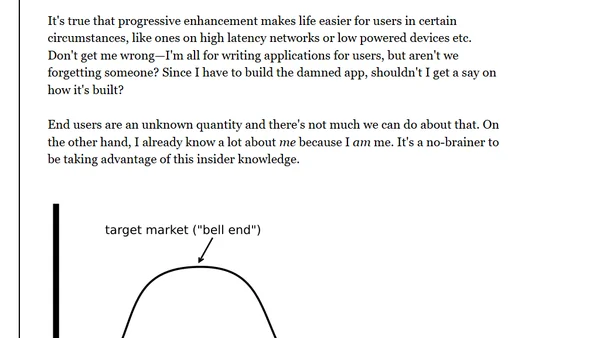
A satirical critique of progressive enhancement and universal/isomorphic apps, arguing they are too difficult and offer no personal benefit to developers.
Microsoft ends support for IE8, IE9, and IE10, sparking discussion on how to handle core web experiences for outdated browsers.
Argues that all websites must begin with server-side rendered HTML for universal accessibility, even if they later use advanced JavaScript features.
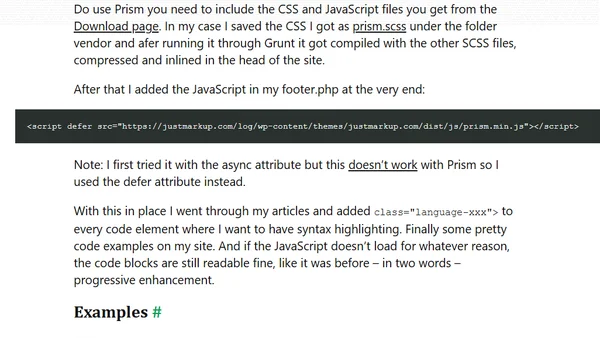
A developer details implementing Prism.js for syntax highlighting on their blog, focusing on progressive enhancement.
A developer's critique of Opera Mini's poor support for modern web features, with a crowdsourced resource for workarounds.
A review of the author's favorite web development conference talks from 2015, covering topics like Service Workers and CSS techniques.
A web developer recommends and reviews two industry books: 'Adaptive Web Design, 2nd Edition' on progressive enhancement and 'Using WebPageTest' for performance analysis.
An article about using Ruxit's web monitoring tool to identify deployment errors after a login system change.
A web developer argues for defining browser support per feature/module instead of globally, using tools like caniuse.com for clarity.