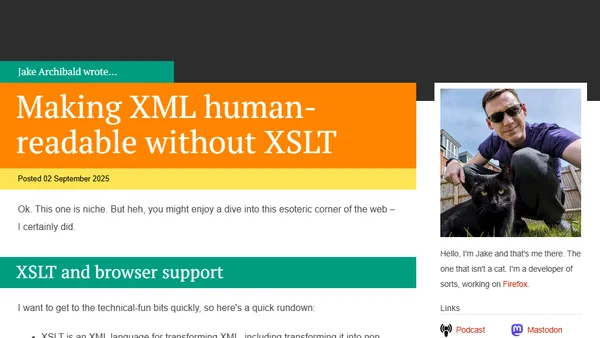
Making XML human-readable without XSLT
Explores alternatives to XSLT for making XML files human-readable, as browser support for XSLT is being removed.
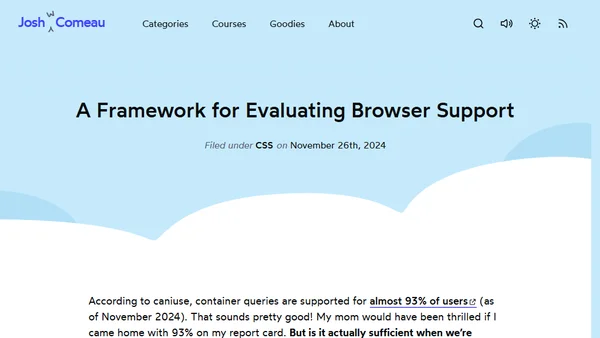
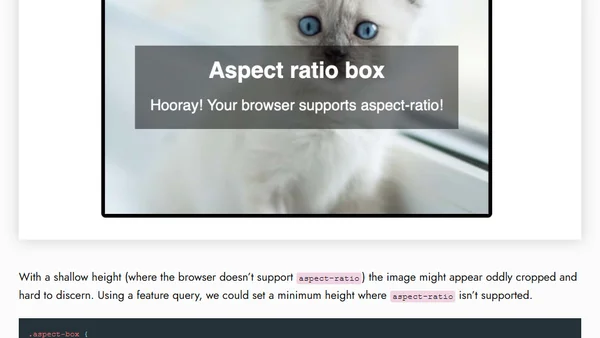
A developer's framework for deciding when to use new CSS features, considering fallback experiences and browser support.
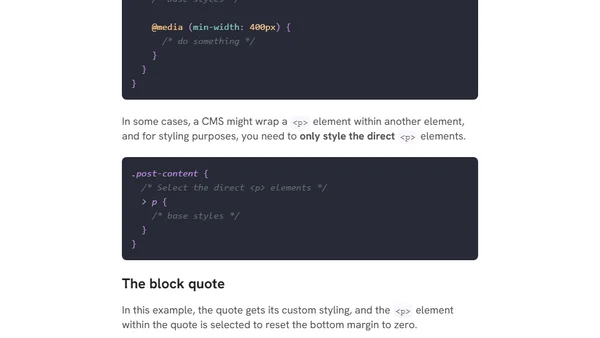
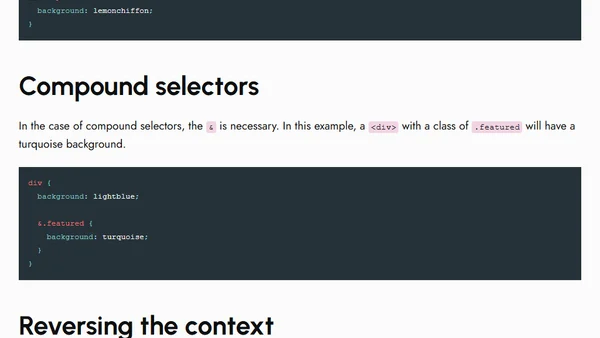
An introduction to native CSS nesting, a new feature now supported in all major browsers, with examples and use cases.
Native CSS Nesting is now supported in all major browsers, offering a cleaner way to write CSS without preprocessors like Sass.
Discusses strategies for handling website support for Internet Explorer after its official retirement, advocating for progressive enhancement over polyfills.
A web developer's strategy for using modern CSS features while ensuring compatibility with older browsers through progressive enhancement and fallbacks.
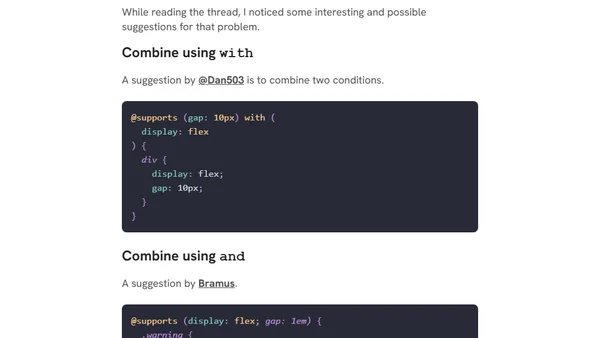
Explains how to detect browser support for the CSS flexbox gap property and provides workarounds for unsupported browsers.
A guide to overcoming common objections and convincing a web development team to adopt CSS Grid Layout, focusing on browser support and workflow.
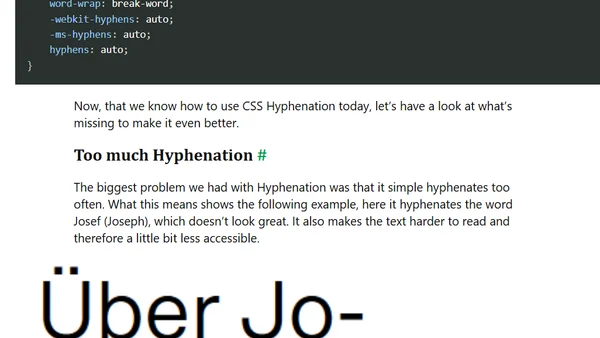
A 2019 overview of CSS hyphenation, covering browser support, implementation code, and limitations like excessive hyphenation.
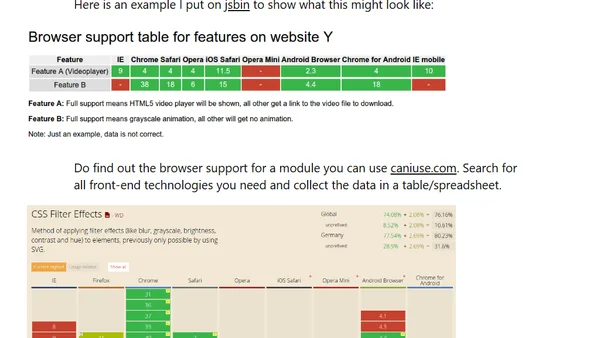
A web developer argues for defining browser support per feature/module instead of globally, using tools like caniuse.com for clarity.
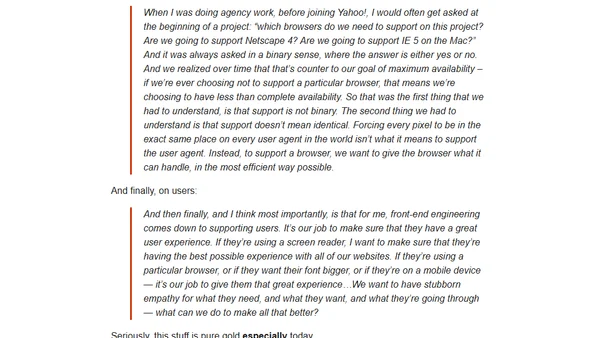
A reflection on the lasting influence of Nate Koechley's 2008 'Professional Frontend Engineering' talk, focusing on principles like progressive enhancement and availability.
Argues against relying solely on web analytics for browser support decisions, advocating for future-friendly development with progressive enhancement.