Faster Angular Applications - Understanding Differs. Developing a Custom IterableDiffer
Learn how to create a custom IterableDiffer in Angular to optimize change detection and improve performance with large collections.
Announcement of the Spanish translation of 'SQL Performance Explained' with updates for latest database releases and a refreshed SQL indexing quiz.
Angular performance guide using pure pipes, memoization, and functional programming to reduce redundant computations in applications.
Explains how to improve Angular app performance using OnPush change detection and immutable data structures.
A technical analysis of Apple's A11 CPU, exploring its heterogeneous core architecture and methods to observe performance and efficiency cores in action.
A technical article about optimizing Django Admin's date_hierarchy feature to eliminate performance bottlenecks caused by expensive database queries.
Performance benchmark of Gnocchi 4.0, a time-series database, comparing its speed and new Redis driver to version 2.0.
Overview of npm 5's major new features, including performance improvements, offline modes, and a standardized lockfile.
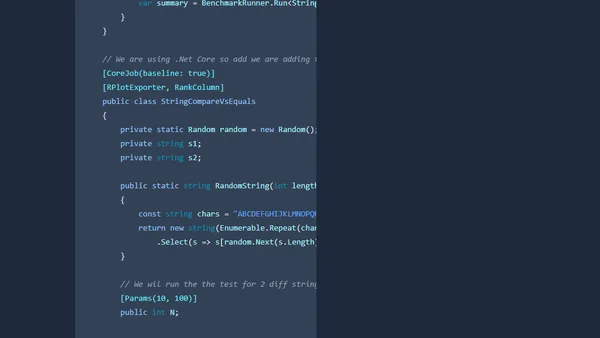
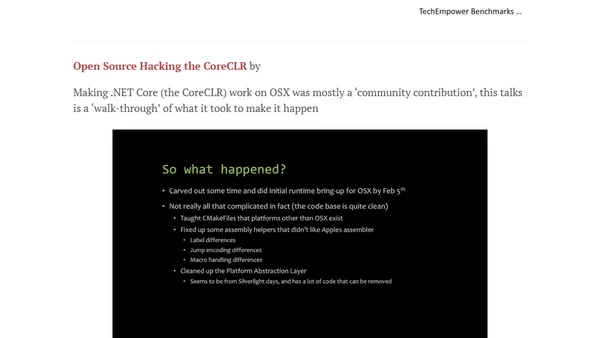
Introducing the Disassembly Diagnoser for BenchmarkDotNet, a tool to disassemble .NET code to ASM, IL, and C# for performance analysis.
The article explores the impact of input latency on user experience in tablets, VR, and computers, debunking the myth of instant response.
Explains the Span<T> type in C# for safe, high-performance memory manipulation across stack, unmanaged, and managed memory.
Explains C# 7.0's ref returns and ref locals for passing and returning large structs by reference to improve performance.
Explains the performance differences between value types and reference types in .NET, focusing on memory layout, CPU cache, and garbage collection.
Explains why to use Future.successful over Future.apply for performance when creating Scala Futures with known values.
A developer shares their journey of discovering state normalization in Redux to improve lookup performance, moving from arrays to keyed objects.
R 3.4.0 is released with major performance upgrades including JIT compiler enabled by default, faster matrix operations, and improved vector handling.
A developer investigates a performance bottleneck caused by regex validation in AutoMapper and explores faster alternatives for string validation.
Explores performance improvements in LINQ methods for .NET Core, highlighting specific optimizations and benchmark results.
Explores the conceptual differences between static site generators and caching for web performance, focusing on developer mindset and trade-offs.
Explains the async and defer attributes in JavaScript, detailing how they control script loading and execution to optimize web page rendering.