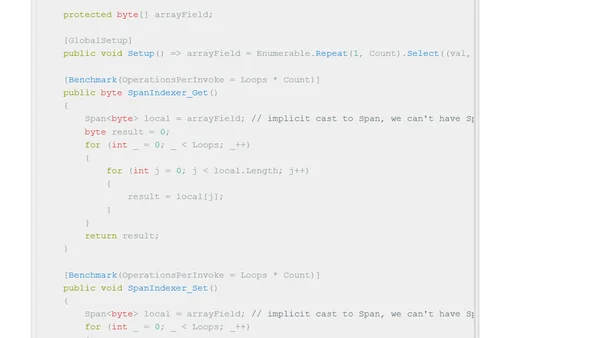
Span
Explains the Span<T> type in C# for safe, high-performance memory manipulation across stack, unmanaged, and managed memory.
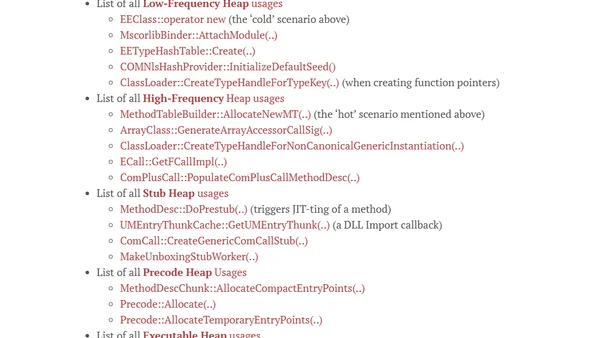
An in-depth look at how the .NET CLR allocates and uses internal memory, exploring its data structures beyond managed code.
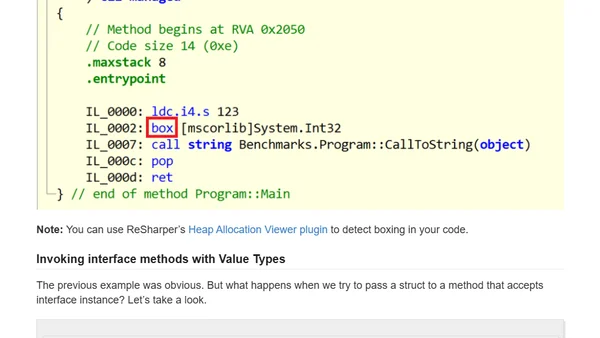
Explains the performance differences between value types and reference types in .NET, focusing on memory layout, CPU cache, and garbage collection.
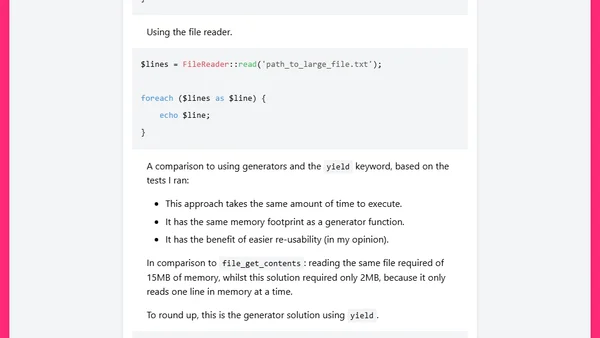
Explains an object-oriented approach to reading large files line by line in PHP, comparing it to generator functions and file_get_contents.
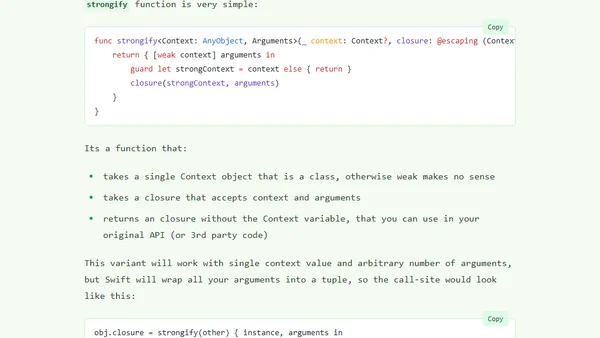
A Swift developer introduces a 'strongify' function to simplify and clean up the common pattern of weak-strong dancing when avoiding retain cycles in closures.
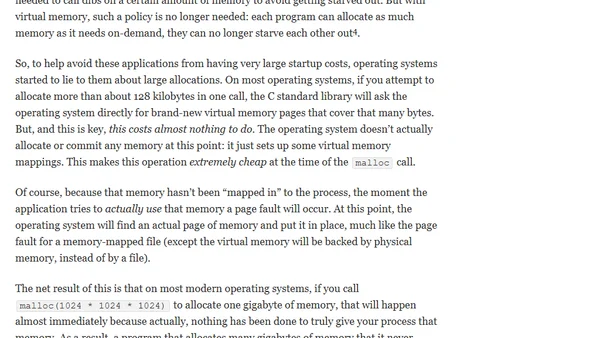
A deep dive into debugging a memory allocation issue in an operating system, starting from a bug report about slow iter_content performance.
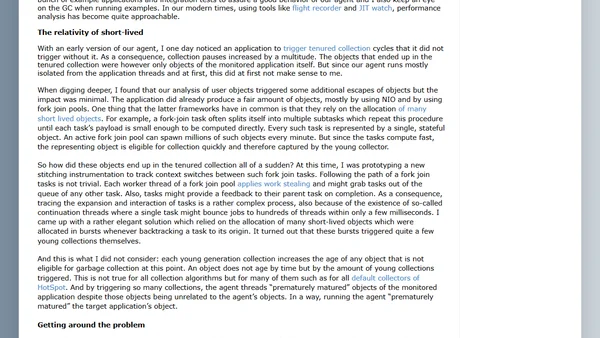
A developer details the challenges of building a Java tracing agent for distributed systems, focusing on asynchronous execution and its impact on garbage collection.
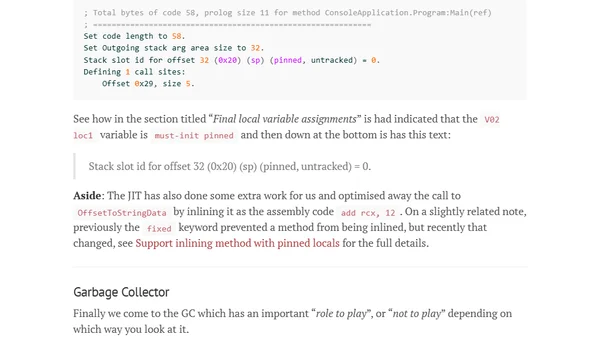
Explains the 'fixed' keyword in C#, covering its role in unsafe code, how the compiler, JIT, CLR, and GC collaborate, and its use for pinning objects in memory.
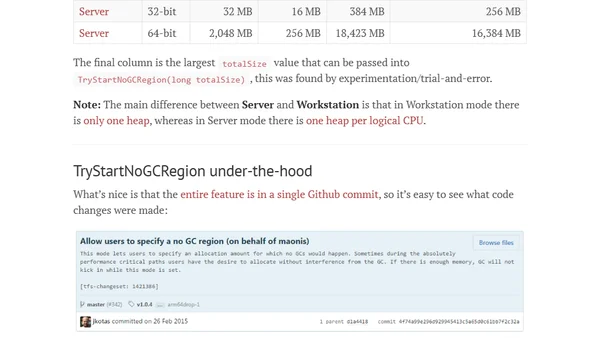
Explains how to use the .NET TryStartNoGCRegion API to prevent garbage collection pauses during critical code execution.
Explores the unique memory layout and performance optimizations of the String type within the .NET Common Language Runtime (CLR).
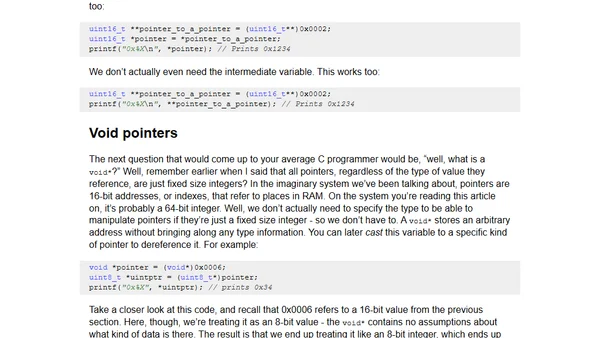
A technical tutorial explaining the fundamentals of pointers in C programming, covering memory addresses, dereferencing, and data representation.
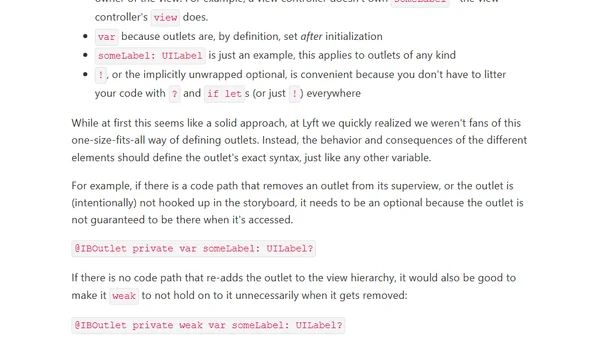
Explains when to use strong vs. weak and optional vs. implicitly unwrapped IBOutlets in Swift/iOS development, with practical rules.
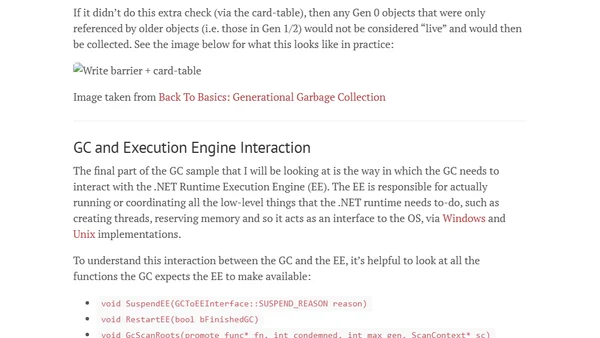
An in-depth exploration of how the .NET Garbage Collector works internally, focusing on its low-level mechanisms and design goals.
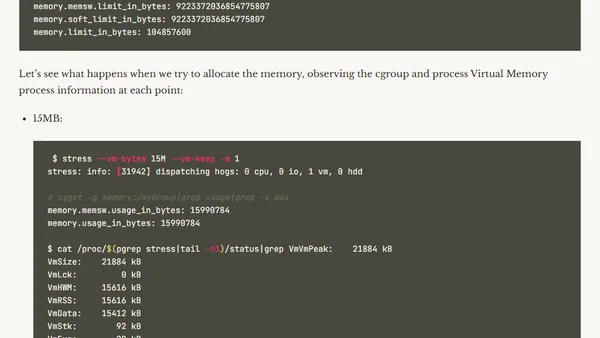
A technical guide on using Linux Control Groups (cgroups) to limit memory usage for specific processes, demonstrated with OBIEE and stress testing.
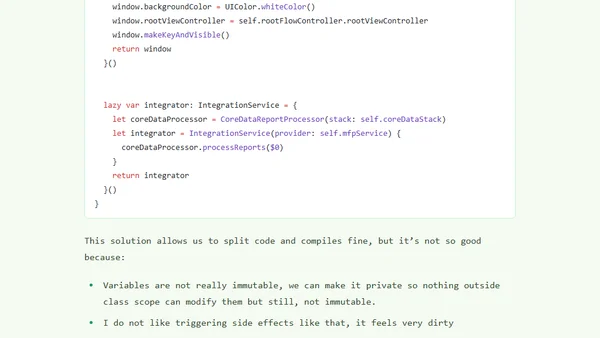
Explores solutions for splitting Swift initializer logic into functions while adhering to Swift's initialization safety rules.
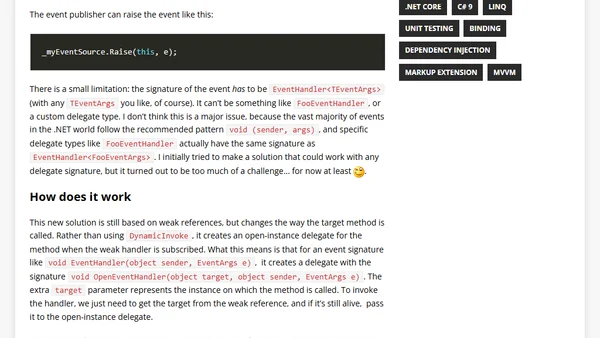
An improved implementation of the weak event pattern in C# to prevent memory leaks, focusing on performance and API design.
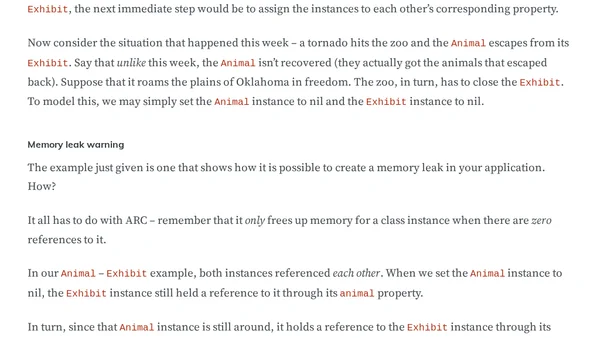
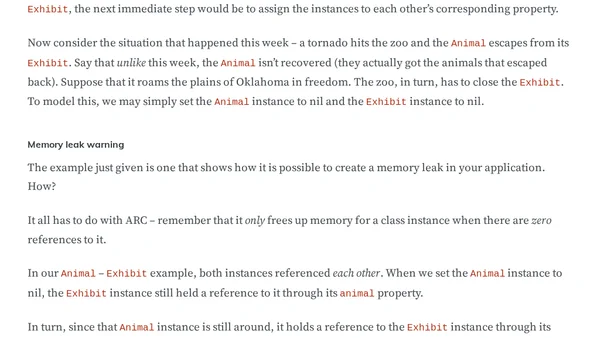
Explains strong, weak, and unowned references in Swift's ARC, with conclusions on when to use each for memory management.
Explains strong, weak, and unowned references in Swift's Automatic Reference Counting (ARC) for memory management.
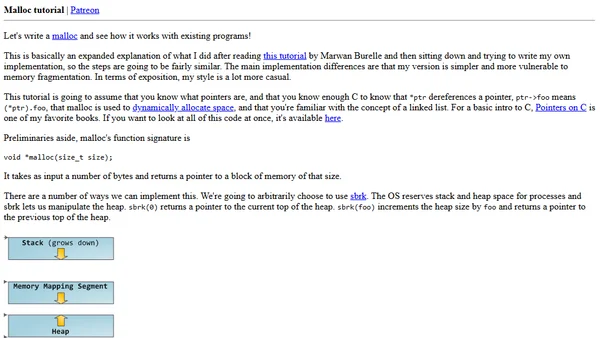
A tutorial on how to write your own malloc memory allocator in C, explaining core concepts and providing sample code.
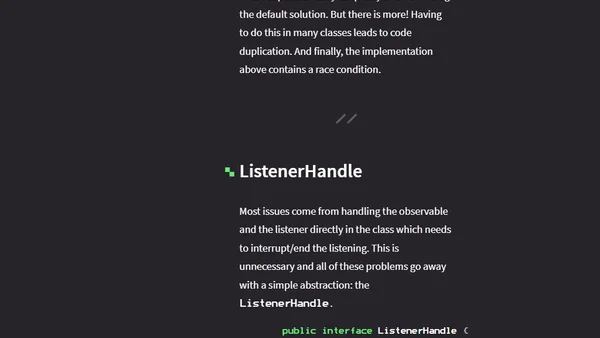
Explains why manually removing listeners is error-prone and introduces the ListenerHandle pattern for cleaner, safer event management in object-oriented code.