How Lisp helped my RetroChallenge 2024 project
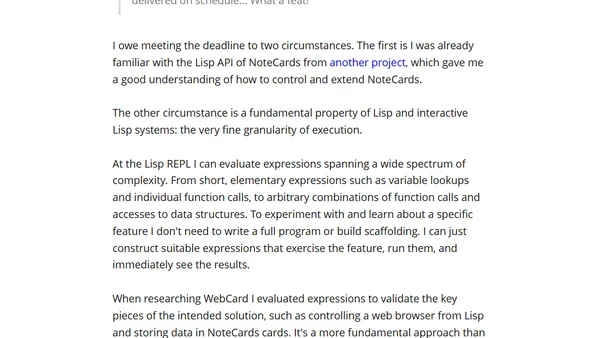
A developer explains how using Lisp and its interactive REPL was crucial for successfully completing a RetroChallenge project to extend a hypermedia system.
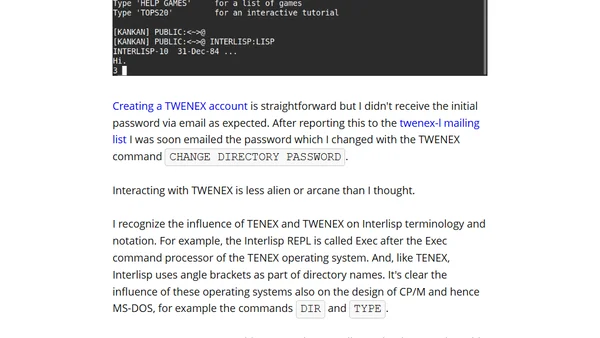
A technical exploration of Interlisp-10, a 1970s Lisp environment for PDP-10 mainframes, and its TTY editor on the TWENEX operating system.
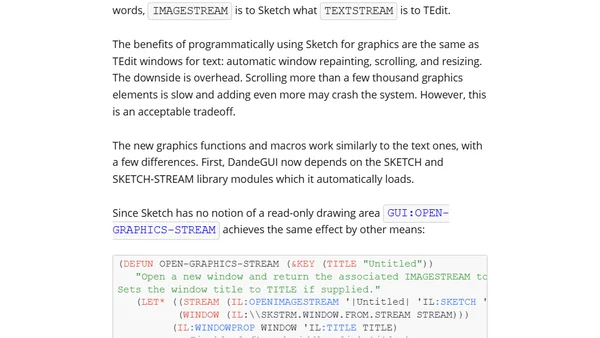
Announcing graphics support for DandeGUI, a GUI toolkit, with new functions for drawing and managing graphics windows in Interlisp.
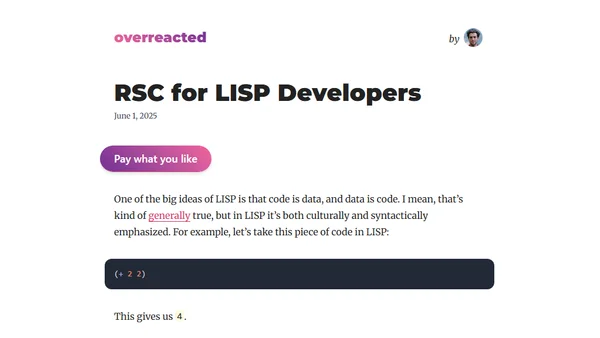
Explains React Server Components (RSC) by comparing them to the 'code as data' concept of quoting in LISP programming.
A developer reflects on rediscovering PC Scheme, his first Lisp environment from the 1990s, and how it shaped his programming journey.
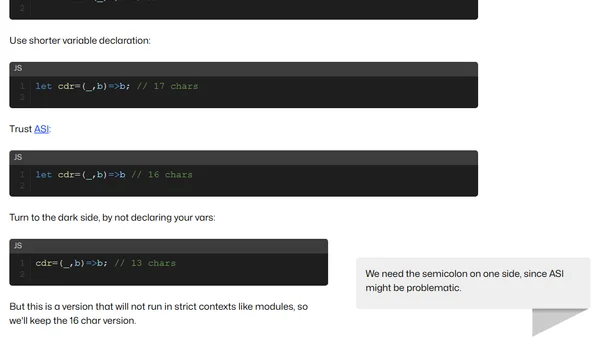
Explains Lisp's cons, car, and cdr concepts in JavaScript and demonstrates code golfing to minimize their implementation.
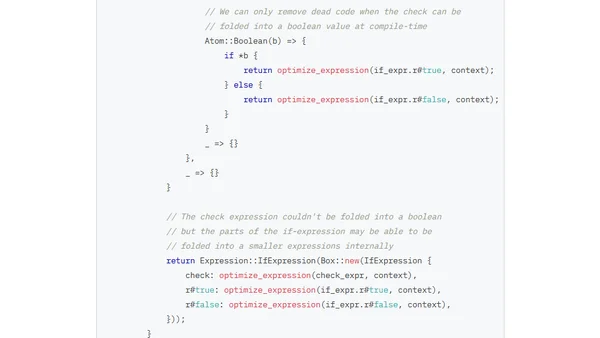
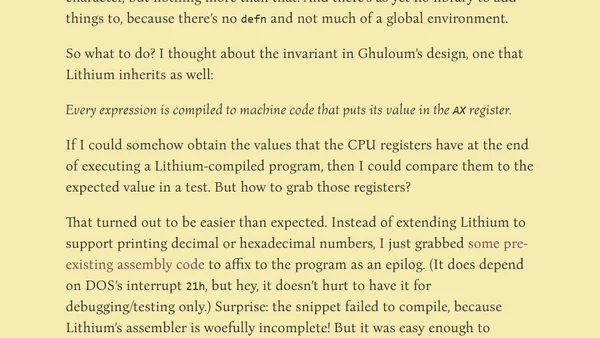
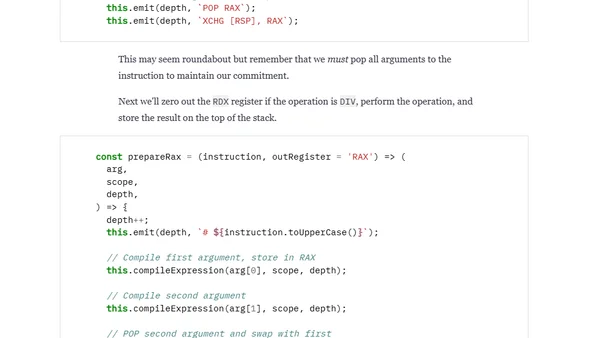
A developer adds a testing infrastructure to their minimalistic x86 Lisp compiler, Lithium, which targets raw machine code without runtime dependencies.
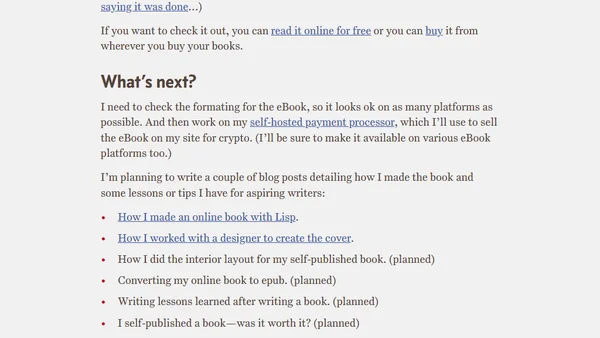
Author announces the print release of their book 'Why Cryptocurrencies?', a project explaining crypto concepts in simple terms.
Upgrading a Lisp compiler's x86 backend to use stack-based value passing instead of limited registers, aiming for feature parity with an LLVM backend.
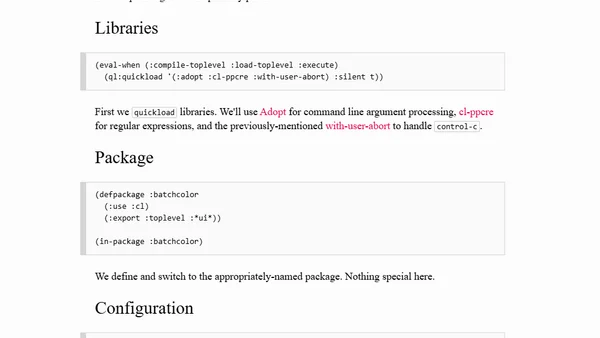
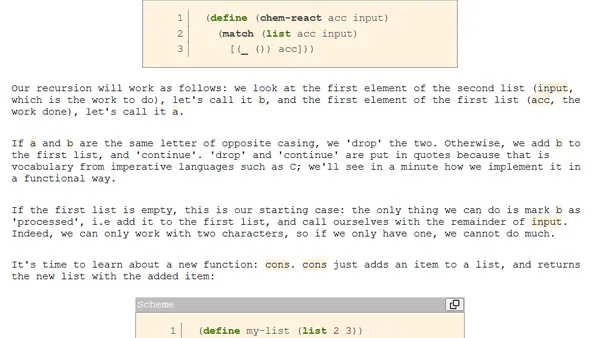
A tutorial on learning the Scheme programming language by solving the Advent of Code 2018 Day 5 challenge, focusing on iterative REPL use and pattern matching.
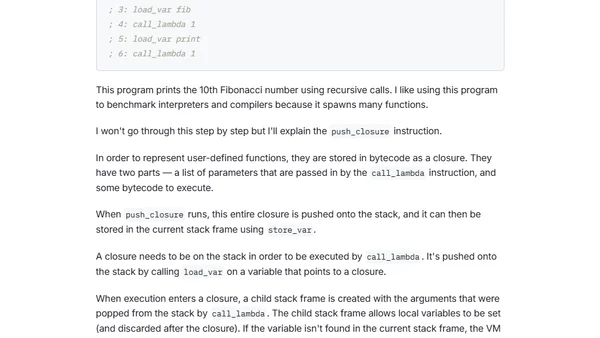
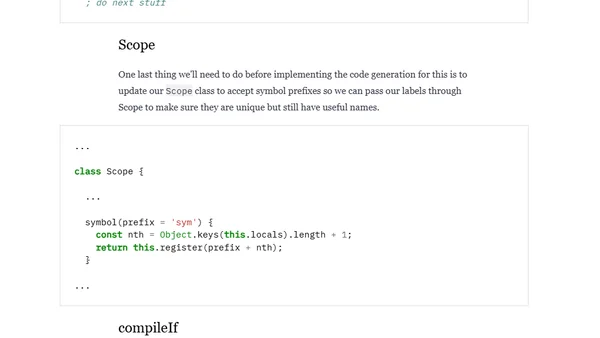
Extending a Lisp compiler's LLVM backend to support conditionals, subtraction, and comparisons, enabling compilation of the Fibonacci algorithm.
Extending a Lisp compiler in JavaScript to support user-defined functions and variables, focusing on assembly code generation.
Explains how Unix shell commands use Lisp-like syntax with program-name-first structure and expression composition.