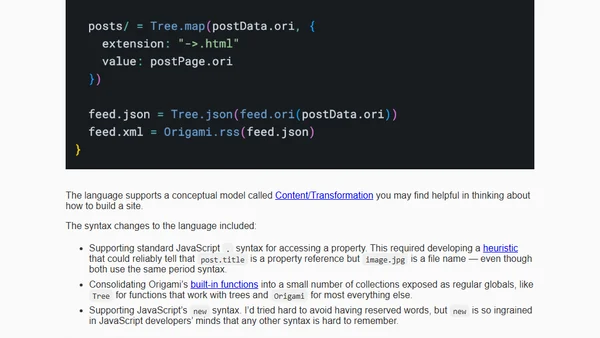
JavaScript 101 – A Detailed Guide on How to Use Object Destructuring
A detailed guide explaining how to use object destructuring in JavaScript to extract properties from objects, covering syntax, nested objects, default values, and aliases.
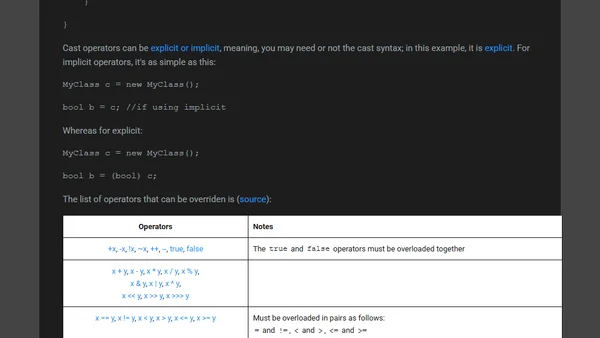
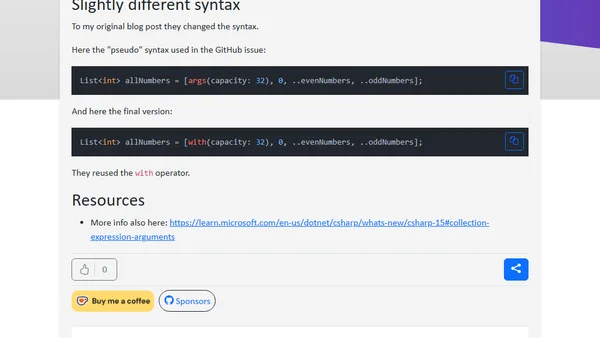
Explores C#'s 'magical' syntax patterns like foreach iteration, tuple deconstruction, and collection initialization that rely on convention-based methods.
An opinionated syntax primer for the Lean programming language, covering definitions, types, and running code.
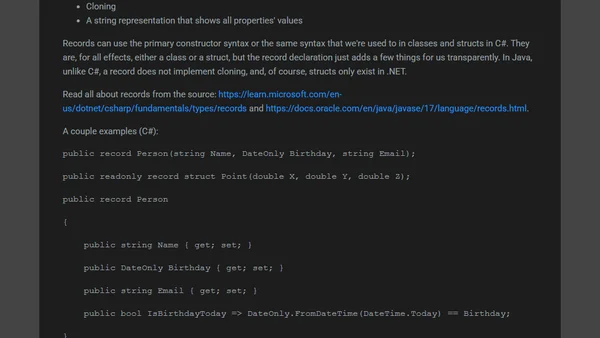
A detailed comparison of modern C# and Java syntax features, including init-only properties, primary constructors, and pattern matching.
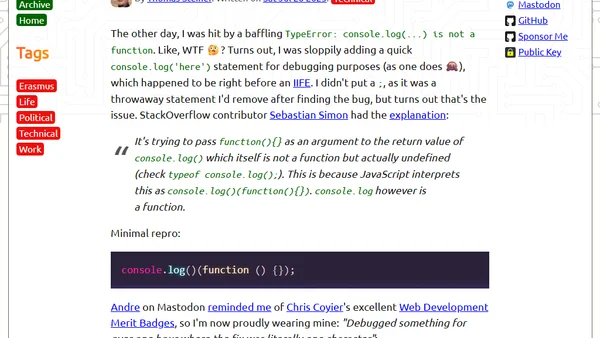
A developer explains how a missing semicolon caused a confusing JavaScript TypeError and shares debugging lessons.
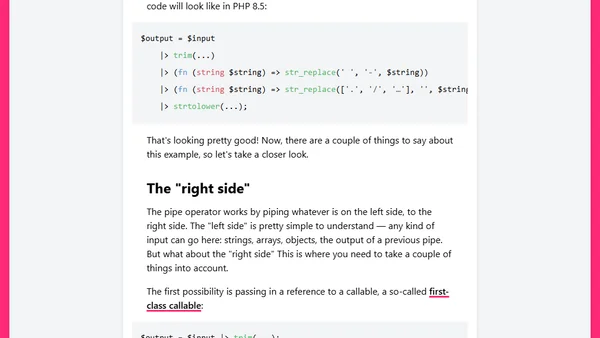
Explains the new pipe operator in PHP 8.5, showing how it simplifies chaining operations and improves code readability.
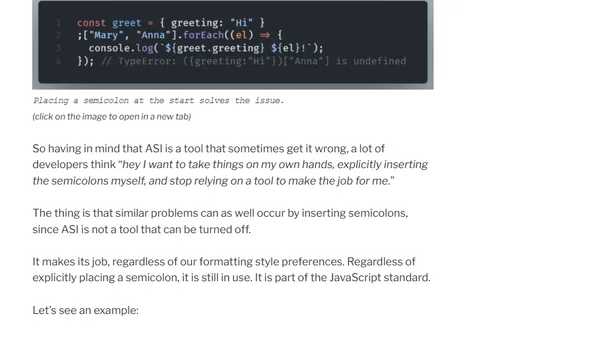
Explores the debate on using semicolons in JavaScript, covering ASI rules, common pitfalls, and best practices for code reliability.
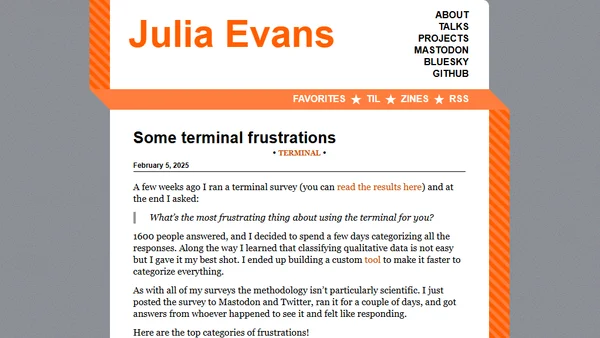
Analysis of a survey on the most frustrating aspects of using the terminal, based on responses from 1600 experienced users.
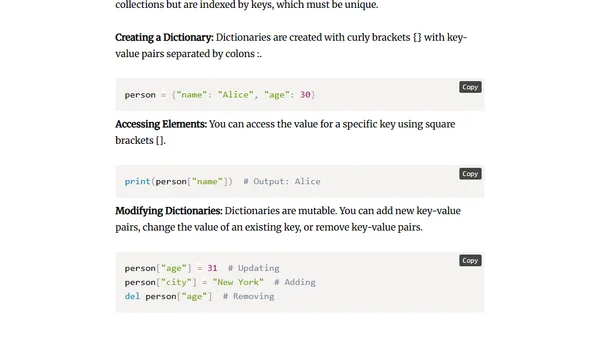
An introductory guide to Python programming covering installation, syntax, data structures, and best practices for beginners.
Explores the debate on placing curly brackets on new lines for better code readability, scanning, and consistency in programming.
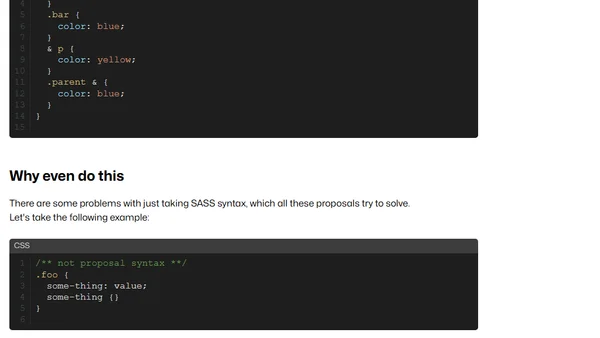
A developer discusses the ongoing debate over the syntax for native CSS nesting, comparing the different options proposed by Chrome and WebKit.
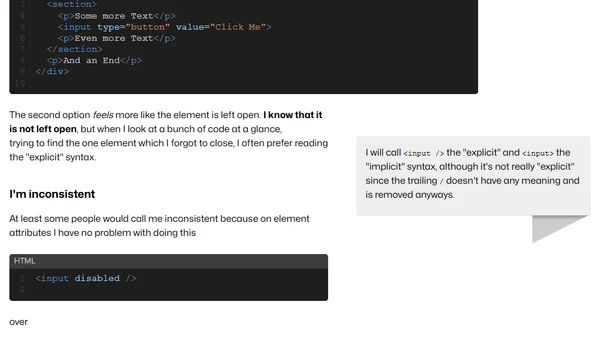
Opinion piece on the debate over using self-closing tags (like <input />) versus implicit closing in HTML, discussing readability and tooling.
Explains the difference between JavaScript statements and expressions, and why this distinction is crucial, especially for React developers.
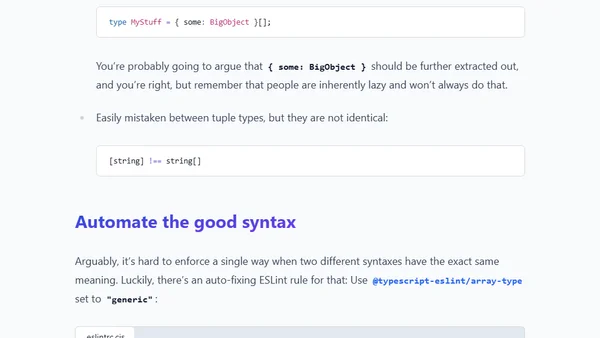
A guide to different TypeScript function syntaxes, explaining when to use ':' vs '=>' for return types with practical examples.
A beginner's guide to Rust programming covering installation, syntax, package management, and writing your first program.
The article argues for prioritizing code readability by analyzing the history and cognitive impact of naming conventions like camelCase vs snake_case.
Explains how Unix shell commands use Lisp-like syntax with program-name-first structure and expression composition.
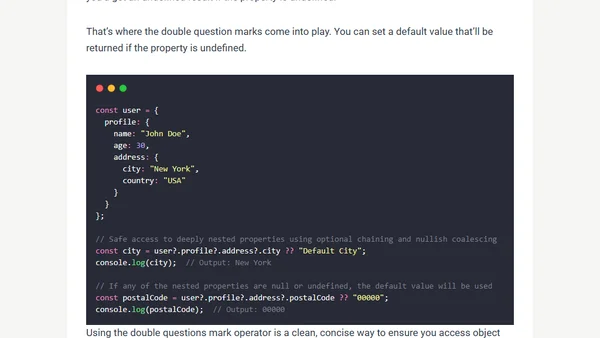
Explains how to use PHP's short ternary operator (?:) for more concise code, replacing repetitive variable checks.