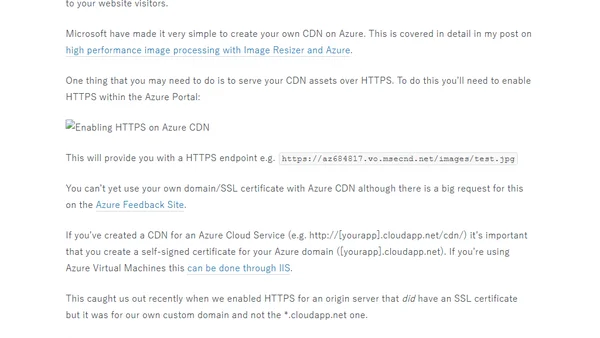
Using HTTPS with the Azure CDN
A guide on enabling HTTPS for assets served through the Azure CDN, covering configuration steps and important certificate considerations.

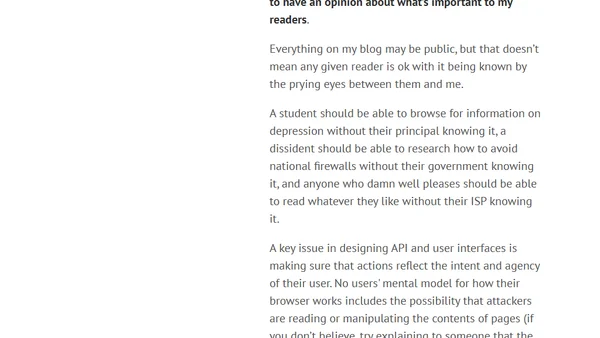
Explains why HTTPS is crucial for security, privacy, and as a tool against censorship, even for non-sensitive web traffic.
Analysis of TLS deployment on top US and global news websites, revealing widespread lack of HTTPS security and privacy protections.
Explains the new Middleware feature in Laravel 5.0, which replaces the traditional filter-style architecture for handling HTTP requests.
The author argues that all websites should use HTTPS by default to protect user privacy and security, making HTTP unethical.
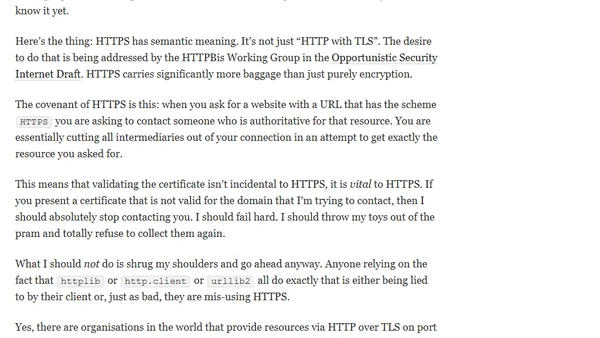
Argues that HTTPS requires certificate verification for security, discussing Python's debate on backporting this fix to version 2.7.
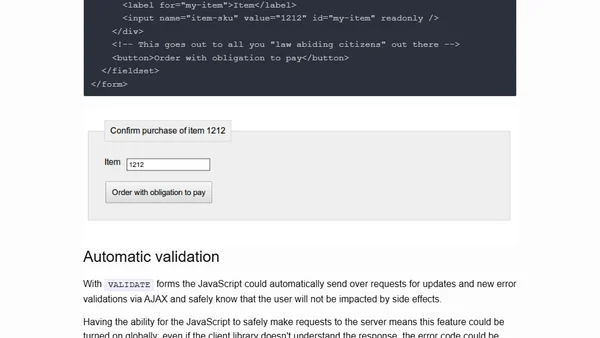
A proposal for a new HTTP verb, VALIDATE, to enable safe, idempotent server-side validation from client-side forms without side effects.
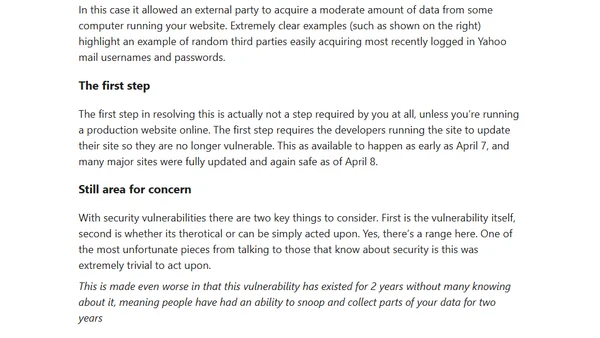
Explains the April 7 web security vulnerability, its impact on major sites, and provides steps for users to protect their accounts.
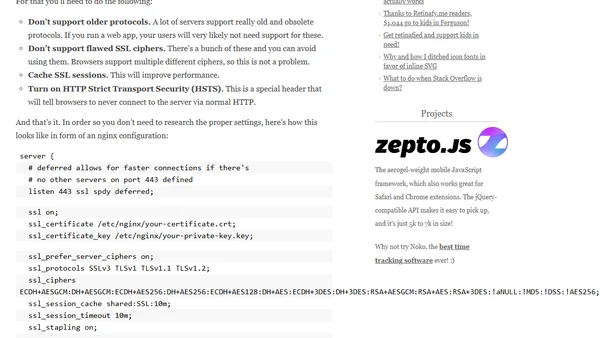
A technical guide explaining how to configure an nginx server to achieve an A+ rating on the Qualys SSL Labs security test.
A guide on setting up an Express.js server to run over HTTPS using a self-signed certificate for local development.
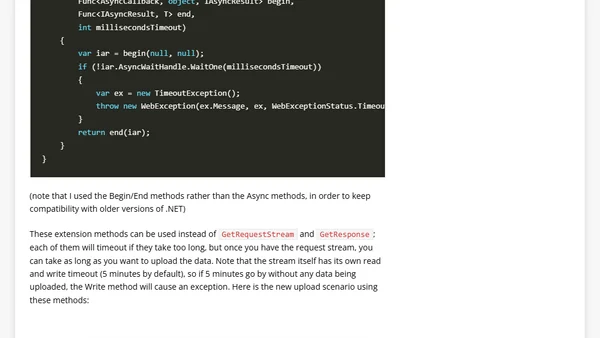
Explains how to handle timeout issues when uploading large files using HttpWebRequest in .NET, offering a solution with custom synchronous wrappers.
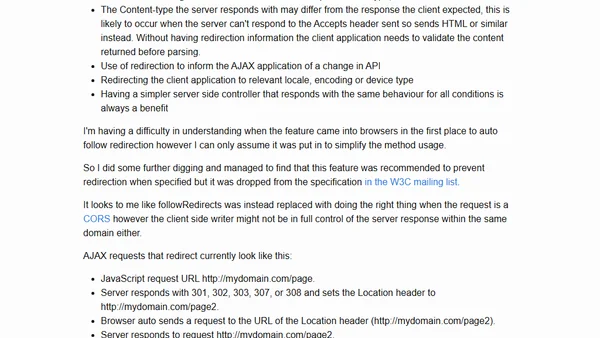
Explores the technical challenge of detecting HTTP redirects in AJAX requests and argues for a native browser solution.
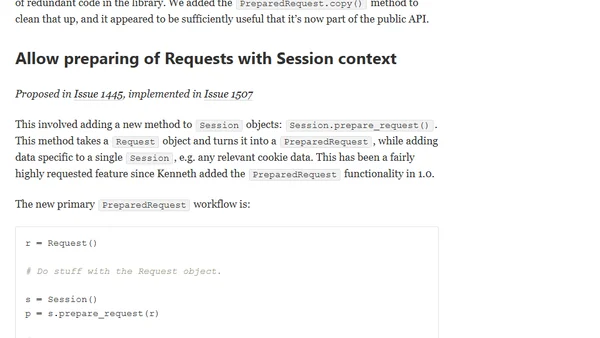
A detailed breakdown of the major changes and breaking updates in the Requests library version 2.0, including header handling and proxy requirements.
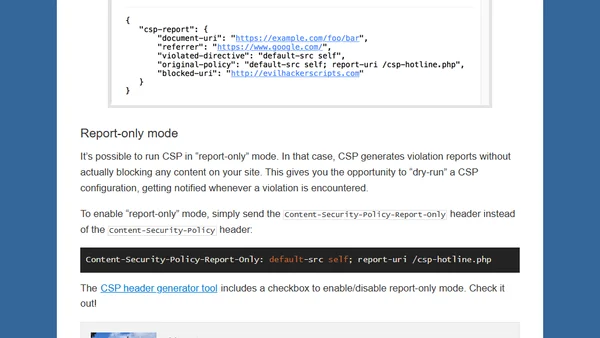
Explains how to process Content Security Policy violation reports with a practical PHP script example.
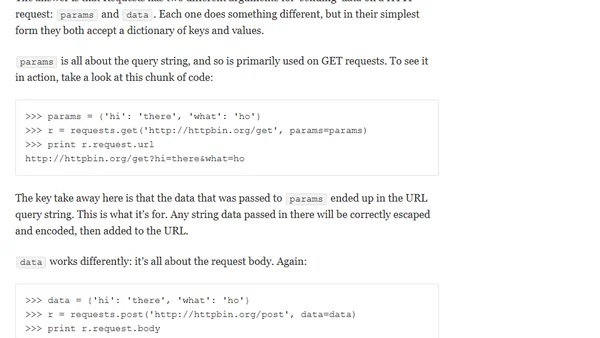
Explains the difference between the 'params' and 'data' arguments in the Python Requests library for HTTP queries and request bodies.
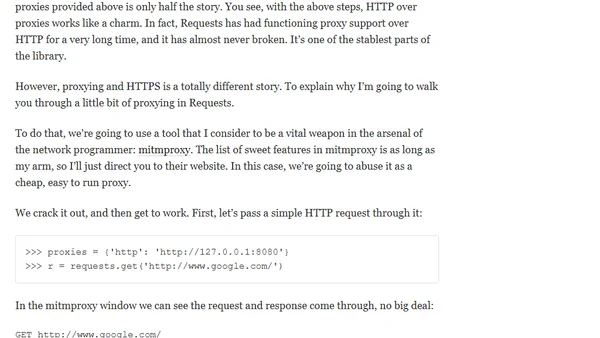
Explains how to configure and use HTTP and HTTPS proxies with the Python Requests library, covering the API and internal implementation details.
Argues that simple, open standards like HTTP, JSON, and Markdown consistently win over complex, heavyweight solutions on the internet.
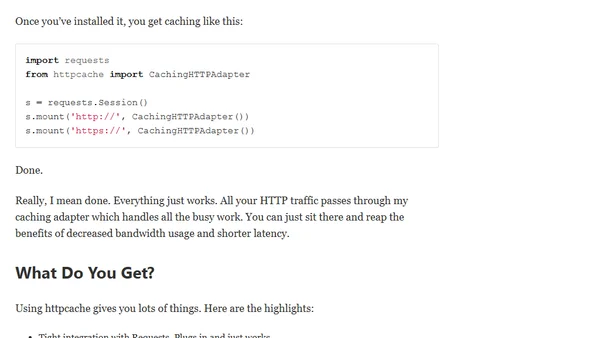
Introduces httpcache, a Python Requests plugin for automatic HTTP caching, reducing bandwidth and latency with minimal setup.
The author explains their motivation for adding SSL to their website: to become a Persona identity provider, discussing centralized online identity solutions.
A developer explains the importance of HTTPS for privacy and security, detailing the process and reasons for finally enabling it on their personal blog.