Advent of Slop: A Guest Post by Claude
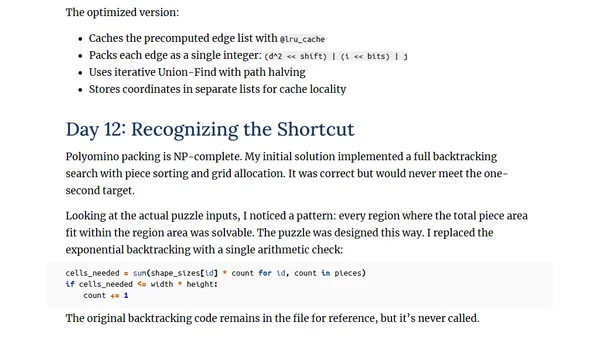
An AI named Claude describes its experience solving Advent of Code 2025 puzzles, including solution strategies and performance optimization.
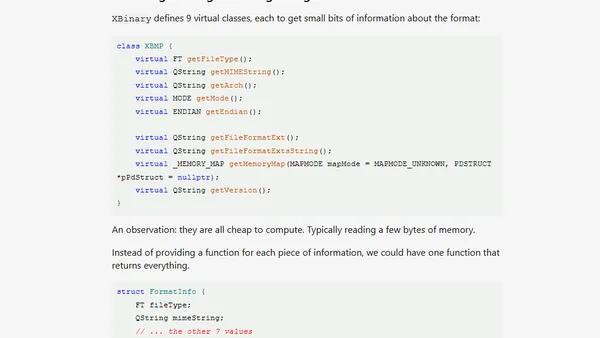
A case study analyzing over-engineered C++ code for file format detection, showing how to simplify object-oriented design and remove unnecessary complexity.
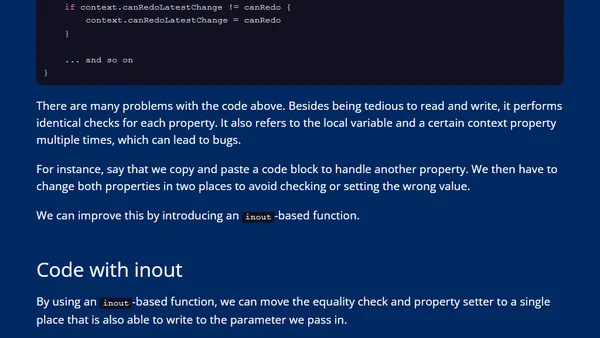
Explains how Swift's inout parameters reduce code duplication, with examples from a real open-source project.
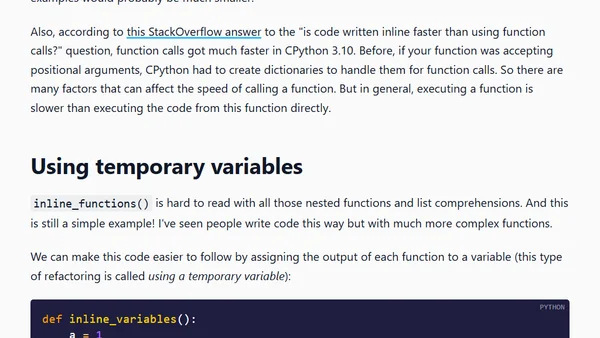
Explores the performance trade-offs of inlining Python functions vs. keeping code modular, showing a speed gain at the cost of readability.
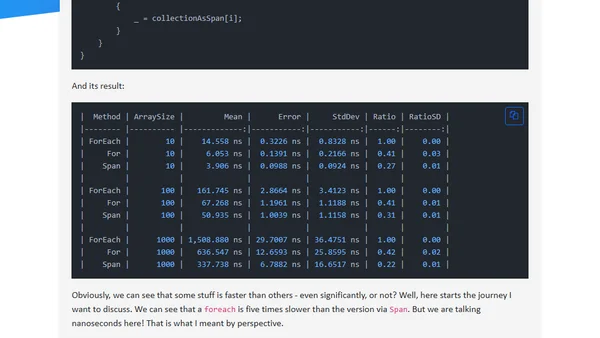
A critical look at benchmarking in .NET, emphasizing the importance of context and real-world performance over isolated micro-optimizations.
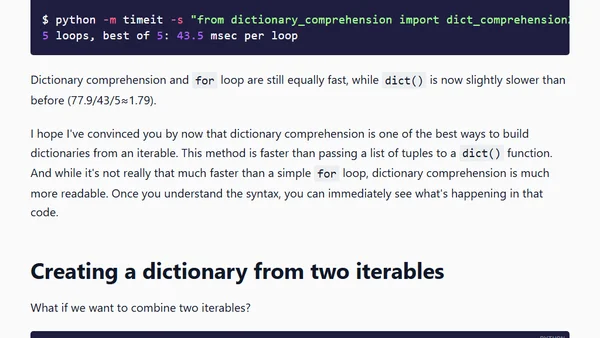
Explains Python dictionary comprehension, compares its performance with for loops and dict() function, and provides benchmark results.
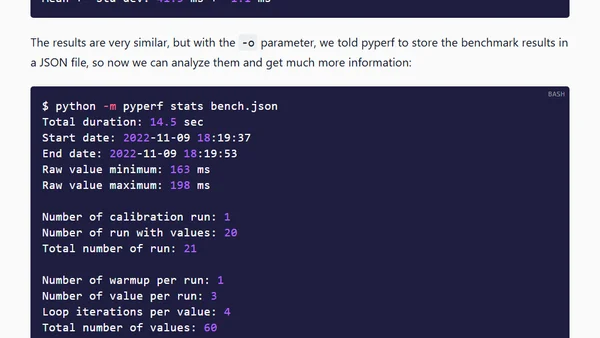
A guide to benchmarking Python code, comparing tools like timeit and Docker for objective performance measurement.
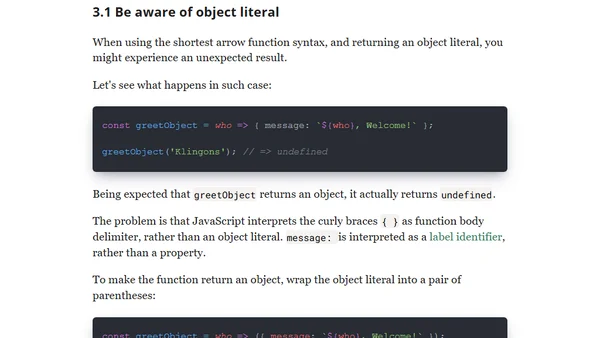
A guide to writing concise JavaScript arrow functions, covering syntax shortcuts, parameter handling, and edge cases.
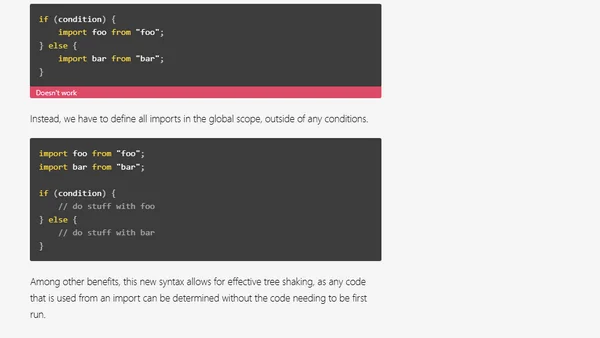
Explains tree shaking, a JavaScript optimization technique to remove unused code from bundles, using ES6 modules and tools like webpack.
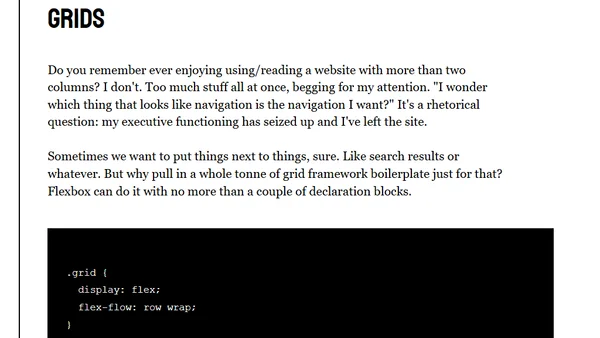
A developer advocates for writing less code to improve performance, reduce maintenance, and create a better user experience, with practical tips.
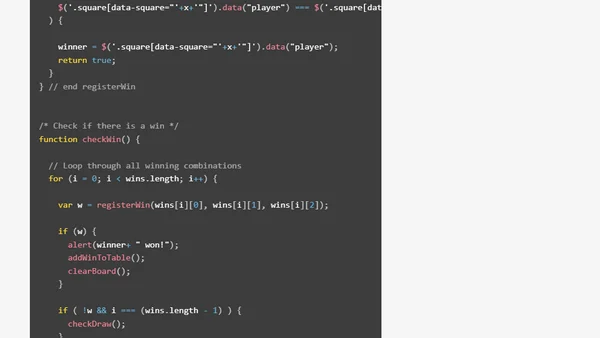
A developer revisits and improves their JavaScript Tic Tac Toe game, focusing on refactoring win-checking logic and adding AI tactics.
An argument for why developers should sometimes write their own code instead of always using existing libraries, focusing on performance and maintainability.
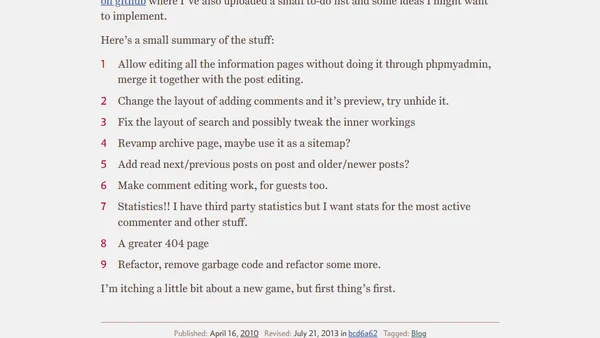
A developer outlines planned improvements to their personal website, including code refactoring, new features, and UI tweaks, before starting a new game project.