Mass function overloading: why and how?
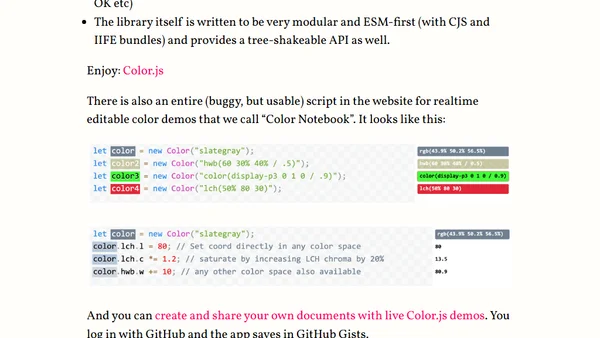
Explores function overloading in JavaScript libraries, using Bliss.js as an example to show how it improves API design and developer experience.
A technical overview comparing REST, RPC, and GraphQL API design approaches, their strengths, weaknesses, and practical considerations.
Discusses the pitfalls of APIs returning optional booleans (Bool?) and proposes using enums for better clarity and user experience.
Discusses problem-solving philosophy in tech, advocating for avoiding problems entirely rather than patching them, using API versioning as an example.
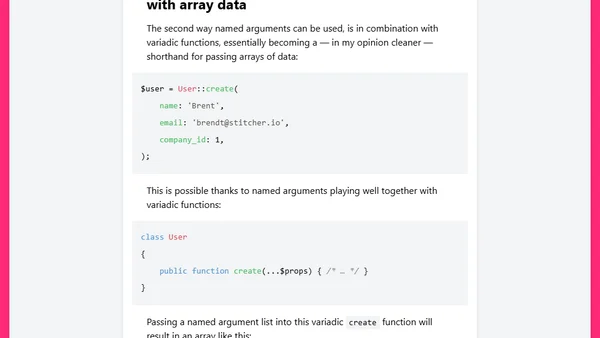
A developer argues for adopting named arguments in PHP 8, addressing concerns from open-source maintainers about breaking changes.
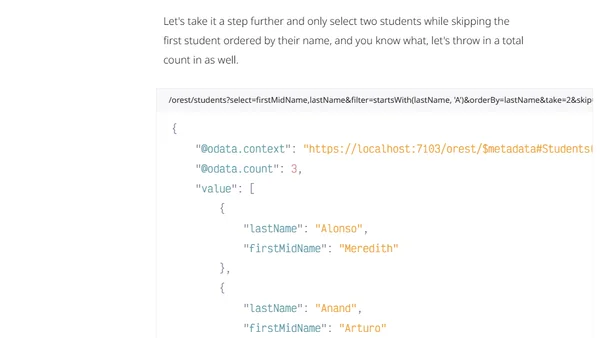
Explains how to serialize a custom C# type as a JSON string in ASP.NET Core APIs using System.Text.Json or JSON.NET converters.
Introducing BARE, a new binary encoding format designed to create compact, efficient stateless tokens for APIs and web services.
Explains the Emitter Parameter Pattern as an alternative to return values for designing flexible Service Provider Interfaces (SPIs) in libraries and frameworks.
Introduces the Emitter Parameter Pattern as a flexible alternative to return values for Service Provider Interfaces (SPIs) in libraries and frameworks.
A former React team member explains the core technical principles that guide the React team's approach to API design and problem-solving.
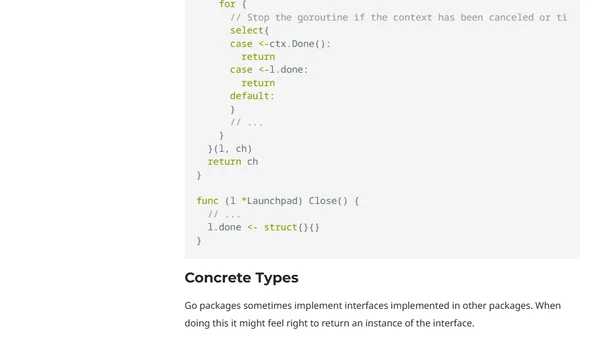
Explores using dynamically scoped variables in Go to improve test helper APIs, reducing boilerplate and passing of testing.T.
Explains how to use Go's internal/ directory to create private packages, reducing a project's public API surface and improving design.
Explains why Azure Functions with HTTP triggers are not ideal for building full web APIs and should be used for reactive, message-based logic instead.
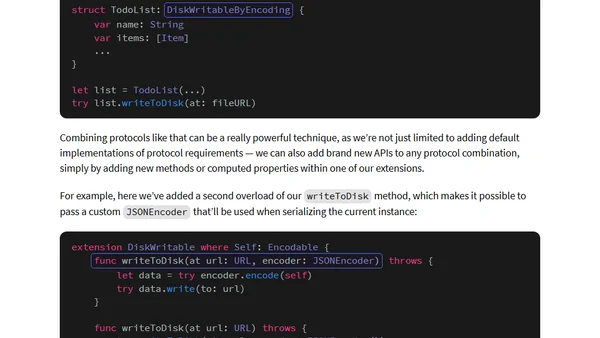
Explains opaque return types in Swift 5.1, covering their syntax, benefits for API encapsulation, and differences from protocol return types.
PSPDFKit shares insights on maintaining a large, cross-platform SDK, focusing on API evolution, proposal-based development, and long-term code maintainability.
A React team member shares personal strategies for coping with stress and feedback after major project releases like React Hooks.
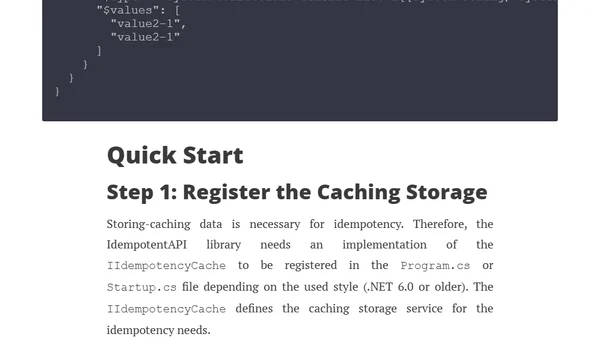
A guide to implementing data validation and proper error response handling for REST APIs, covering validation rules and the Problem Details standard.
Explains why certain React APIs like React.memo are not Hooks, focusing on composition and debugging constraints.
Introduces the 'Bug-O' notation, a metric for how API design affects debugging speed as a codebase grows.
Explains the rationale behind React Hooks' reliance on call order and how it enables features like multiple state variables.