The Kiwi PRNG
Analysis of a bug in New Zealand's official pseudo-random number generator used for electoral vote counting, based on the Wichmann-Hill algorithm.
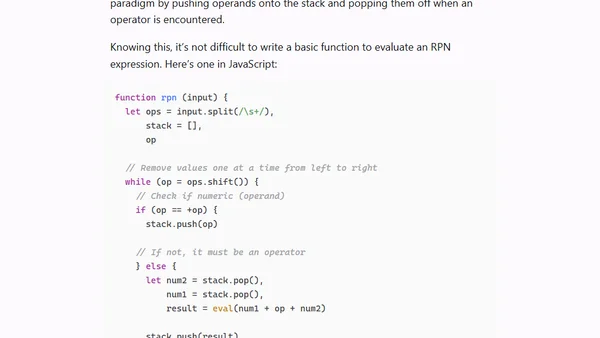
An introduction to Reverse Polish Notation (RPN), explaining its stack-based logic, history with HP calculators, and providing a JavaScript evaluator.
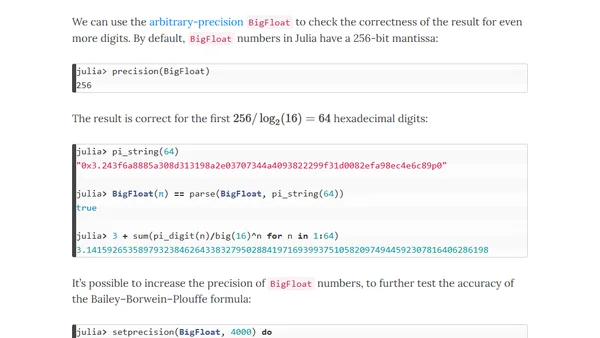
Explains the Bailey-Borwein-Plouffe formula for computing hexadecimal digits of π and provides a Julia implementation.
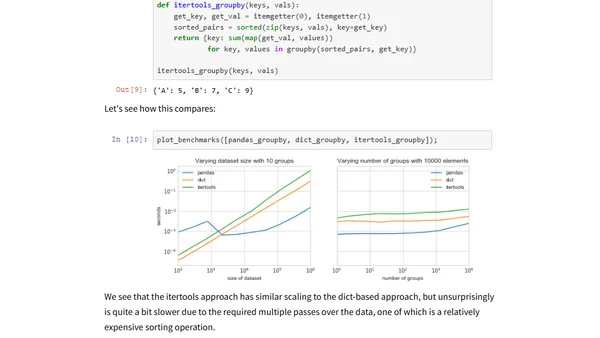
Explores implementing group-by operations from scratch in Python, comparing performance of Pandas, NumPy, and SciPy for data aggregation.
Analyzes the pseudorandom number generator defined in NZ Flag Referendum law, comparing it to the Wichmann-Hill algorithm and noting a potential flaw.
Explores the mathematical design of the game Spot It! using finite projective planes and prime numbers, with code on GitHub.
Author's 2014 review: writing a data science book from scratch in Python and preparing for/starting a software engineering job at Google.
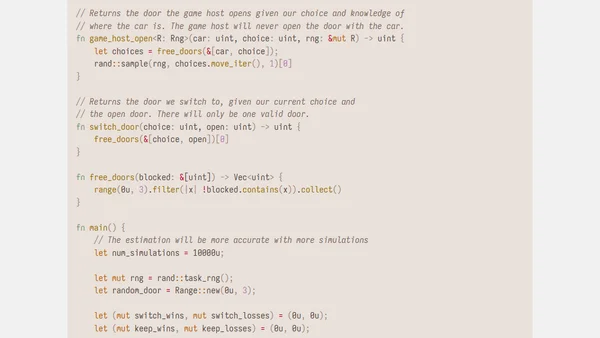
A Rust programming simulation of the classic Monty Hall probability problem, demonstrating the counter-intuitive odds.
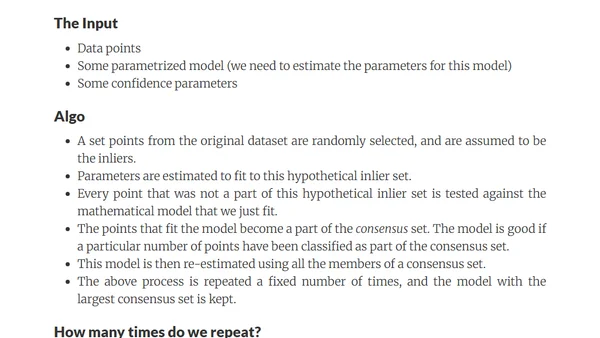
An explanation of the RANSAC algorithm for outlier rejection, used in computer vision and data modeling.
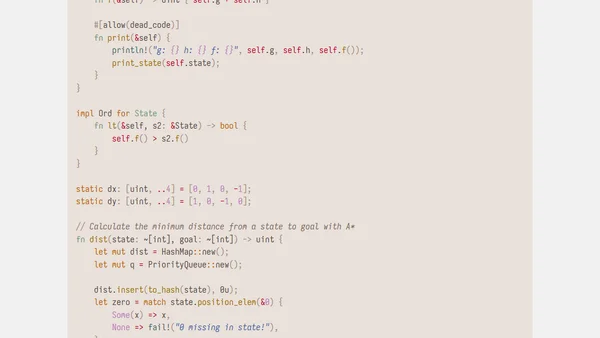
A developer shares their experience implementing the 8-puzzle solver in Rust using A* and BFS algorithms, discussing language features and challenges.
An exploration of the Cooley-Tukey Fast Fourier Transform (FFT) algorithm, its underlying principles, and a Python implementation from scratch.
Explores solving the running median problem in Python, comparing clever, educational, and research approaches, and presents an indexable skiplist solution.