Advent of 2025, Day 22 – SQL Server 2025 – T-SQL Features – UNISTR()
Explains the new UNISTR() T-SQL function in SQL Server 2025 for handling Unicode strings, emojis, and escape sequences.
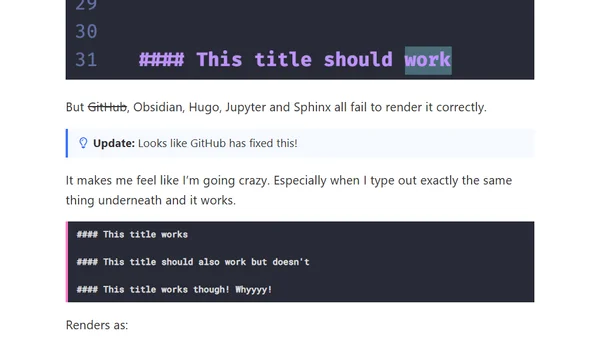
Explains why Markdown headers sometimes fail to render due to accidental non-breaking spaces, with a focus on Mac keyboard layouts.
Explains the HTML <bdi> element and its role in isolating bidirectional text from the browser's Unicode algorithm.
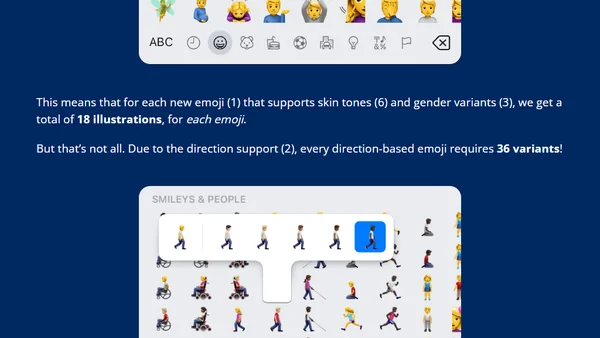
Analyzes the growing complexity of the Emoji standard, focusing on skin tone, gender, and direction variants, and discusses Apple's unprecedented removal of some emojis in iOS 17.4.
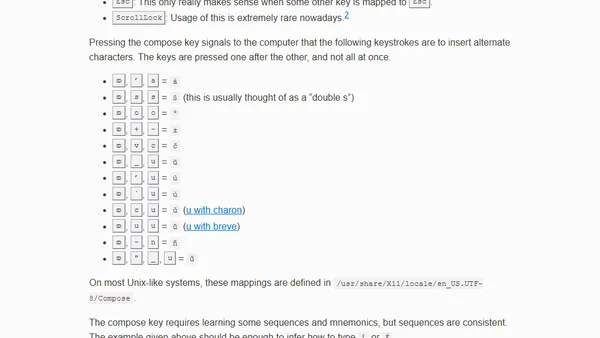
Explains methods for typing non-English characters on computers, including AltGr, dead keys, and the Compose key.
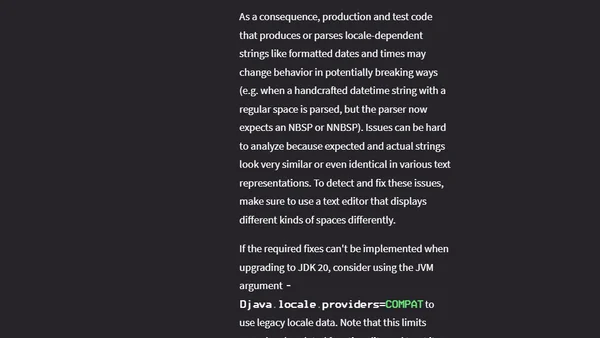
JDK 20-23 updates for Unicode CLDR Version 42, covering locale data changes and parsing enhancements for date/time strings.
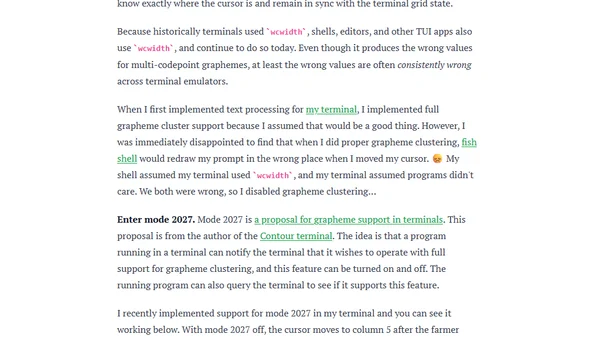
Explains why emojis like 🧑🌾 cause inconsistent cursor movement in terminals due to grapheme clusters and offers solutions for developers.
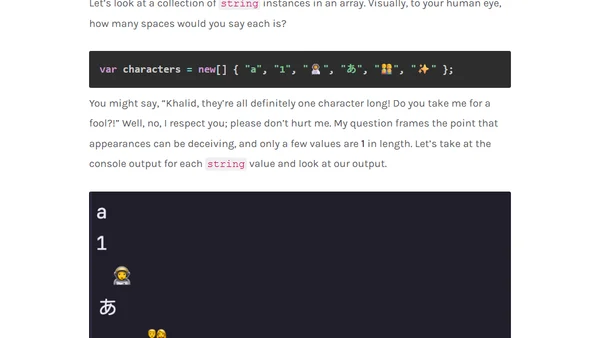
Explains how to accurately measure Unicode string lengths in C# using the StringInfo class, addressing challenges with non-ASCII characters in console output.
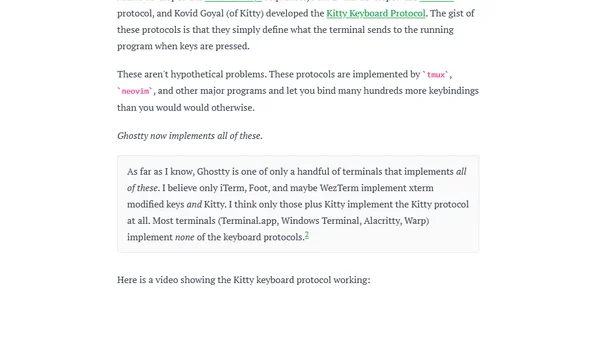
Third devlog for Ghostty terminal emulator, covering community updates, a talk announcement, and deep dive into keyboard input handling challenges.
Explains the challenges of using non-ASCII characters in R packages for global portability, and why CRAN enforces checks.
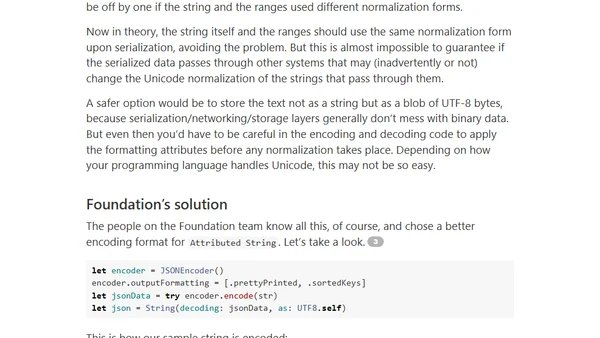
Explores the challenges of designing a Codable format for Swift's AttributedString, focusing on Unicode complexities like grapheme clusters and normalization.
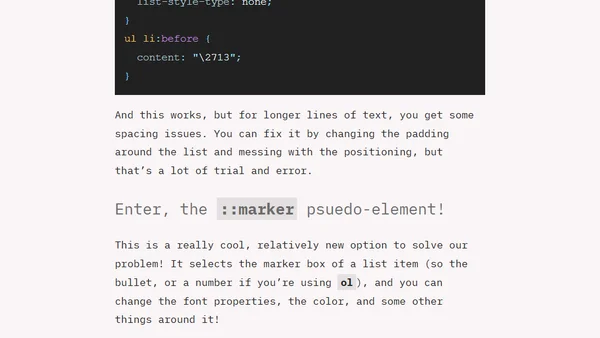
Learn to use the CSS ::marker pseudo-element to style list bullets with Unicode characters, solving text alignment issues.
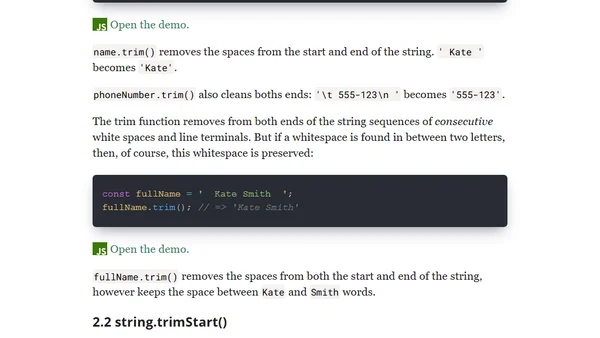
A guide to trimming whitespace and line terminators from strings in JavaScript using trim(), trimStart(), and trimEnd() methods.
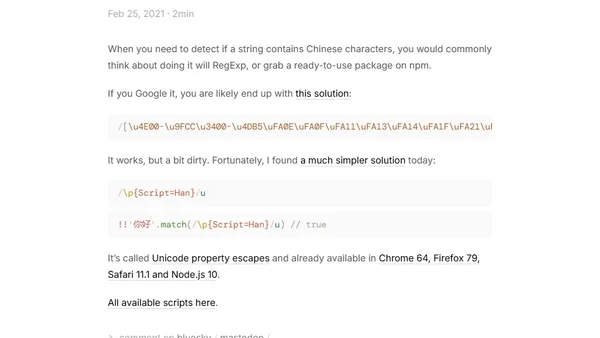
A technical guide on using Unicode property escapes in regex to detect Chinese characters in strings, offering a cleaner alternative to traditional methods.
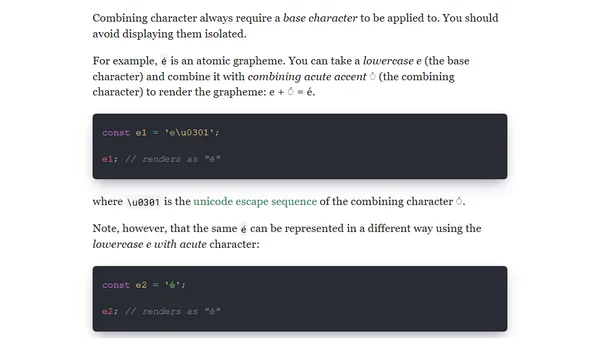
Explains the complexities of comparing JavaScript strings, especially with Unicode combining characters, and offers safer comparison methods.
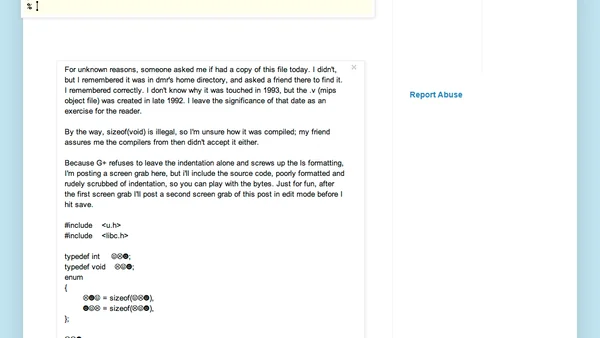
A historical look at a quirky C code snippet from 1992 using smiley face typedefs, shared from the author's Google+ archive.
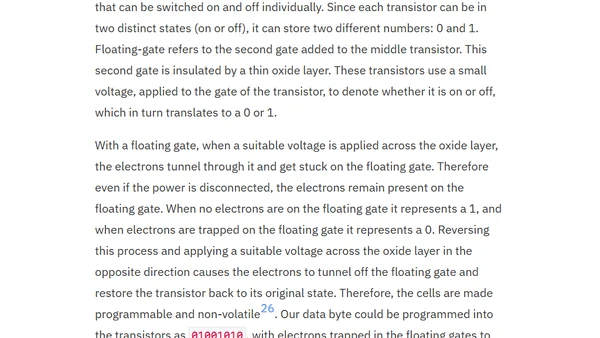
A historical journey through data storage mediums, from punch cards to modern DRAM, explaining how a single byte is represented.
A personal account of the creation of UTF-8, the dominant character encoding for the web, by one of its co-inventors.
A Haskell developer shares a solution for performing regex substitutions with Unicode, specifically for embedding YouTube links.
How to detect Right-to-Left Override (RLO) characters in filenames using Python's unicodedata module to prevent malicious file spoofing.