Superlogical
Mitchell Hashimoto announces Superlogical, a new company building a terminal multiplexer, and reflects on his journey from Ghostty.
Mitchell Hashimoto is a software developer and co-founder of HashiCorp, now working on Ghostty, a modern terminal emulator. He previously led and built major DevOps tools like Terraform, Vault, and Consul, and shares insights from engineering and aviation.
52 articles from this blog
Mitchell Hashimoto announces Superlogical, a new company building a terminal multiplexer, and reflects on his journey from Ghostty.
A guide explaining why SIMD is simpler than its reputation, with a common five-step pattern for speeding up loops using vectorized operations.
Mitchell Hashimoto pledges another $400,000 to the Zig Software Foundation, bringing total support to $700,000, citing respect for Zig's technical and community values.
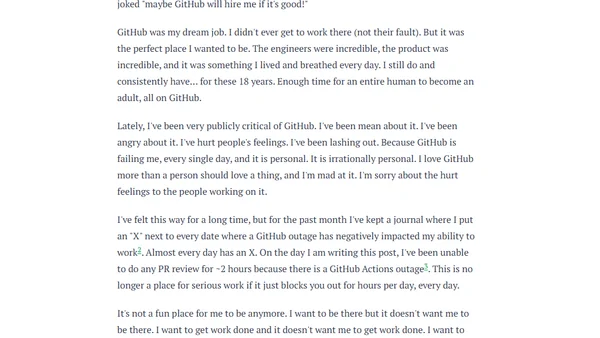
Mitchell Hashimoto explains why Ghostty is leaving GitHub due to frequent outages and declining reliability.
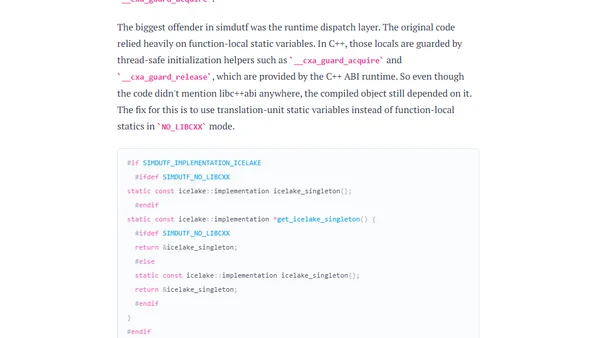
Simdutf library can now be used without libc++ or libc++abi dependencies, improving portability for embedded and WebAssembly environments.
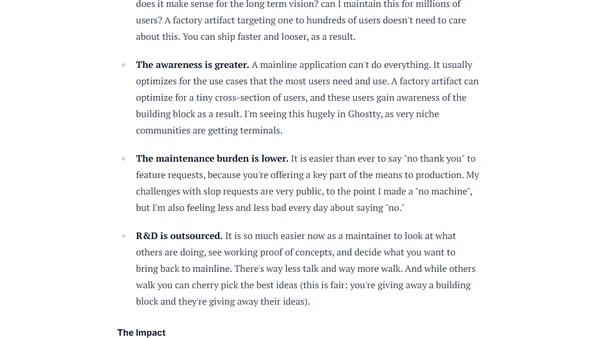
Mitchell Hashimoto argues software success today comes from building blocks that enable quantity over quality, using AI to glue components together.
A software engineer's measured journey from AI skepticism to practical adoption, outlining six key steps for integrating AI agents into development workflows.
Introducing Tripwire, a Zig library for injecting failures to test error handling and recovery paths, ensuring robust error cleanup.
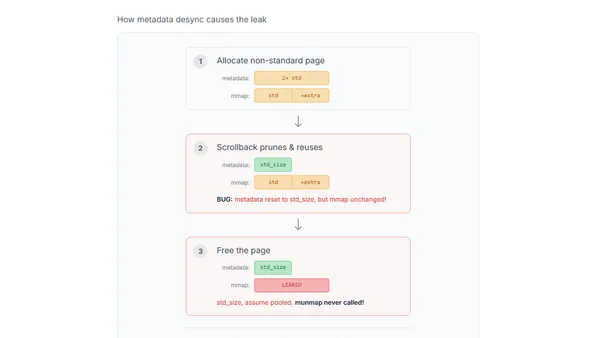
A technical deep dive into diagnosing and fixing a major memory leak in the Ghostty terminal emulator, triggered by specific CLI applications.
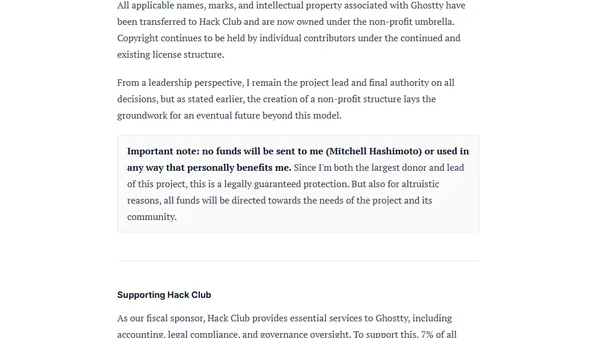
Ghostty terminal project transitions to a non-profit structure under Hack Club to ensure its long-term sustainability and commitment to open source.
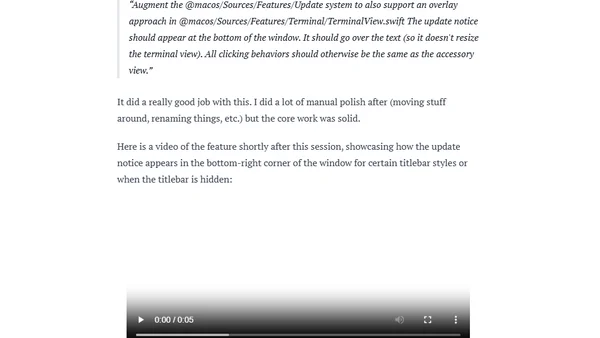
Mitchell Hashimoto details using AI agentic coding tools to develop an unobtrusive macOS auto-update feature for Ghostty, sharing the full process and token costs.
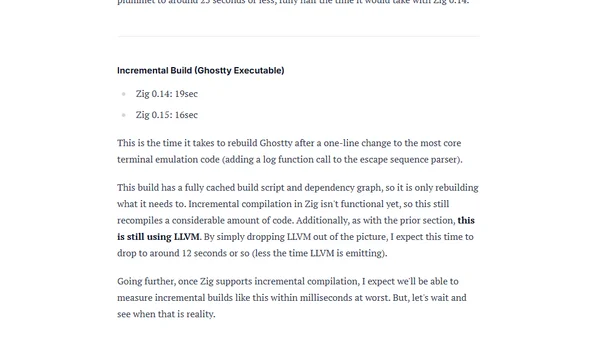
Zig 0.15.1 shows significant improvements in build times for the Ghostty project, with faster script compilation and incremental builds.
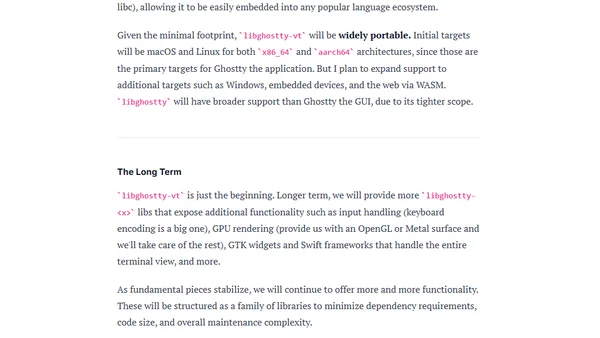
Announcing libghostty-vt, a zero-dependency library for parsing terminal sequences and managing terminal state, extracted from the Ghostty terminal emulator.
A reflection on the importance of user experience and emotional impact in software development, beyond just meeting specifications.
Mitchell Hashimoto shares insights on how tech non-profits can improve their donation processes and marketing to attract more donors.
Ghostty terminal's GTK app was rewritten in Zig, integrating with GObject and using Valgrind for memory validation.
Mitchell Hashimoto clarifies his original intent behind the 'as code' concept, distinguishing it from 'as programming' and explaining its focus on codifying knowledge.
Ghostty terminal project announces eight new subsystem maintainers to support its growth and long-term open source health.
Mitchell Hashimoto reflects on the personal journey and philosophy behind releasing Ghostty, a new terminal emulator, after reaching version 1.0.
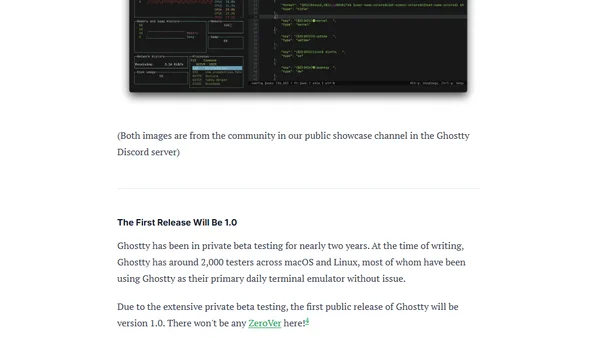
Announcement of Ghostty 1.0, a new open-source terminal emulator for macOS and Linux aiming to be a fast, feature-rich, and standards-compliant drop-in replacement.