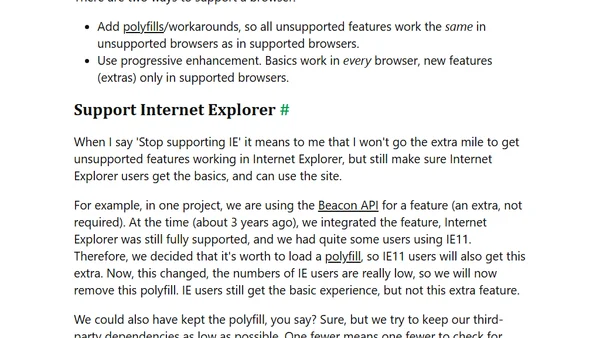
My Browser Support Strategy
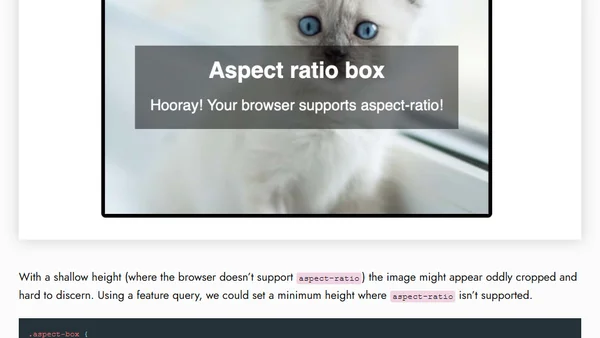
A web developer's strategy for using modern CSS features while ensuring compatibility with older browsers through progressive enhancement and fallbacks.
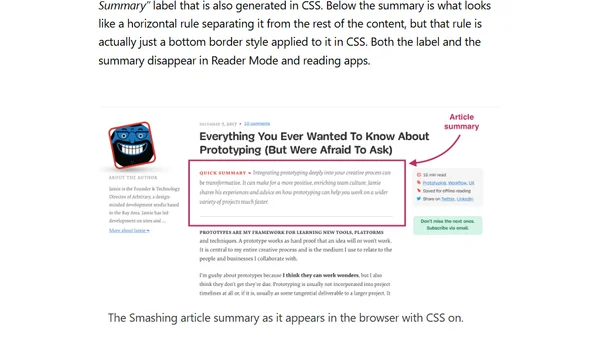
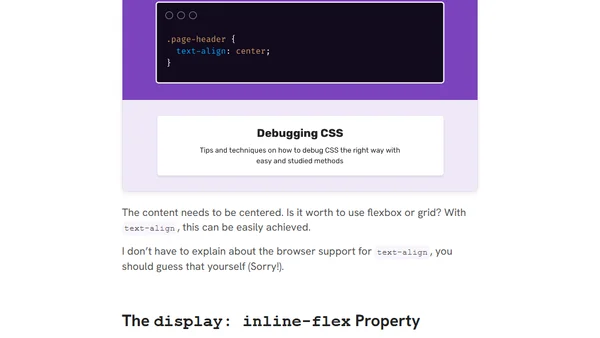
Tips for web developers to ensure content remains understandable and functional when CSS is stripped by Reader modes and reading apps.
A web developer reflects on 2020 career changes, embracing frontend development, and focusing on core web technologies for 2021.
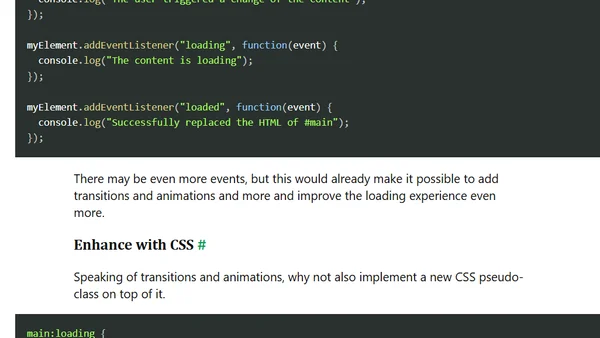
A proposal for a native browser feature to load and replace HTML content without JavaScript, enabling SPA-like experiences directly with HTML attributes.
Explores lesser-known CSS properties like place-items, margin: auto with Flexbox, and ::marker to simplify layouts and styling without extra code.
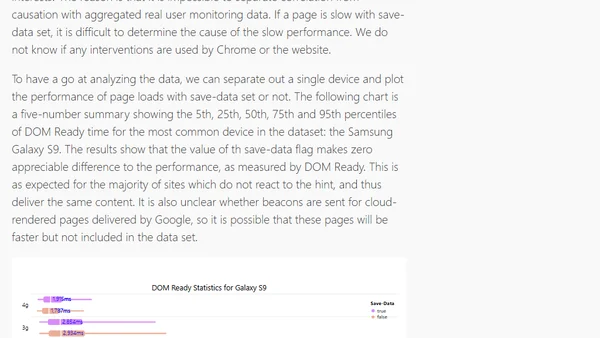
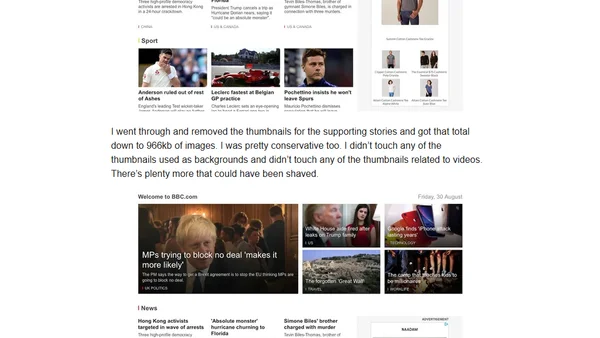
Analysis of Chrome's Save-data client hint, exploring global opt-in rates, user demographics, and technical implementations for data-saving web experiences.
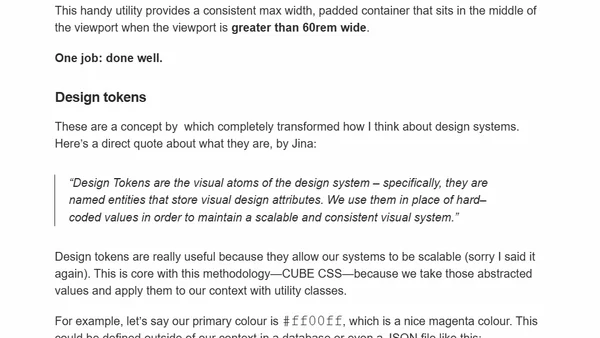
An introduction to CUBE CSS, a pragmatic CSS methodology focused on simplicity, consistency, and leveraging the power of native CSS.
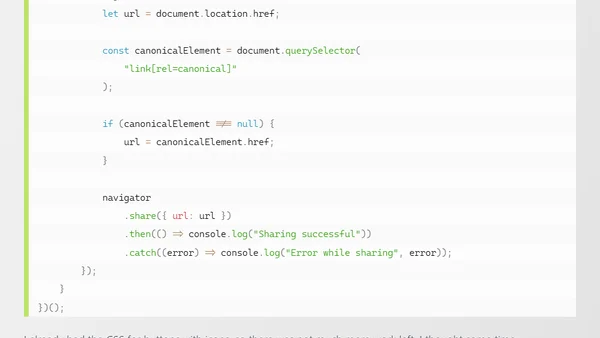
A guide to implementing a native sharing button using the Web Share API with progressive enhancement for cross-browser compatibility.
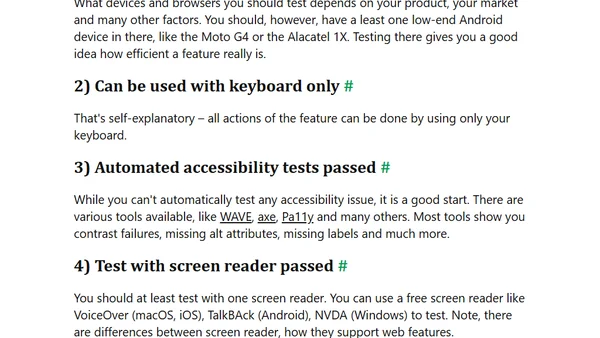
Essential frontend testing criteria for a feature's Definition of Done, covering devices, accessibility, and JavaScript resilience.
A front-end developer argues for embracing the challenge of unknown browser and device combinations through progressive enhancement.
A web developer discusses using Web Components with progressive enhancement for cross-browser support, including IE.
Explores how to use the Save-Data header to optimize web performance without degrading user experience, with practical examples.
Explains the differences between JAMStack and serverless web apps, focusing on their core architectural principles.
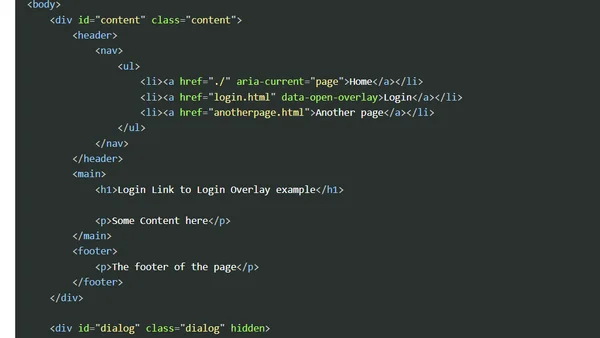
Explains how and why to enhance HTML links into interactive buttons using JavaScript, with a practical login dialog example.
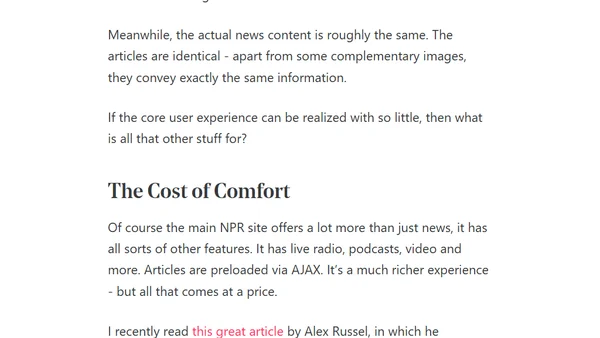
Analyzes the benefits of text-only news websites during emergencies, highlighting their speed, reliability, and user-friendliness.
Explains Chrome's NOSCRIPT intervention, which disables JavaScript on slow networks, and details how to test its behavior.
Explores semantic HTML markup approaches for FAQ sections and accordions, focusing on accessibility and progressive enhancement without JavaScript.
A developer explains the decision to avoid CSS Custom Properties for a paid theme feature to maximize browser compatibility, discussing progressive enhancement trade-offs.
Explores using the Network Information API to create web components that adapt to a user's connection speed and type.
The author details converting their personal website into a Progressive Web App using Service Workers for offline viewing and a native app-like experience.