Bonus Thought Regarding the Name ‘iPhone Ultra’
Analysis of potential names for Apple's foldable iPhone, discussing 'iPhone Ultra' and 'iPhone Duo' as alternatives to 'iPhone Fold'.
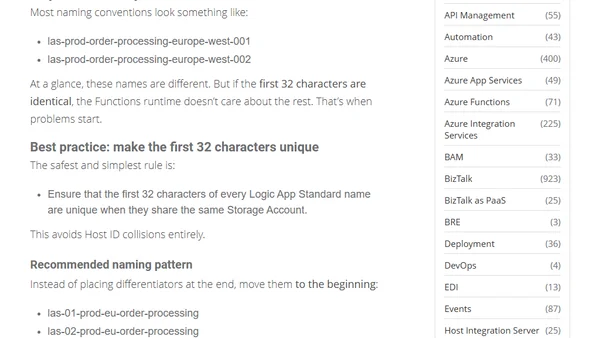
Explains a critical 32-character naming limit in Azure Logic Apps Standard that can cause deployment and runtime errors due to Host ID collisions.
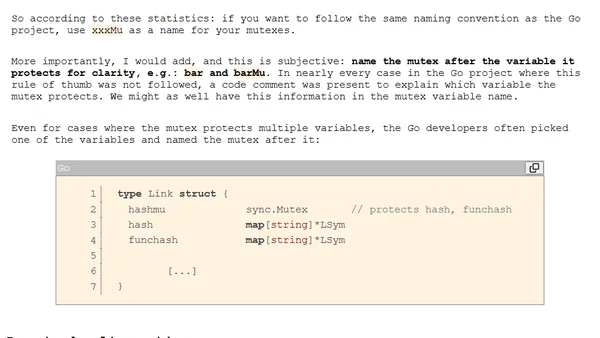
Explores naming conventions for mutexes in Go codebases and introduces structural search tools like ast-grep to analyze patterns.
A guide to using the Azure Naming Terraform module for generating consistent and unique resource names in Azure infrastructure deployments.
Argues for naming code components with noun-adjective order (e.g., StreamCreated) instead of adjective-noun for better alphabetical grouping and searchability.
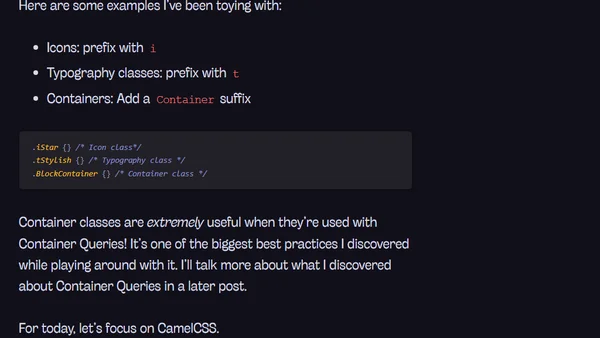
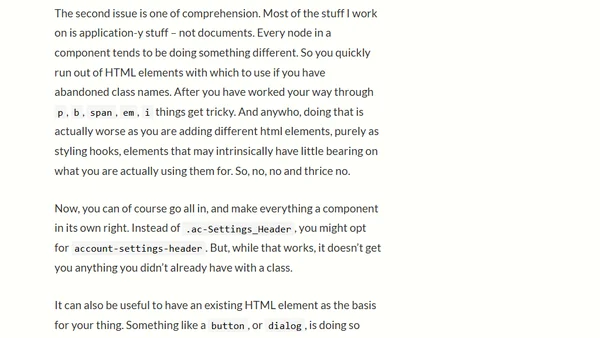
The author argues that using camel-cased CSS class names is superior to traditional kebab-cased BEM syntax for modern, modular CSS development.
Argues that CSS class-naming conventions like BEM or ECSS remain a pragmatic choice for scalable CSS architecture, even with modern features like Cascade Layers.
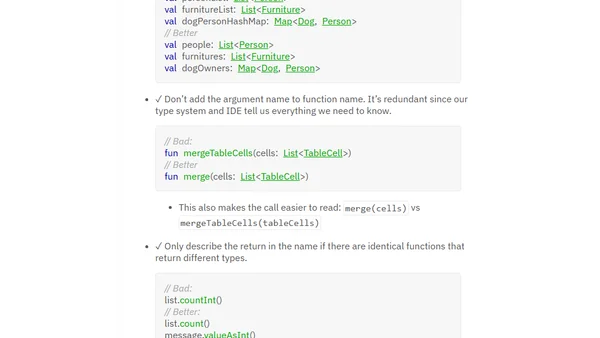
A developer's perspective on the importance of naming in programming, offering personal rules for creating readable and maintainable code.
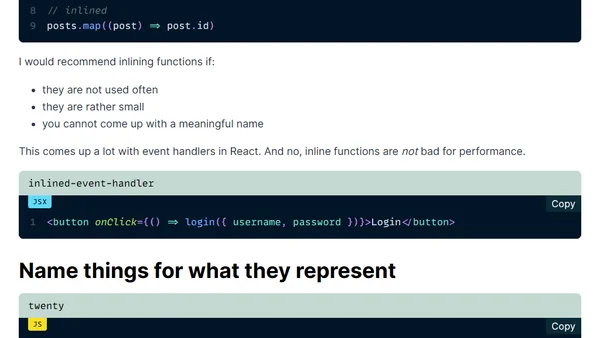
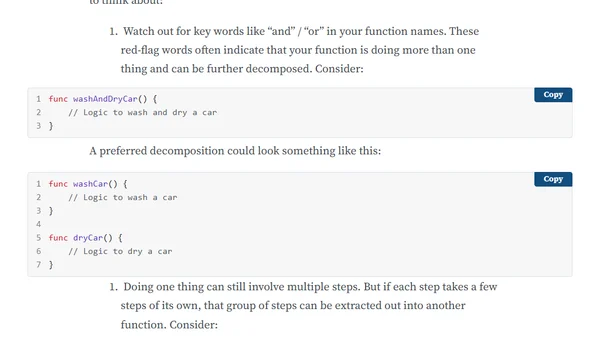
A guide to effective naming in code, covering principles for clarity, precision, and consistency to improve software design and maintainability.
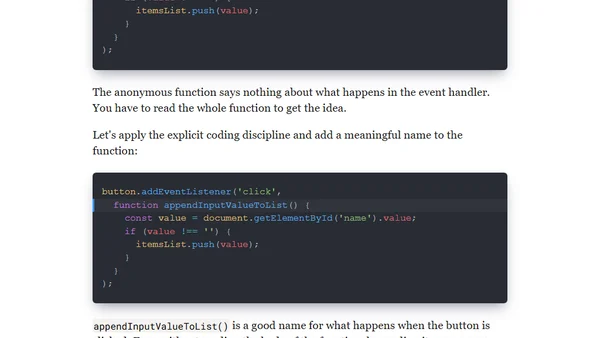
Advocates for explicit coding discipline, focusing on clear naming and communication to improve code readability and prevent misunderstandings.
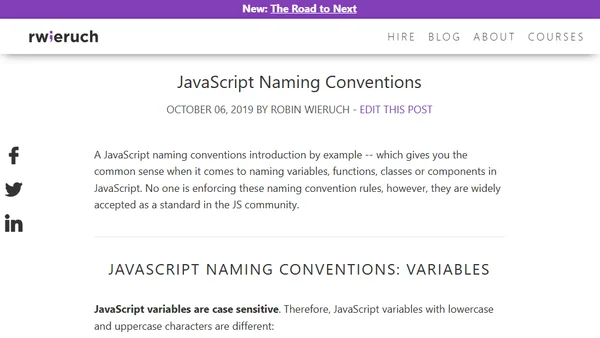
A guide to common JavaScript naming conventions for variables, functions, classes, and booleans, following widely accepted standards.
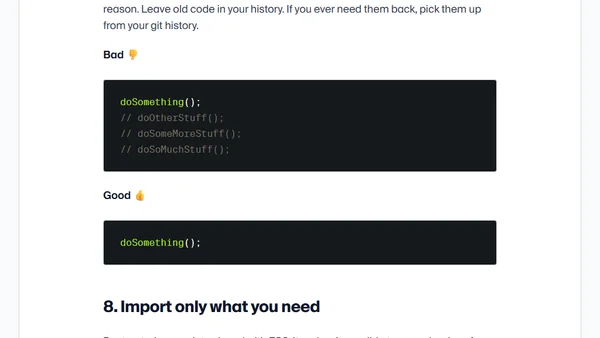
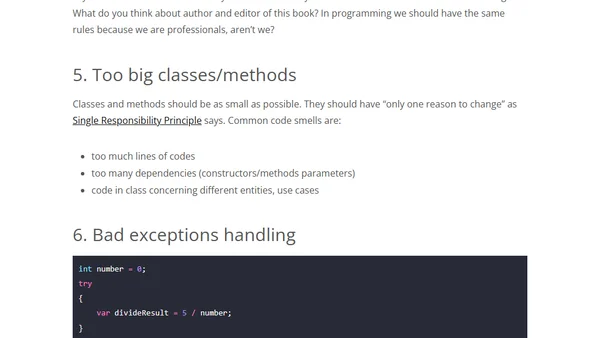
A developer shares 10 frequently violated clean code principles, covering naming, comments, duplication, and formatting.
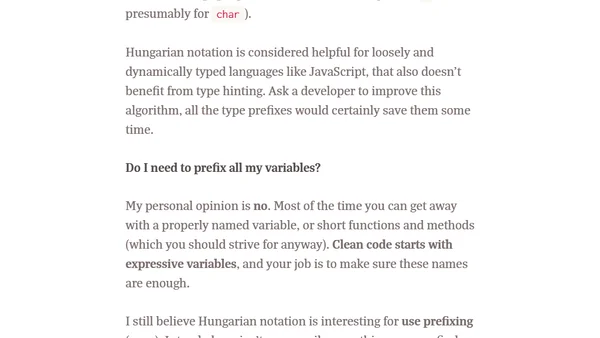
Explains Hungarian notation, a naming convention using prefixes to improve code readability and maintainability in JavaScript and CSS.
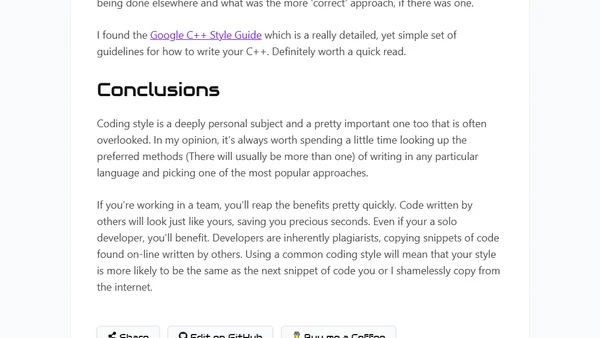
Discusses the importance of naming conventions and coding style for readability and productivity, with examples from SQL and C++.
Discusses naming conventions for IObservable<T> properties in Reactive Extensions (Rx), proposing the 'When' prefix to differentiate from C# events.