An Introduction to Observables in RxJS and Angular
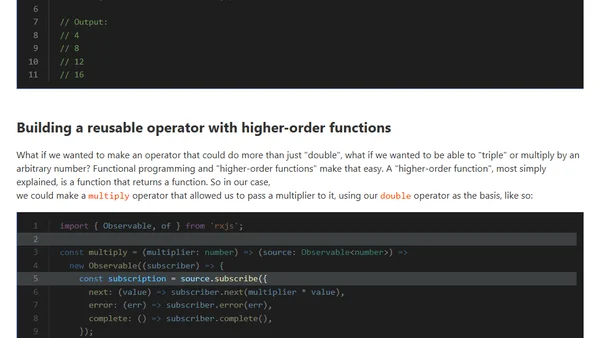
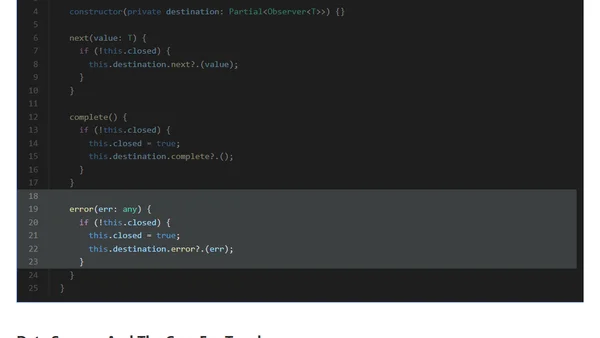
A tutorial explaining the basics of RxJS Observables and how to use them for handling asynchronous events in Angular applications.
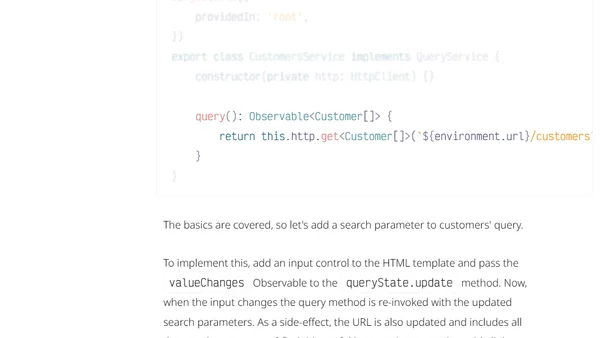
Introducing ngx-query-state, an Angular library to simplify HTTP data fetching and state management, inspired by tools like React Query.
Explains the key differences between Subject and BehaviorSubject in Angular, focusing on subscription behavior and initial value handling.
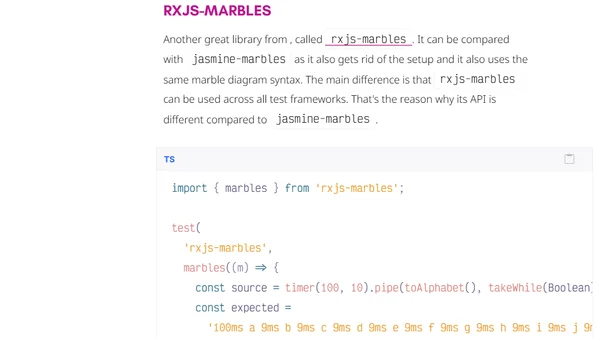
Explores using rxjs-for-await for testing RxJS streams, comparing it to traditional marble diagram testing for simplicity.
Explains a common RxJS Observable initialization pitfall with WebSocket streams and provides solutions using higher-order observables.
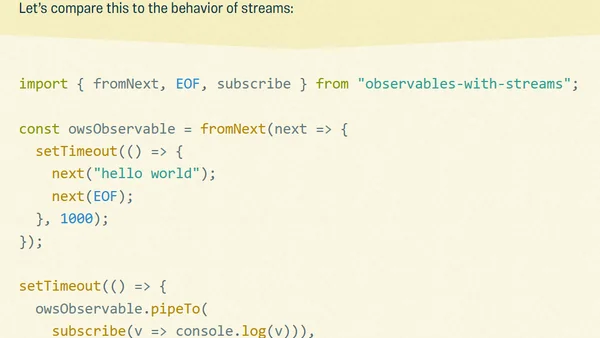
Explores using WHATWG Streams for reactive programming, comparing them to RxJS observables and discussing their suitability for web development.
A developer shares lessons from building an interactive MIDI controller app with Angular, covering device connection and signal capture using the Web MIDI API and Observables.
Explains how to manage related data models in Angular 2 with ngrx using Observable.combineLatest for computed state.
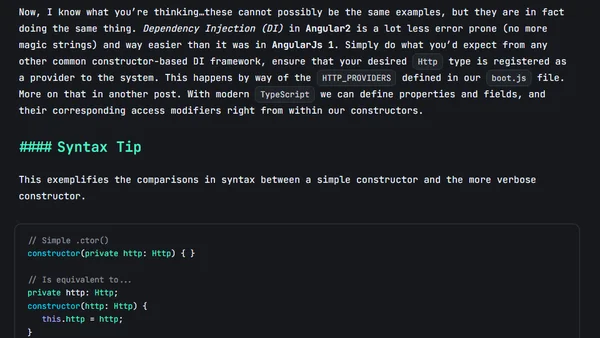
Explains how Angular2's HTTP service uses RxJS Observables, contrasting it with AngularJS 1's promise-based approach.
An in-depth look at implementing the Store and handling network communication in the Flux architecture, using Observables and design patterns.
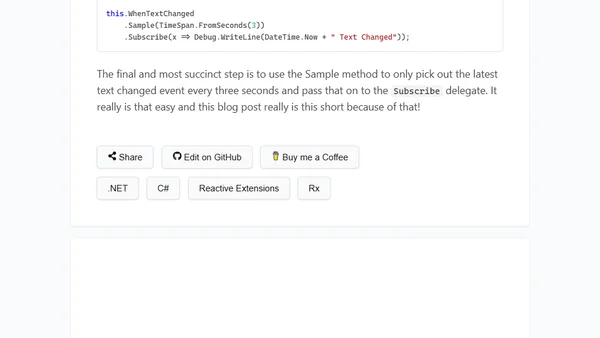
Explains how to use Reactive Extensions (Rx) to sample high-frequency C# events like TextChanged in WPF, reducing UI updates.
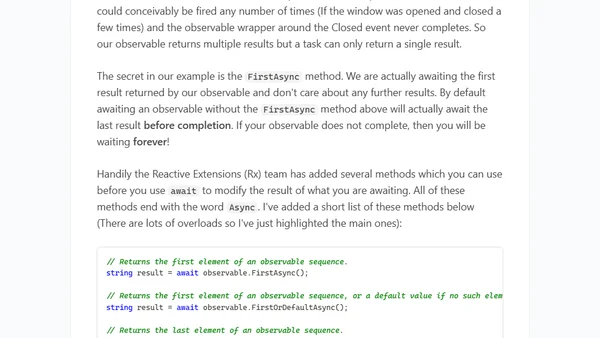
Explains how to use Reactive Extensions (Rx) to await Observables, converting event-based async patterns into simpler, awaitable tasks in C#.
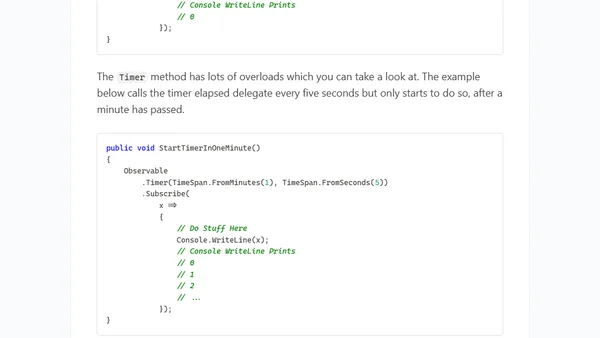
Explains how to replace traditional .NET timers with Reactive Extensions (Rx) for better control and simpler code in C#.
Discusses naming conventions for IObservable<T> properties in Reactive Extensions (Rx), proposing the 'When' prefix to differentiate from C# events.