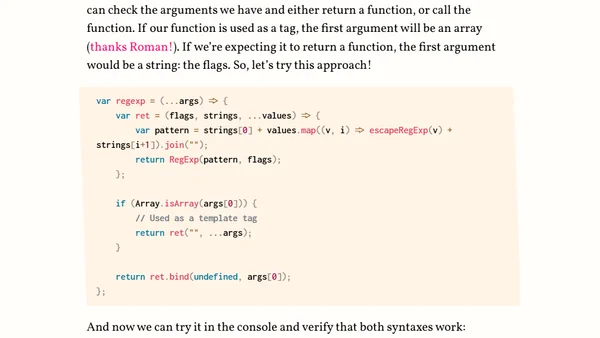
Easy Dynamic Regular Expressions with Tagged Template Literals and Proxies
A guide to creating dynamic regular expressions in JavaScript using tagged template literals and Proxies to simplify string escaping.
A guide to using ES6 default parameters in JavaScript functions to simplify code and handle required arguments.
A developer shares their process of refactoring a Vue.js application, focusing on improving component structure and using modern ES6 features.
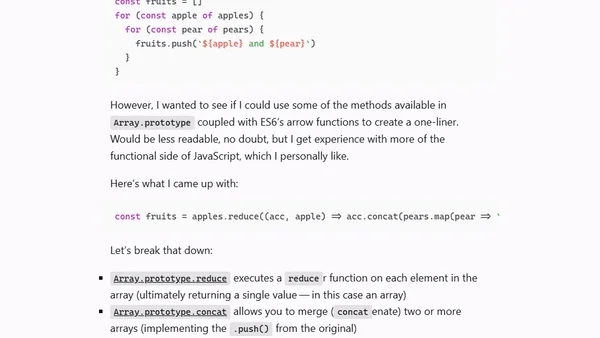
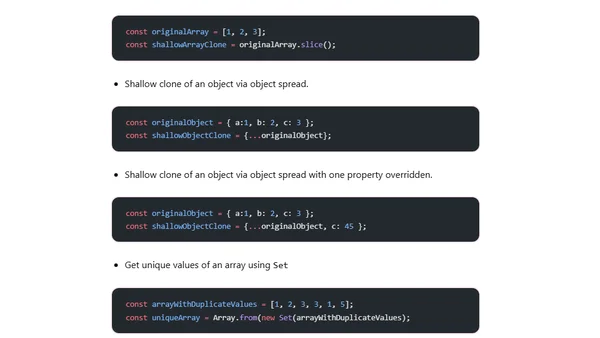
A collection of useful one or two-line JavaScript snippets for common tasks like cloning arrays/objects, getting unique values, and flattening arrays.
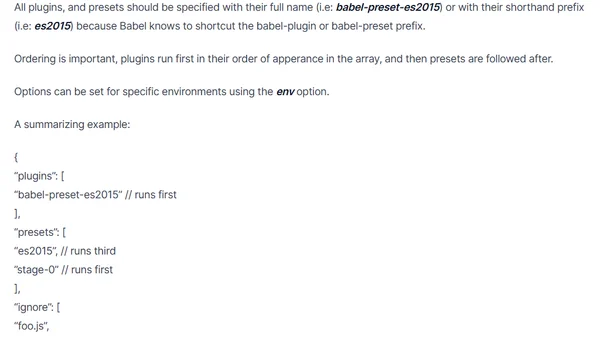
A technical guide exploring advanced Babel.js configuration, Stage-X presets for ES6 features, and source map debugging.
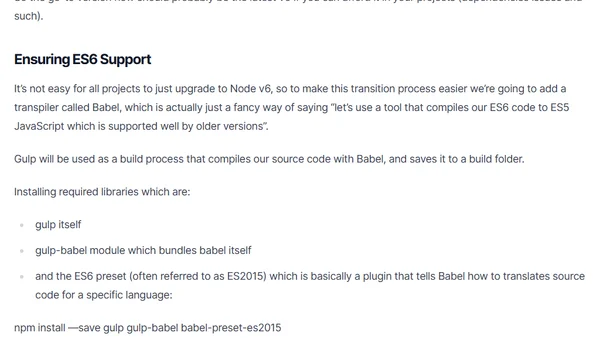
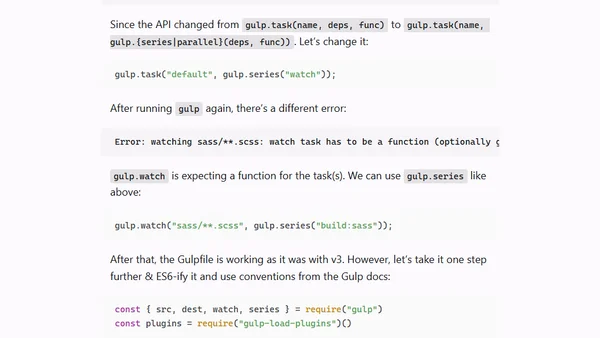
A guide to using ES6 features in Node.js projects, covering version support and setting up Babel with Gulp for transpilation.
An introduction to Brunch, a simple and convention-based JavaScript build tool for modern web development projects.
A guide to modernizing JavaScript code by replacing ES5 hacks and workarounds with cleaner, native ES2015+ alternatives.
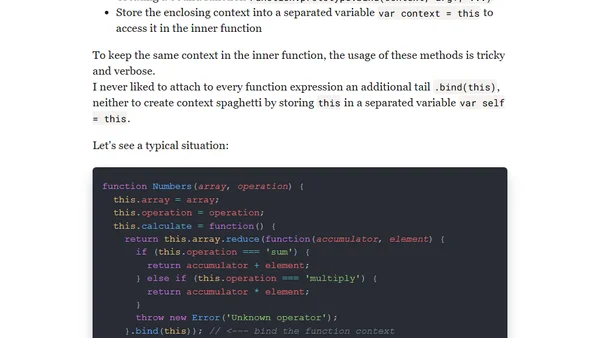
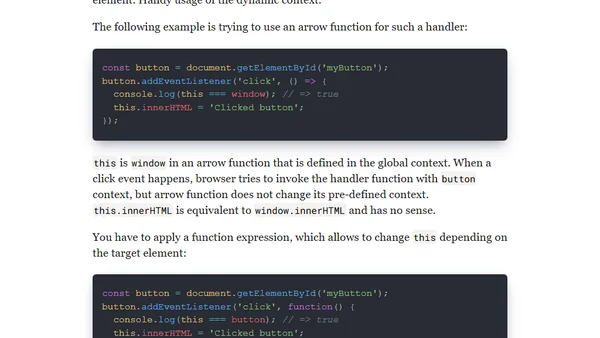
Explains scenarios where JavaScript arrow functions are problematic, such as in object methods and prototypes, due to their lexical 'this' binding.
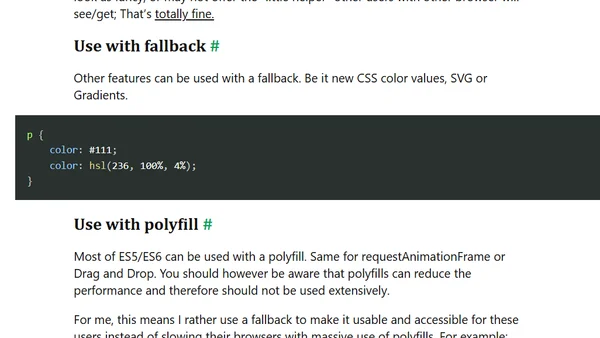
A web developer's perspective on handling browser support for new features, advocating for progressive enhancement and strategic use of polyfills.
A challenging JavaScript quiz focusing on ES6 features like classes, generators, and template strings to test developers' understanding.
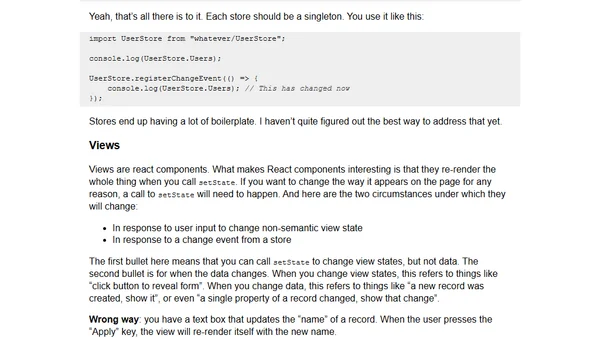
A practical guide to understanding and implementing the Flux architecture for React.js applications, focusing on unidirectional data flow.
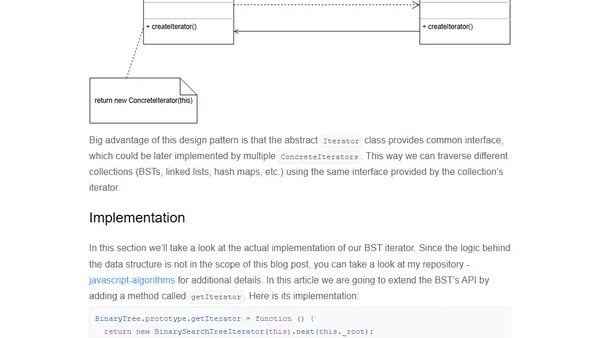
Learn how to implement a Binary Search Tree iterator using ES6 generators in JavaScript, covering generator syntax and the iterator pattern.
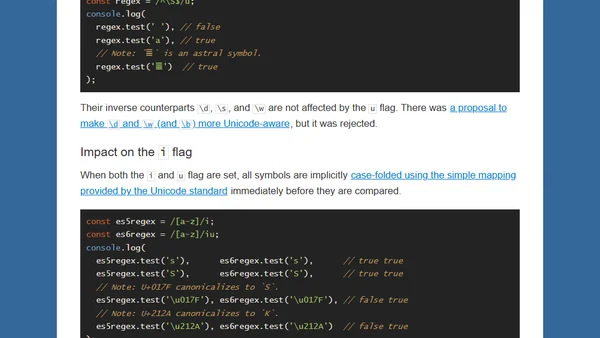
Explains the new Unicode 'u' flag in ES2015 JavaScript regex, covering syntax, dot operator, quantifiers, and character class behavior.
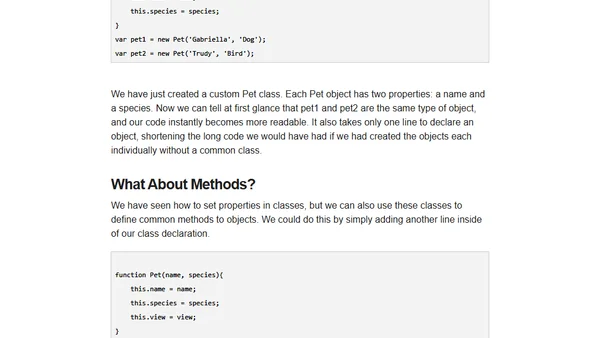
An introduction to using classes in JavaScript to create reusable, organized code for object-oriented programming.
Explains when to use ES6 Sets vs Arrays in JavaScript, focusing on performance, uniqueness, and use cases like error tracking and UI rendering.