Multitenancy Techniques for EF Core
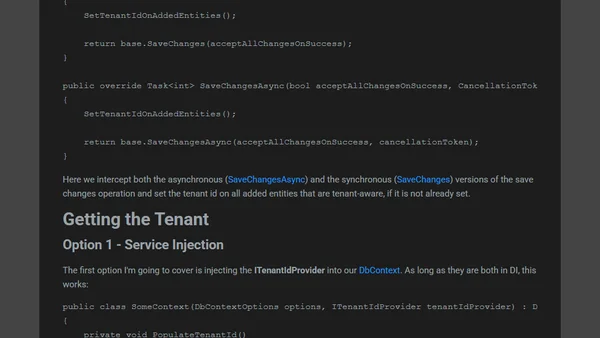
Explores three techniques for implementing multitenancy in EF Core applications, focusing on tenant isolation strategies and context configuration.
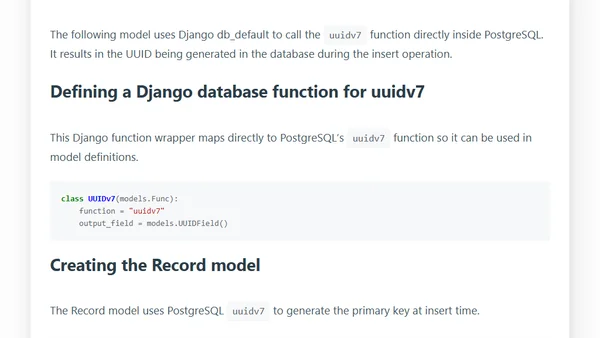
A guide to implementing UUIDv7 in Python, Django, and PostgreSQL for better database performance and ordered identifiers.
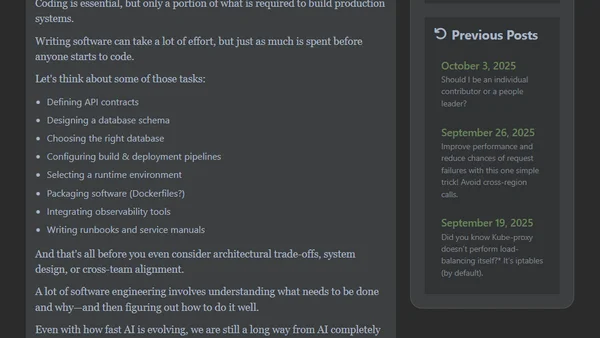
Explores why coding is just one component of software engineering, highlighting system design, architecture, and the role of AI tools.
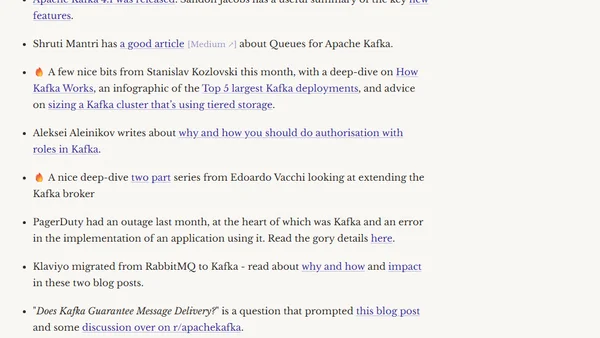
A monthly roundup of 78 curated links on data engineering, architecture, AI, and tech trends, with top picks highlighted.
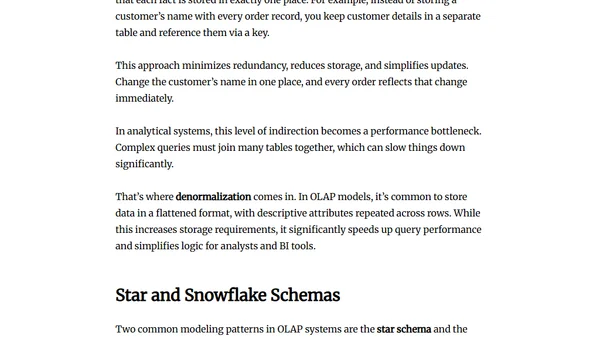
An introduction to data modeling concepts, covering OLTP vs OLAP systems, normalization, and common schema designs for data engineering.
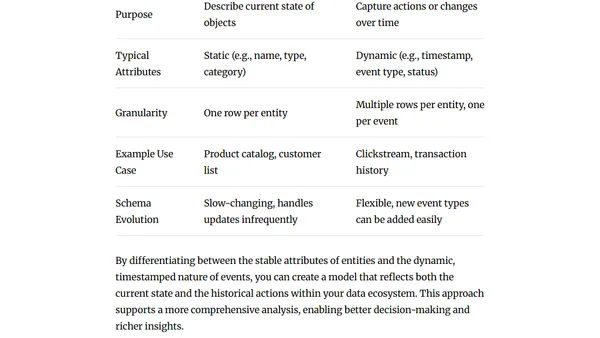
Explores the differences between event and entity data modeling, when to use each approach, and practical design considerations for structuring data effectively.
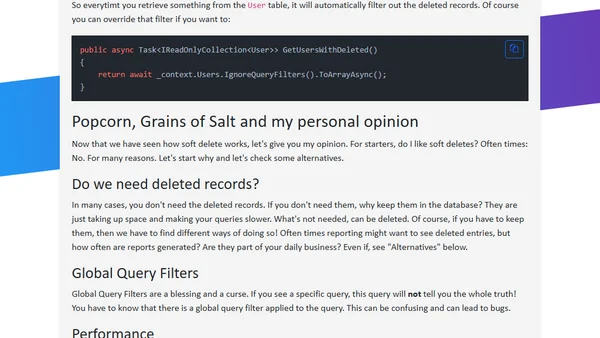
Discusses the pros and cons of soft deleting database records, including implementation, performance, and alternatives.
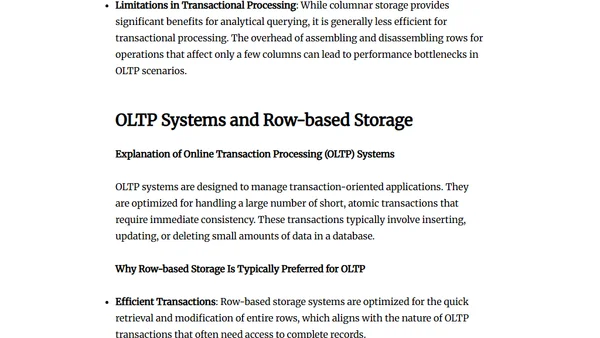
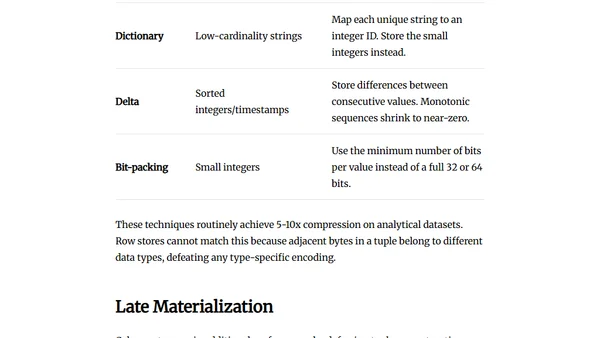
Compares columnar vs. row-based data structures, explaining their optimal use in OLAP and OLTP systems for performance and scalability.
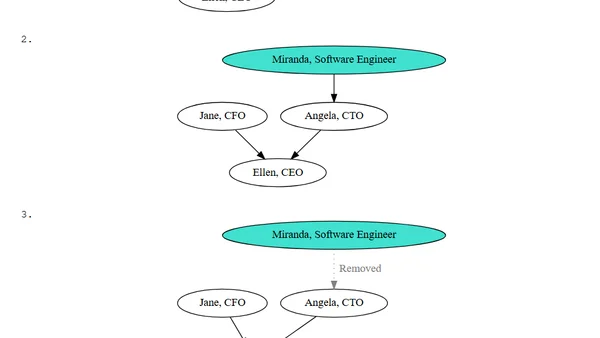
Explains how to use Kahn's algorithm for topological sorting to detect cycles in graphs, with a practical example of managing employee hierarchies.
Explains how TigerBeetle, a database written in Zig, operates using only static memory allocation for predictability and performance.
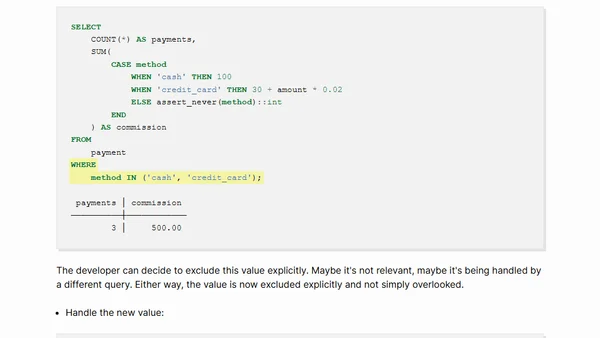
A technique for future-proofing SQL code by intentionally adding errors to catch unexpected changes in data or logic.
An introductory guide to database fundamentals, covering data design, relationships, and types of databases for application development.
A guide to the three most critical DynamoDB limits: item size, query/scan page size, and partition throughput, and how they impact data modeling.
Critique of the Active Record pattern, explaining its inefficiencies in data access and performance issues in applications and APIs.
Explains DynamoDB filter expressions, their limitations, and when to use them versus proper table design for efficient queries.
Explains how DynamoDB's design ensures scalable performance, contrasting it with the scaling challenges of relational databases.
A tutorial on using Mongoose's Population feature to link MongoDB collections, preventing document size limits by separating blog posts and comments.
Discusses common pitfalls and challenges when using non-relational databases, focusing on difficulties in changing primary keys and access patterns.
Argues that the PIE theorem (Pattern Flexibility, Efficiency, Infinite Scale) is more practical for database selection than the popular CAP theorem.
Examines four common data modeling patterns for DynamoDB in serverless applications, including simple use cases and complex relational approaches.