Progressive web apps – let’s not repeat the errors from the beginning of responsive web design
A developer reflects on lessons from early responsive web design to avoid similar pitfalls when implementing Progressive Web Apps (PWAs).
Argues that web accessibility benefits all users, not just those with disabilities, and improves business outcomes by reaching a wider audience.
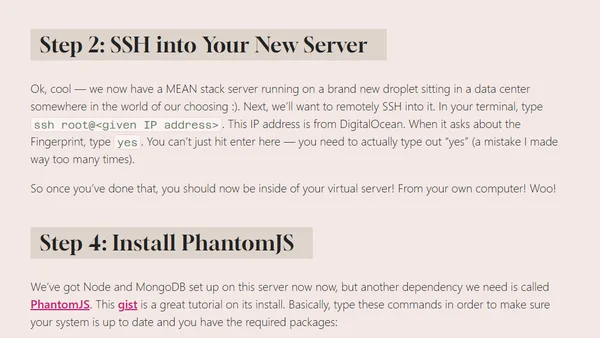
A tutorial on setting up a self-hosted web accessibility testing dashboard using the open-source Pa11y tool on a DigitalOcean server.
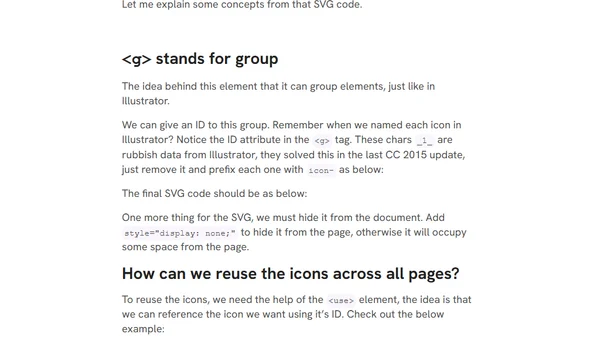
A developer explains why they switched from icon fonts to SVG for web icons, citing performance, accessibility, and maintainability benefits.
A developer argues against forcing external links to open in new tabs, advocating for user control and confidence in website content.
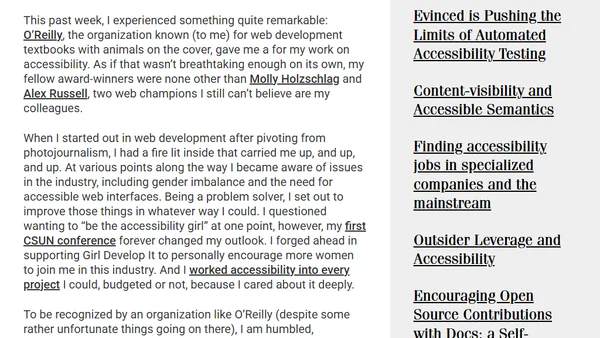
A web developer reflects on winning an O'Reilly Web Platform Award for her work in accessibility and encouraging women in tech.
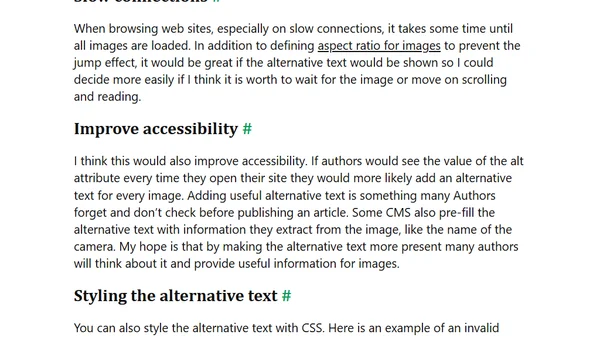
Advocates for browsers to display image alt text during loading to improve UX on slow connections and accessibility.
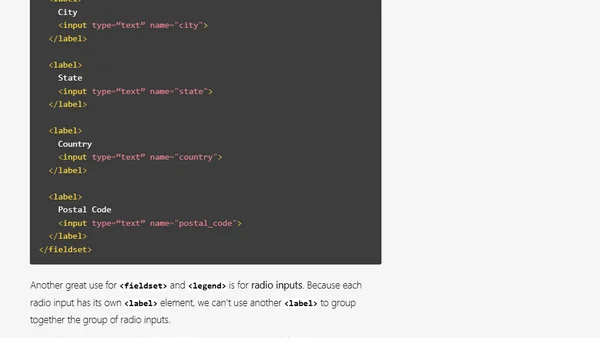
A guide to correctly labeling HTML form elements using name, id, label, fieldset, and legend for accessibility and functionality.
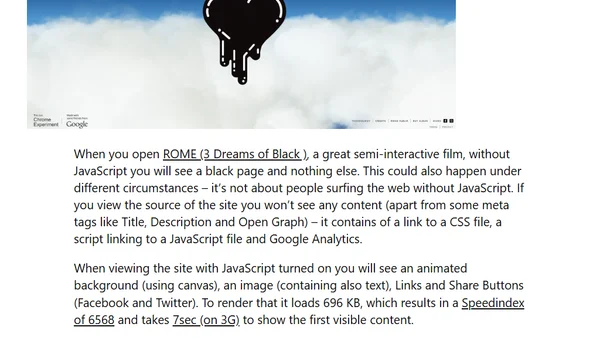
Argues that all websites must begin with server-side rendered HTML for universal accessibility, even if they later use advanced JavaScript features.
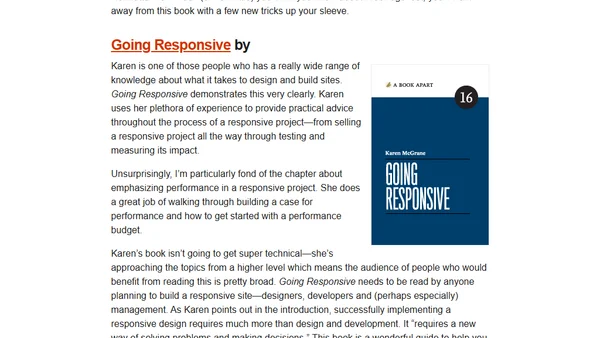
A web developer recommends and reviews two industry books: 'Adaptive Web Design, 2nd Edition' on progressive enhancement and 'Using WebPageTest' for performance analysis.
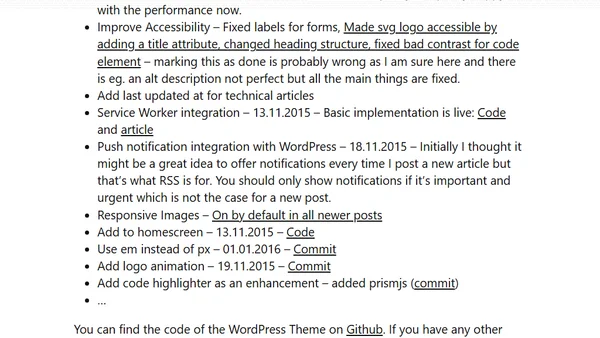
A developer documents the open redesign of their personal website, focusing on performance, accessibility, and modern web features.
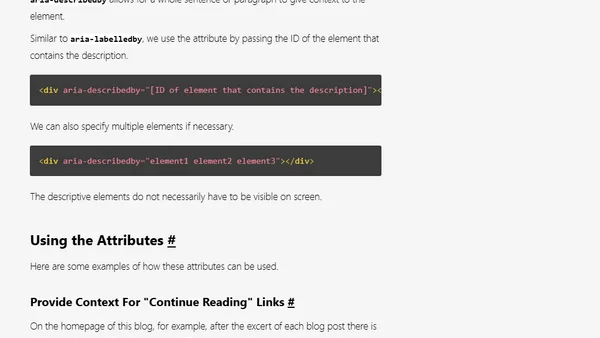
Explains how to use ARIA attributes (aria-labelledby, aria-label, aria-describedby) to properly label HTML elements for screen readers and improve web accessibility.
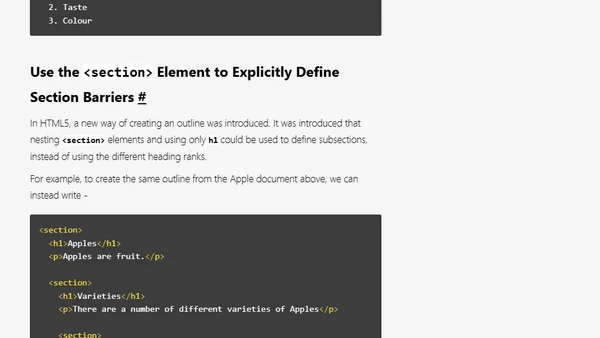
Explains how to use HTML heading elements (h1-h6) and the <section> tag to create a proper document outline for accessibility and structure.
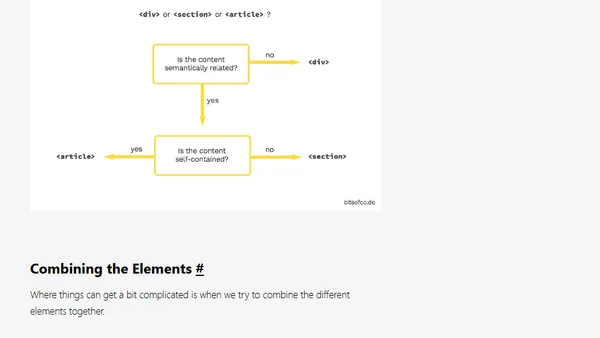
Explains the semantic differences between HTML5's <div>, <section>, and <article> elements and provides guidelines for when to use each.
A web accessibility expert seeks input from screen reader users to understand their real-world navigation strategies and challenges.
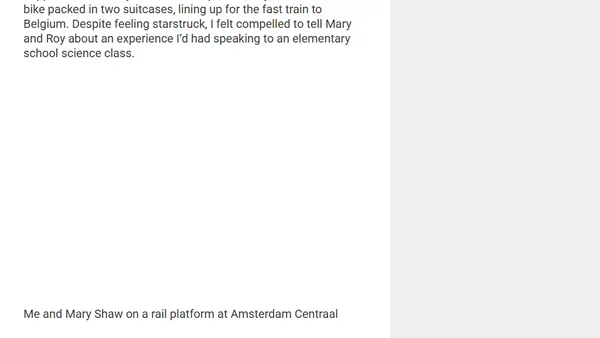
A software engineer reflects on legacy, inspiration, and meeting a pioneering software architecture researcher at a tech conference.
A developer argues for learning HTML, CSS, and JavaScript fundamentals before jumping into frameworks like React or Angular.
A case study on embedding, art-directing, and providing accessible fallback for an SVG infographic using the HTML object element.
A guide to building a multi-level dropdown navigation menu that is fully accessible across mouse, touch, keyboard, and screen sizes, with JavaScript fallback.
A web developer explains progressive enhancement as a use-case oriented approach, using video implementation as a practical example.