Drew DeVault
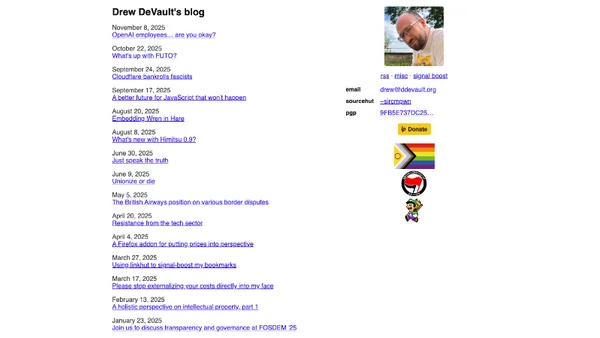
Drew DeVault’s blog features sharp commentary on open source, software engineering, programming languages, ethics in tech, and the social impact of technology.
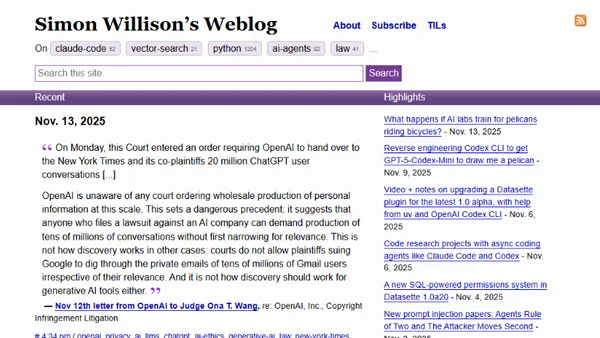
Simon Willison — Independent developer and writer documenting practical experiments, tools, and deep analysis around large language models, generative AI, web development, security, and emerging programming workflows through detailed posts and daily TILs.
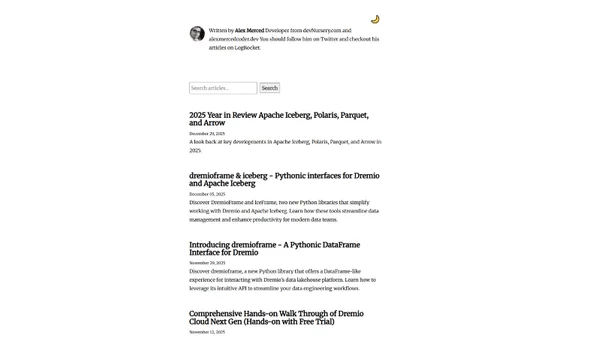
Alex Merced — Developer and technical writer sharing in-depth insights on data engineering, Apache Iceberg, data lakehouse architectures, Python tooling, and modern analytics platforms, with a strong focus on practical, hands-on learning.
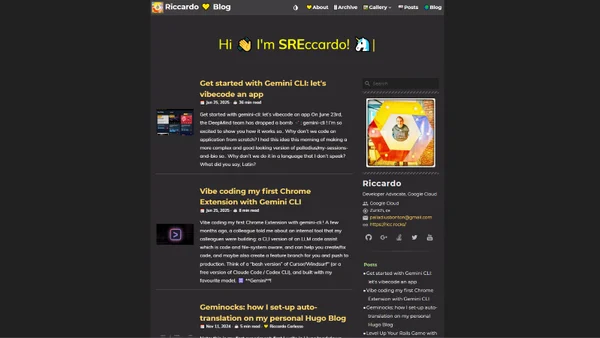
Riccardo Carlesso — Cloud engineer and technical writer exploring AI-powered development, Gemini CLI, Google Cloud, and modern tooling through hands-on experiments, vibe coding, and practical tutorials across web, cloud, and automation.
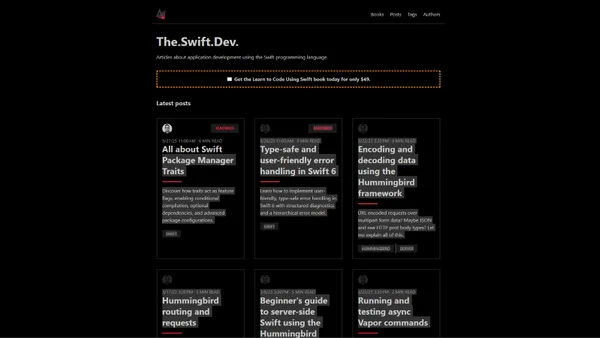
Tibor Bödecs — Swift developer and technical writer sharing in-depth articles on Swift, Swift 6, server-side Swift, and frameworks like Hummingbird and Vapor, with a focus on clean architecture, type safety, and modern language features.
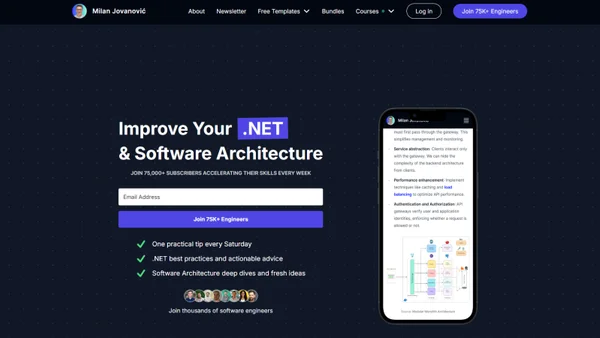
Milan Jovanović — Software Architect and Microsoft MVP for Developer Technologies, helping engineers master .NET and software architecture through practical guidance, newsletters, and videos based on real-world enterprise experience.
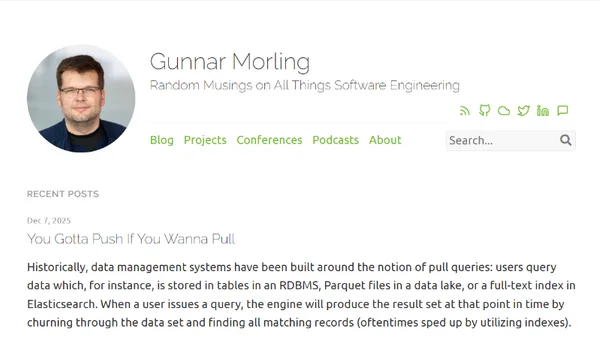
Morling.dev is the personal blog of Michael Morling, a software engineer and architect with deep expertise in Java, Spring, JVM internals, architecture, performance, and developer tooling. His writing focuses on practical and detailed explanations of topics such as Spring framework internals, microservices design, JVM garbage collection, performance tuning, clean architecture, Gradle builds, and language features that matter in real projects. Michael often breaks down subtle behaviors of the JVM and Spring ecosystem, helping developers understand why things work the way they do and how to improve reliability and efficiency in production systems.
SimonWillison.net is the long-running blog of Simon Willison, a software engineer, open-source creator, and co-author of the original Django framework. He writes about Python, Django, Datasette, AI tooling, prompt engineering, search, databases, APIs, data journalism, and practical software architecture. The blog includes detailed notes from experiments, conference talks, and real projects. Readers will find clear explanations of topics such as LLM workflows, SQL patterns, data publishing, scraping, deployment, caching, and modern developer tooling. Simon also publishes frequent micro-posts and TIL entries that document small discoveries and tricks from day-to-day engineering work. The tone is practical and research oriented, making the site a valuable resource for anyone interested in serious engineering and open data.
Matt Segal is a software engineer and tech lead who writes about software design, Python development, system architecture, and the craft of engineering teams. His blog focuses on practical approaches to building reliable, maintainable software - from dependency management and code reviews to continuous delivery and scalable system design.
mattstauffer.com is the personal blog of Matt Stauffer, a web developer, author, and educator specializing in Laravel, PHP, and full-stack web development. Matt shares tutorials, insights, and resources on modern web development, covering topics like backend development, JavaScript, and Laravel best practices. He is also the author of Laravel: Up & Running and a host of the Laravel Podcast. Through his blog, Matt provides practical advice for developers, project management tips, and insights into maintaining a productive development workflow. His content is designed to help developers of all levels improve their skills and stay updated with the latest trends in the web development industry.
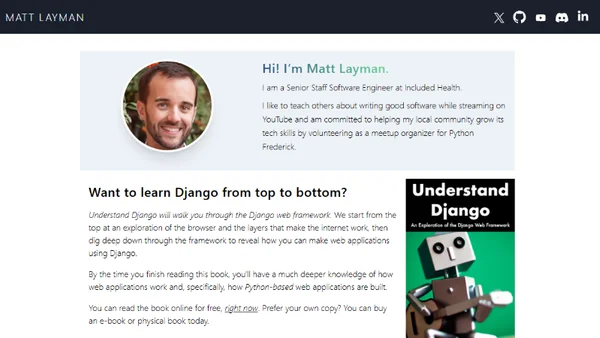
mattlayman.com is a blog by Matt Layman, a software engineer who focuses on building complex web applications, primarily using Django. He shares his expertise through regular live streams on YouTube, where he teaches others how to build advanced SaaS projects. Matt is also deeply involved in the tech community in Frederick, Maryland, where he founded Python Frederick and has helped organize local tech events. Currently, Matt is a Senior Staff Software Engineer at Included Health, working to enhance the patient experience through technology. His blog offers insights into web development, community involvement, and his career journey.
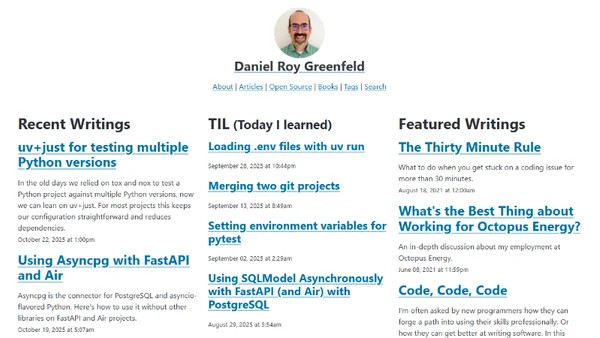
Daniel Feldroy’s blog, daniel.feldroy.com, is a personal site by coder, author, and speaker Daniel Feldroy, known in the tech community as "pydanny" and co-author of Two Scoops of Django. Based in London, Daniel shares insights about his life, including his work at Kraken Tech, a part of the Octopus Energy Group focused on tackling climate change. The blog, built using the FastHTML framework, covers various topics beyond Python, reflecting Daniel's broader interests in coding, writing, and Brazilian Jiu-Jitsu. His former site, pydanny.com, now redirects here to reflect his evolving focus beyond just Python.
RobinWieruch.de is the personal site and blog of Robin Wieruch, a software engineer and educator known for clear, practical tutorials on React, TypeScript, Next.js, GraphQL, Node.js, and testing. The articles focus on real projects and common problems such as state management, authentication, data fetching, pagination, performance, and testing strategies. Robin is the author of The Road to React and other hands-on guides. He publishes step by step walkthroughs that pair code with explanations, so readers learn the concepts and the reasoning behind them.
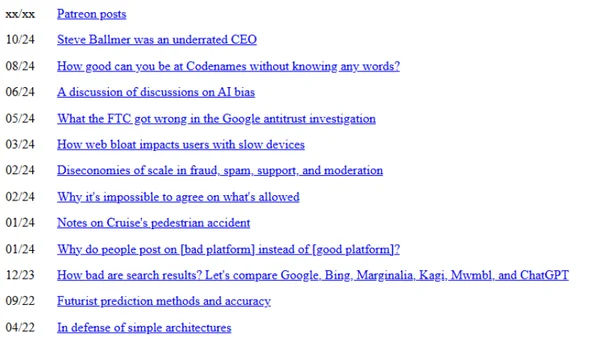
DanLuu.com is the personal blog of Dan Luu, known for long-form essays that mix systems thinking with careful measurement and clear writing. The topics range from computer latency and input lag, testing versus informal reasoning, and concurrency bugs, to industry pieces on developer compensation and curated lists of programming blogs worth reading. Many posts include data, historical context, and reproducible reasoning, which is why the site is often cited in courses and shared across the developer community. The design is intentionally minimal, which puts all attention on the ideas.