Andrew Lock
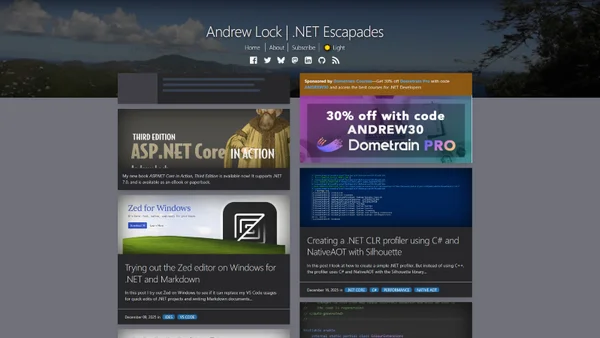
Andrew Lock — Full-stack ASP.NET developer and creator of .NET Escapades, sharing in-depth tutorials and practical insights on ASP.NET Core, C#, and modern .NET development, backed by a PhD and author of ASP.NET Core in Action.
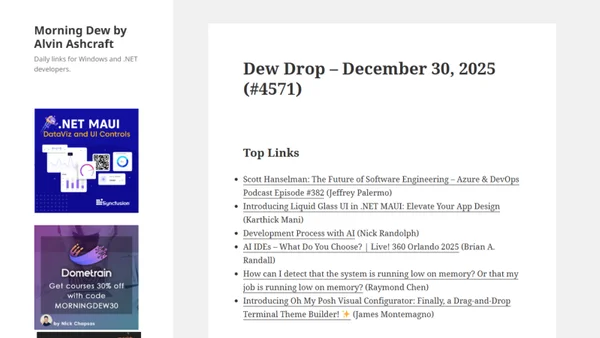
Alvin Ashcraft — Creator of Morning Dew, a daily curated link roundup for Windows and .NET developers, and a Microsoft technical writer with 29+ years of experience sharing high-quality resources on .NET, Azure, web, and modern software development.
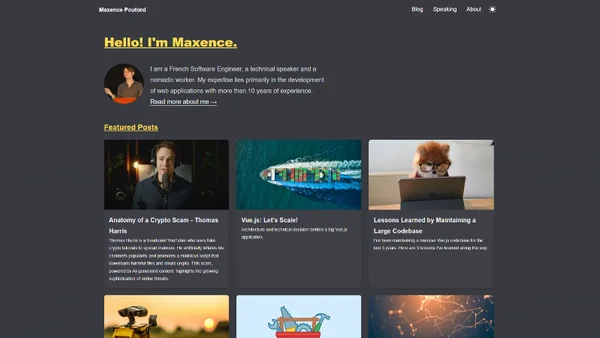
Maxence Poutord est un développeur logiciel spécialisé dans l'architecture Vue.js, les workflows Git et le développement web moderne. Découvrez des insights issus de 3 ans de maintenance d'une énorme base de code Vue.js incluant 9 leçons essentielles, décisions d'architecture pour faire évoluer de grandes applications et tests d'intégration avec Testing Library. Explorez des tutoriels Git complets incluant des cheat sheets avancées, la compréhension des mécanismes internes de git commit et l'optimisation de gitconfig personnalisé. Apprenez la migration de Gatsby.js vers Astro, l'intégration de commentaires Giscus dans les blogs Astro et 10 ans d'expérience en blogging. Suivez pour la sensibilisation à la cybersécurité sur les arnaques crypto, des projets open-source incluant docker-symfony et l'assistant IA YoutubeMate, et des insights pratiques de développement web. Accédez aux projets phares et 62+ articles de blog sur JavaScript, les tests et l'architecture logicielle.
Morling.dev is the personal blog of Michael Morling, a software engineer and architect with deep expertise in Java, Spring, JVM internals, architecture, performance, and developer tooling. His writing focuses on practical and detailed explanations of topics such as Spring framework internals, microservices design, JVM garbage collection, performance tuning, clean architecture, Gradle builds, and language features that matter in real projects. Michael often breaks down subtle behaviors of the JVM and Spring ecosystem, helping developers understand why things work the way they do and how to improve reliability and efficiency in production systems.
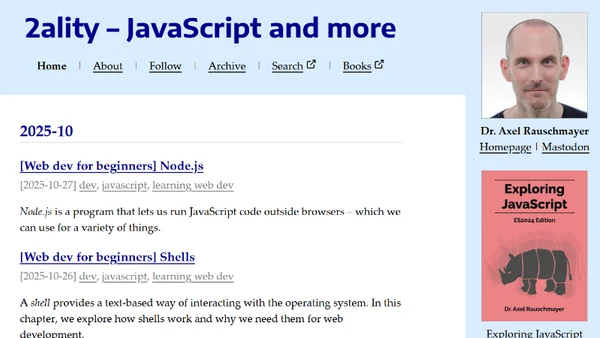
2ality.com is the long-standing blog of Dr. Axel Rauschmayer, devoted to JavaScript, TypeScript and modern web development. The blog was launched in March 2005 and remains one of the deepest and most respected resources for ECMAScript, language fundamentals and evolving JS features. Axel writes detailed, clear, and specification-aware analyses of JavaScript behavior, type system tricks in TypeScript, best practices, and the internal mechanics of web technologies. The content ranges from diving into conditional types, tuple types, ESM-based package publishing, to tutorials on Node.js and shell scripting.
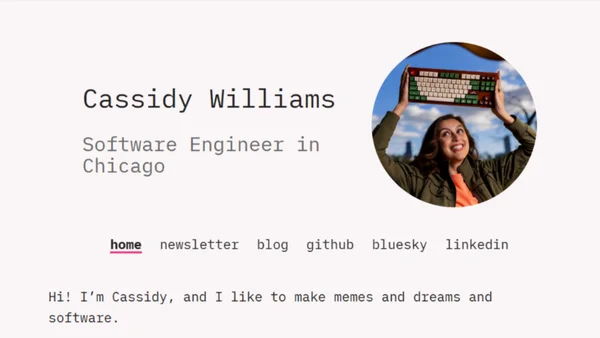
Cassidoo.co is the personal blog of Cassidy Williams, a well known developer, speaker, and educator who writes about JavaScript, React, career growth, web development, dev tools, and learning in public. Her posts mix technical insights with approachable explanations, covering topics like UI patterns, coding tips, productivity workflows, and the human side of software engineering. Cassidy is known for her weekly newsletter, open-source work, and community involvement.
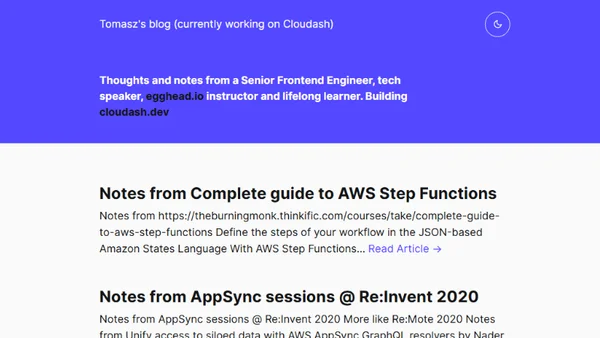
Tlakomy.com is the personal blog of Tomasz Łakomy, a Senior Frontend Engineer, tech speaker, and egghead.io instructor who is currently working on Cloudash, a serverless monitoring tool. On his blog he shares notes and deep dives about AWS, serverless architectures, AWS CDK, Lambda, DynamoDB, AppSync, GraphQL, TypeScript, and frontend development, always with a practical and friendly tone.
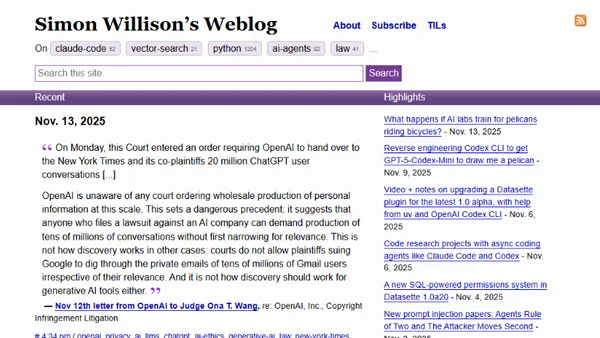
SimonWillison.net is the long-running blog of Simon Willison, a software engineer, open-source creator, and co-author of the original Django framework. He writes about Python, Django, Datasette, AI tooling, prompt engineering, search, databases, APIs, data journalism, and practical software architecture. The blog includes detailed notes from experiments, conference talks, and real projects. Readers will find clear explanations of topics such as LLM workflows, SQL patterns, data publishing, scraping, deployment, caching, and modern developer tooling. Simon also publishes frequent micro-posts and TIL entries that document small discoveries and tricks from day-to-day engineering work. The tone is practical and research oriented, making the site a valuable resource for anyone interested in serious engineering and open data.
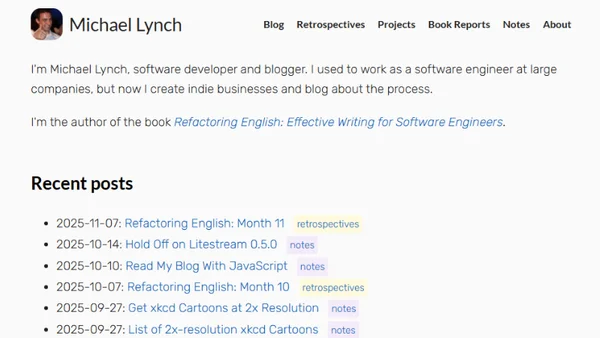
Michael Lynch – Developer, Indie Founder and Technical Writer Michael Lynch shares honest and detailed stories from his journey as a software engineer and indie founder. His blog covers topics like building sustainable businesses, code reviews, software craftsmanship, and lessons learned from running and selling his own startup, TinyPilot. Each post reflects a mix of engineering precision and real-world experience, written with clarity and humor. Readers can find tutorials, retrospectives, and essays that go beyond code to explore motivation, productivity, and the human side of software development. This blog is a must-read for developers, indie hackers, and anyone who enjoys thoughtful writing about technology and entrepreneurship.
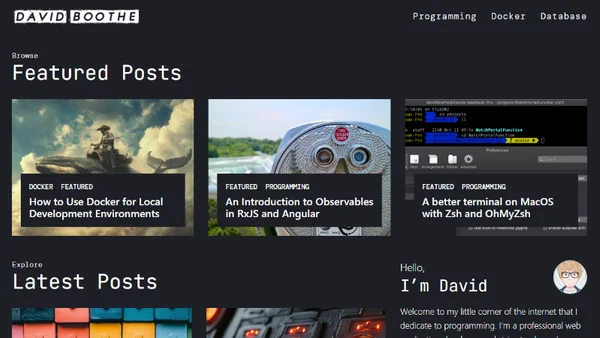
David Boothe, a seasoned web-app engineer, shares observations from his craft: code architecture, frontend/back-end integration, productivity hacks, and reflections from his real-world development work. His posts aren’t purely theoretical, they’re grounded in building real applications and improving with each iteration.
mattstauffer.com is the personal blog of Matt Stauffer, a web developer, author, and educator specializing in Laravel, PHP, and full-stack web development. Matt shares tutorials, insights, and resources on modern web development, covering topics like backend development, JavaScript, and Laravel best practices. He is also the author of Laravel: Up & Running and a host of the Laravel Podcast. Through his blog, Matt provides practical advice for developers, project management tips, and insights into maintaining a productive development workflow. His content is designed to help developers of all levels improve their skills and stay updated with the latest trends in the web development industry.
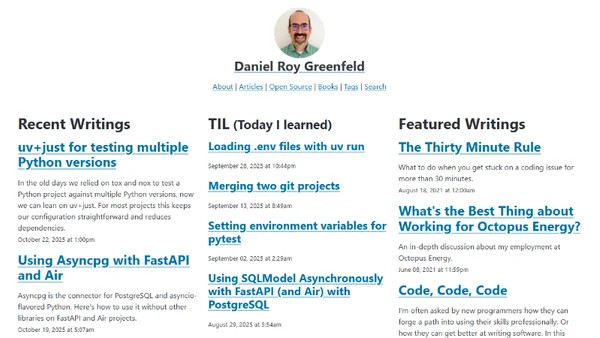
Daniel Feldroy’s blog, daniel.feldroy.com, is a personal site by coder, author, and speaker Daniel Feldroy, known in the tech community as "pydanny" and co-author of Two Scoops of Django. Based in London, Daniel shares insights about his life, including his work at Kraken Tech, a part of the Octopus Energy Group focused on tackling climate change. The blog, built using the FastHTML framework, covers various topics beyond Python, reflecting Daniel's broader interests in coding, writing, and Brazilian Jiu-Jitsu. His former site, pydanny.com, now redirects here to reflect his evolving focus beyond just Python.
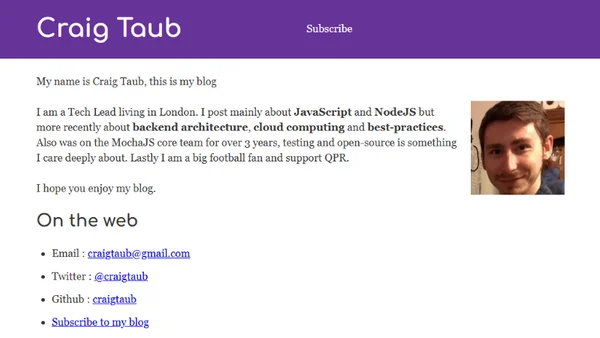
Craig Taub’s blog is where technology meets real-world experience. From JavaScript and Node.js to cloud computing and backend design, each post shares lessons learned, best practices, and honest thoughts from a Tech Lead who’s passionate about open source and testing.
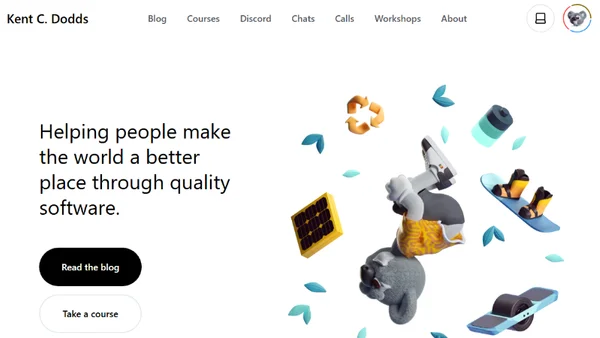
KentCDodds.com is the personal website and blog of Kent C. Dodds, a software engineer, educator, and open-source contributor known for his work in the React ecosystem. He writes about modern web development, testing, accessibility, performance, and developer experience, focusing on how to build reliable, maintainable, and scalable applications. Kent is the creator of popular libraries such as Testing Library and Remix, and his articles often highlight practical approaches to writing better React components, handling state, and improving user experience. Beyond tutorials, the site features courses, workshops, podcasts, and conference talks, all aimed at helping developers learn by doing. With his teaching-first philosophy and clear explanations, KentCDodds.com has become one of the most trusted learning resources in the React and JavaScript community.
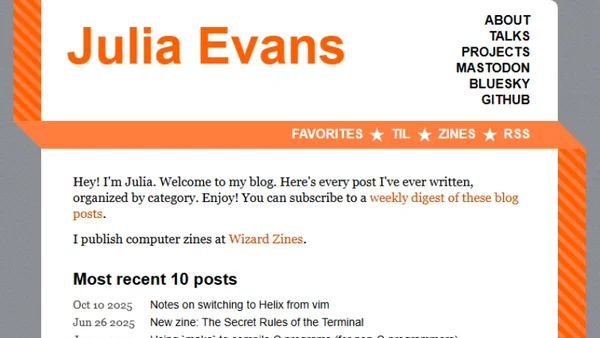
Jvns.ca is the personal blog of Julia Evans, a software engineer and writer known for making complex technical topics easy and fun to understand. Her posts cover Linux, networking, debugging, command-line tools, and systems programming, often using real-world examples and colorful visual explanations. Julia’s writing focuses on practical learning, showing how tools like strace, tcpdump, git, and Python actually work under the hood and helping developers gain confidence in understanding what their systems are doing. She is also the creator of the popular Zine series, which turns topics like debugging, shell commands, and performance profiling into engaging illustrated mini-books. With her clear and approachable teaching style, Jvns.ca has become one of the most beloved resources for developers who want to truly understand how computers work.
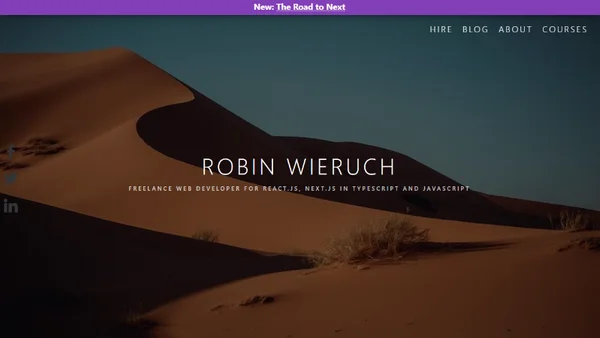
RobinWieruch.de is the personal site and blog of Robin Wieruch, a software engineer and educator known for clear, practical tutorials on React, TypeScript, Next.js, GraphQL, Node.js, and testing. The articles focus on real projects and common problems such as state management, authentication, data fetching, pagination, performance, and testing strategies. Robin is the author of The Road to React and other hands-on guides. He publishes step by step walkthroughs that pair code with explanations, so readers learn the concepts and the reasoning behind them.
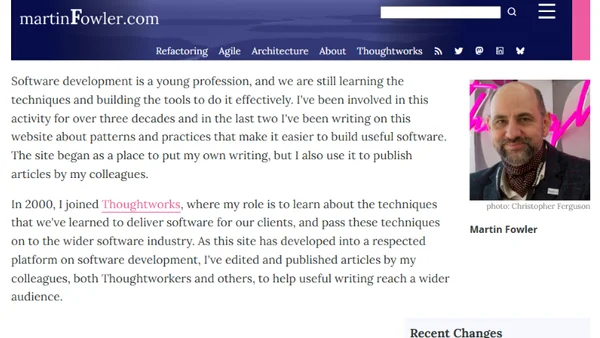
MartinFowler.com is the long-running technical blog of Martin Fowler, author, software architect, and Chief Scientist at ThoughtWorks. The site serves as a cornerstone for modern software engineering, featuring influential essays and guides on software architecture, refactoring, agile methodologies, design patterns, and continuous delivery. Martin’s writing combines deep technical expertise with a clear, educational tone, making complex ideas about domain-driven design, microservices, and testing strategies accessible to engineers of all levels. Classic works like Refactoring, Patterns of Enterprise Application Architecture, and Continuous Integration originated from concepts first explored on this blog. With over two decades of archives, MartinFowler.com remains one of the most authoritative and enduring resources in professional software development.