Why You Should Always Write Software as Open Source, Even When It's Never Going to Be
Argues for writing all software as if it will be open source, promoting modular design and long-term maintainability even for private projects.
A programmer discusses common bad habits like leaving unused code, over-generalization, and OOP fixation, offering advice for cleaner development.
A developer's instinct and experience are valuable tools for navigating complex coding challenges and unexpected hurdles in software development.
A critique of the Visual Studio Achievements beta, arguing its current rewards promote bad coding habits instead of good practices.
A programming tip on overcoming creative blocks by first writing functional but imperfect code, then refining it into an elegant solution.
Argues for better scientific computing tools, emphasizing readability, reproducibility, and open-source libraries as crucial for research.
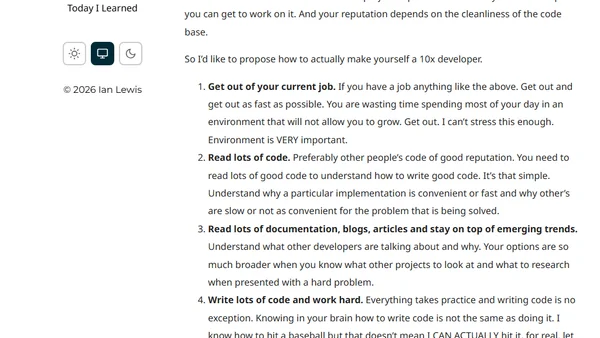
A satirical take on becoming a 'superstar' developer is contrasted with genuine advice for becoming a truly productive 10x programmer.
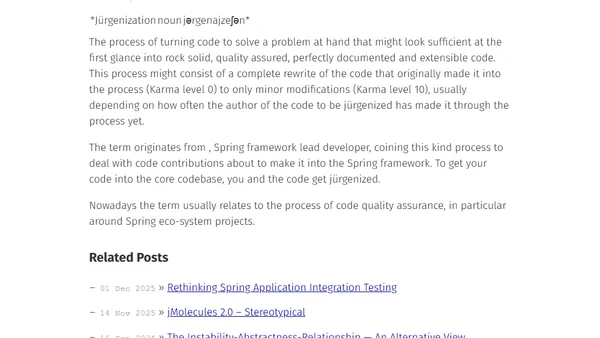
How the developers used Pylint to refactor and clean up the codebase for the Entertainer media center software.
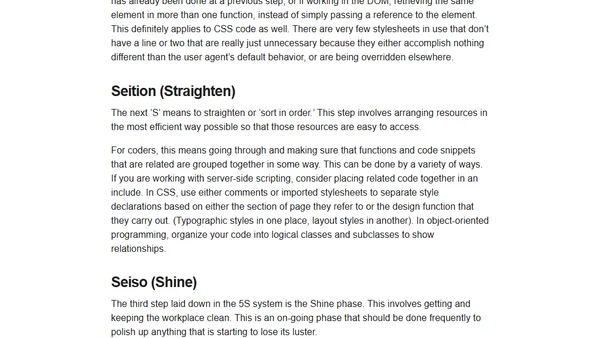
Applying the manufacturing 5S methodology (Sort, Straighten, Shine, Standardize, Sustain) to software development for cleaner, more maintainable code.
A blog post drawing parallels between John Wooden's coaching philosophy and the importance of attention to detail in programming and software design.
Tips for writing maintainable code with good commenting, descriptive naming, and consistency to help future developers.
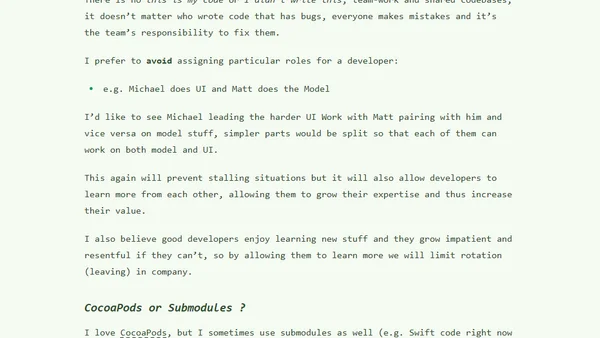
A response to programmer stereotypes, arguing that developers shouldn't be ashamed of imperfect code if they are committed to continuous learning and improvement.