Statistical Fatalism
Critique of causal inference in statistics, highlighting the flawed assumption that treatments have no impact on future outcomes, using cancer screening trials as an example.
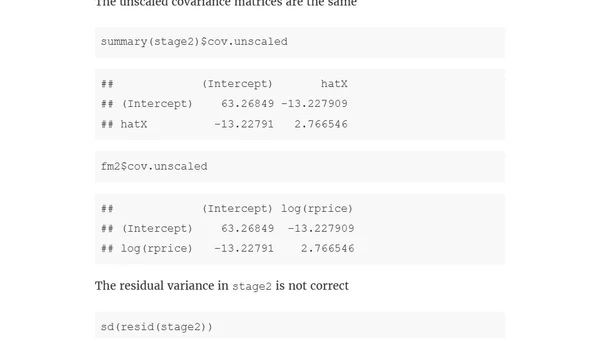
A technical explanation of the Two-Stage Least Squares (2SLS) method for causal inference in regression, covering its derivation and variance estimation.
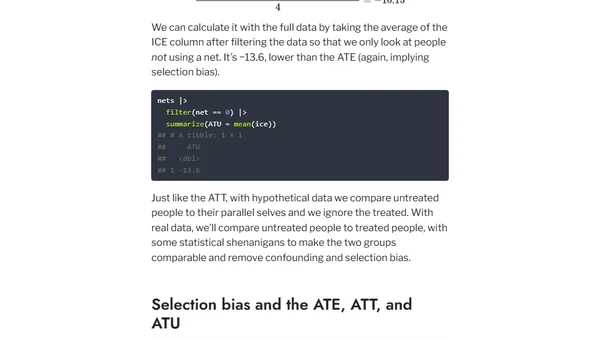
Explains key causal inference estimands (ATE, ATT, ATU) and how to calculate them using observational data, with a focus on R and the potential outcomes framework.
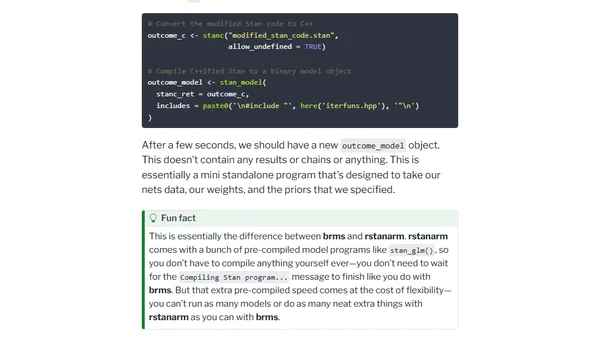
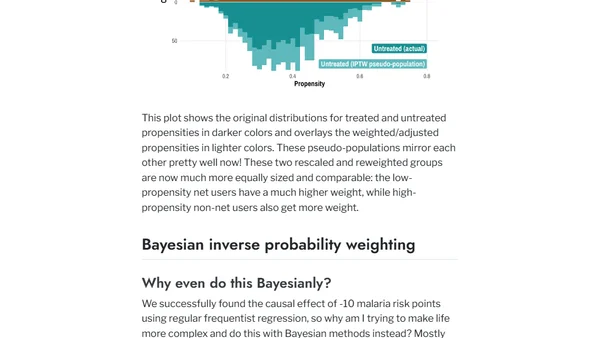
A tutorial on implementing a nearly fully Bayesian causal inference model using inverse probability weights with R, brms, and Stan.
Explores the challenges and a proposed method for combining Bayesian inference with propensity scores and inverse probability weights for causal analysis.
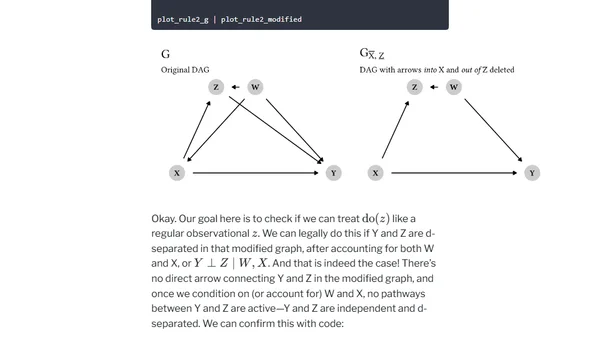
Explains the three rules of do-calculus in plain language and manually derives the backdoor adjustment formula for causal inference.
Explores the relationship between causal and statistical models, focusing on causal diagrams, Markov factorization, and structural equation models.
Explores the distinction between using regression models for causal inference versus predictive inference, and the role of generalizability in prediction.
A technical guide on using marginal structural models with GEE and multilevel models in R to handle confounding in panel data.
A technical tutorial on using R and inverse probability weighting to handle time-series panel data for causal inference with marginal structural models.
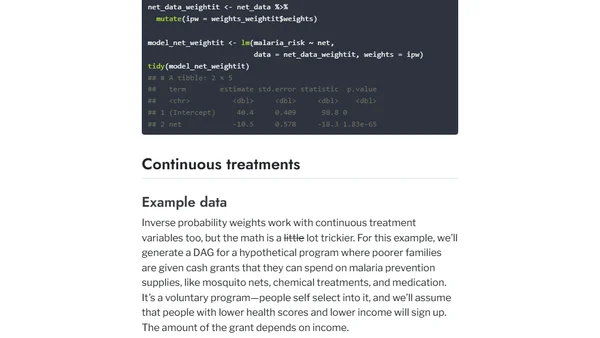
A tutorial on using R to calculate inverse probability weights for causal inference with both binary and continuous treatment variables.
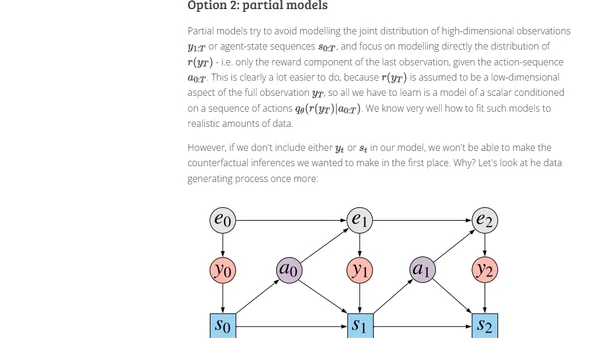
Explains the concept of causally correct partial models for reinforcement learning in POMDPs, focusing on counterfactual policy evaluation.
Explains methods like regression and inverse probability weighting to close confounding backdoors in DAGs for causal inference in observational data.
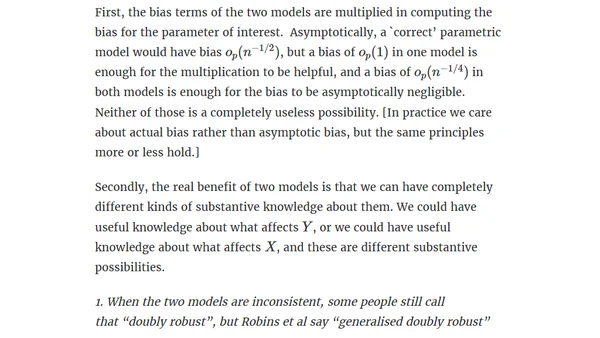
Explains the statistical concept of 'double robust' estimation, where using two models for outcome and exposure improves reliability.
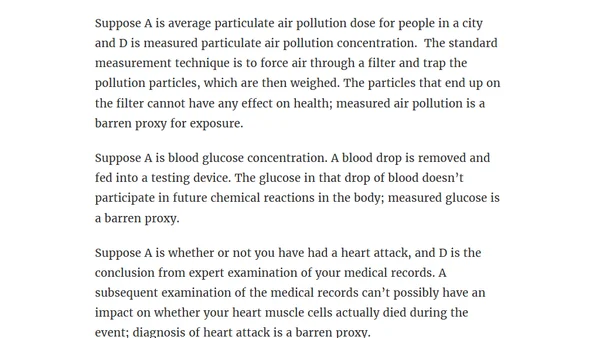
Explores the concept of 'barren proxies' in causal inference, arguing that measurement reliability is more critical than the proxy's barrenness.
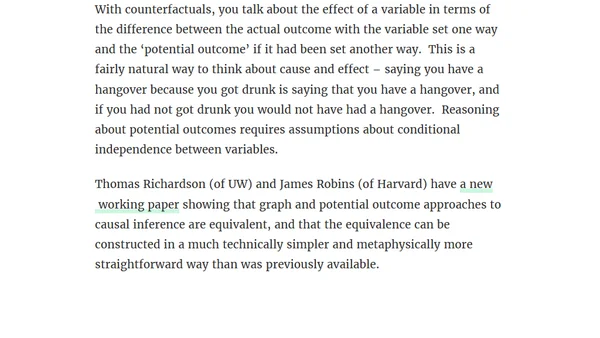
Explores the equivalence between causal graphs and counterfactual reasoning in statistics, simplifying the connection between two major causal inference frameworks.
Explores limitations of causal graph assumptions in statistical modeling, discussing when variables like poverty or diet may violate the faithfulness condition.
Examines statistical challenges with the causal Markov and faithfulness properties, focusing on measurement error's impact on causal inference.