Llm Blogs

Page 7 of 7 (136 Blogs)
The Pragmatic Engineer Gergely Orosz
11/29/2025 EN

The Pragmatic Engineer Gergely Orosz

PragmaticEngineer.com is the blog of Gergely Orosz, a software engineer and engineering manager known for clear, research-driven writing about the software industry. He publishes deep-dive essays on software engineering, architecture, scaling systems, engineering management, Big Tech practices, incident analysis, product delivery, and developer careers. Gergely combines experience from companies like Uber and Microsoft with interviews, data, and real examples from engineering teams around the world. His work is widely read because it explains how high-performing tech organizations actually operate, and what individual developers can learn from them. The blog is complemented by a popular weekly newsletter and books focused on practical engineering leadership.
Cassidy Williams
11/29/2025 EN

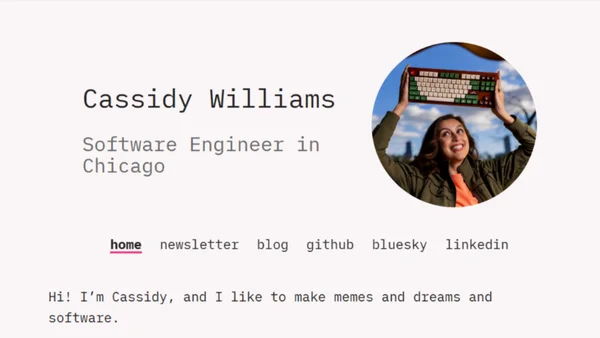
Cassidy Williams

Cassidoo.co is the personal blog of Cassidy Williams, a well known developer, speaker, and educator who writes about JavaScript, React, career growth, web development, dev tools, and learning in public. Her posts mix technical insights with approachable explanations, covering topics like UI patterns, coding tips, productivity workflows, and the human side of software engineering. Cassidy is known for her weekly newsletter, open-source work, and community involvement.

Sebastian Raschka
11/29/2025 EN

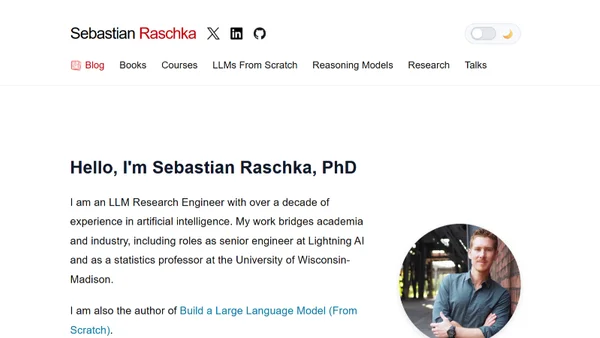
Sebastian Raschka

SebastianRaschka.com is the personal blog of Sebastian Raschka, PhD, an LLM research engineer whose work bridges academia and industry in AI and machine learning. On his blog and notes section he publishes deep, well-documented articles on topics such as LLMs (large language models), reasoning models, machine learning in Python, neural networks, data science workflows, and deep learning architecture. Recent posts explore advanced themes like “reasoning LLMs”, comparisons of modern open-weight transformer architectures, and guides for building, training, or analyzing neural networks and model internals.

Daniel Janus
11/15/2025 EN

Daniel Janus

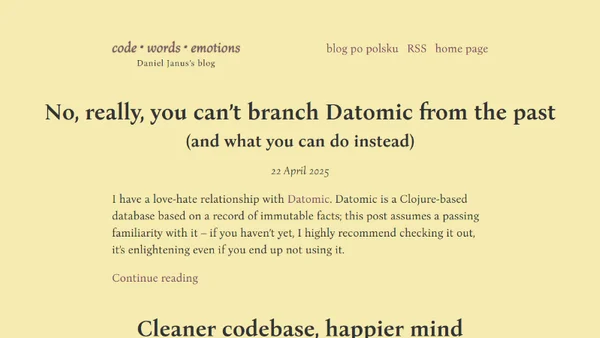
Blog.DanielJanus.pl is the personal blog of Daniel Janus, a veteran programmer from Poland who writes about Clojure, Rust, functional programming, developer culture, and personal productivity. Daniel combines deep technical insights with reflections on how code, words, and emotions interact in a developer’s life. His posts range from “Corner-cases of Comparing Clojure Numbers” to explorations of CSS compression and personal essays about ADHD and workspace clutter. The blog is bilingual (Polish and English) and features both short essays and detailed code-driven articles. With an emphasis on thinking clearly, rethinking assumptions, and learning continuously, Daniel’s writing appeals to engineers seeking both intellectual depth and human perspective.

Minko Gechev
11/15/2025 EN

Minko Gechev

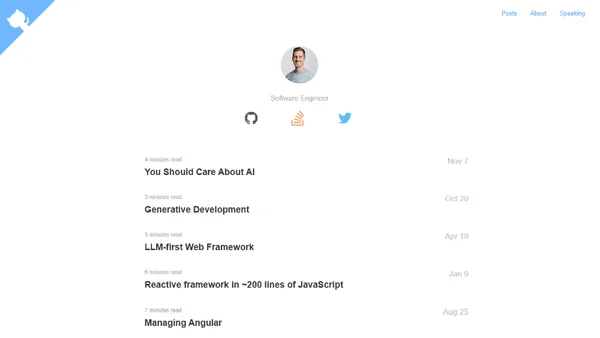
Blog.mgechev.com is the personal blog of Minko Gechev, Lead for Web Frameworks at Google and a widely recognized engineer in the JavaScript and Angular ecosystem. Minko writes about Angular, JavaScript, TypeScript, frontend architecture, web performance, and AI assisted development, mixing clear code examples with insights gained from building frameworks at scale. He is the creator of influential open source projects and has been awarded by Google and the President of Bulgaria for the impact of his contributions. His articles often explore advanced topics such as LLM powered development, predictive prefetching, reactive rendering, framework design, and large scale JavaScript tooling. Beyond engineering, he shares lessons from giving over a hundred conference talks and from leading major web initiatives at Google. Minko is also the co founder of Rhyme.com, an EdTech platform offering hands on technical training. He built the platform and engineering team starting in 2015. In 2018 Rhyme became Coursera’s first acquisition, marking a significant milestone in his career.

Simon Willison
11/13/2025 EN

Simon Willison

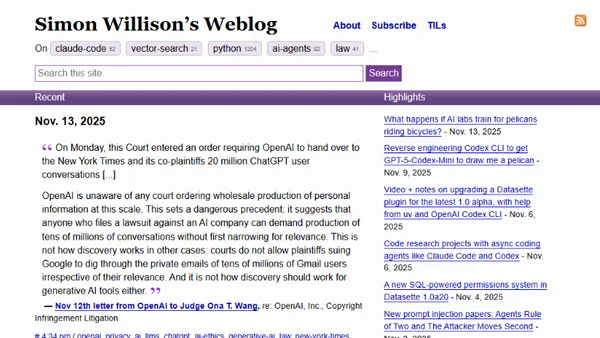
SimonWillison.net is the long-running blog of Simon Willison, a software engineer, open-source creator, and co-author of the original Django framework. He writes about Python, Django, Datasette, AI tooling, prompt engineering, search, databases, APIs, data journalism, and practical software architecture. The blog includes detailed notes from experiments, conference talks, and real projects. Readers will find clear explanations of topics such as LLM workflows, SQL patterns, data publishing, scraping, deployment, caching, and modern developer tooling. Simon also publishes frequent micro-posts and TIL entries that document small discoveries and tricks from day-to-day engineering work. The tone is practical and research oriented, making the site a valuable resource for anyone interested in serious engineering and open data.

Thomas Uhrig
11/9/2025 EN

Thomas Uhrig

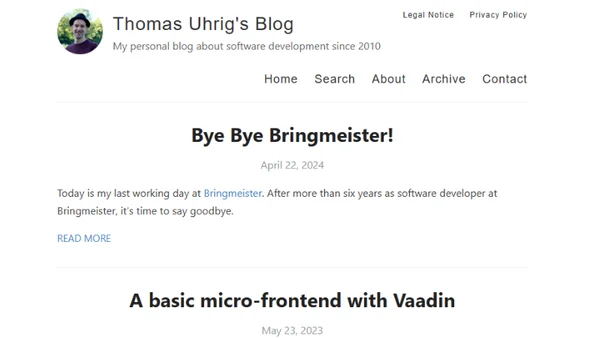
Thomas Uhrig is a software developer based near Karlsruhe, Germany, who writes about building microservices, Java and Kotlin ecosystems, Spring Boot, GraphQL, and modern cloud infrastructures. On his blog you’ll find deep dives into topics such as micro-frontend architectures, database latency monitoring, event-driven design, and migrating legacy systems to static site generators. His content is technical, detailed and tailored to practitioners looking to improve code readability, system design and deployment workflows.

Waldek Mastykarz
11/9/2025 EN

Waldek Mastykarz

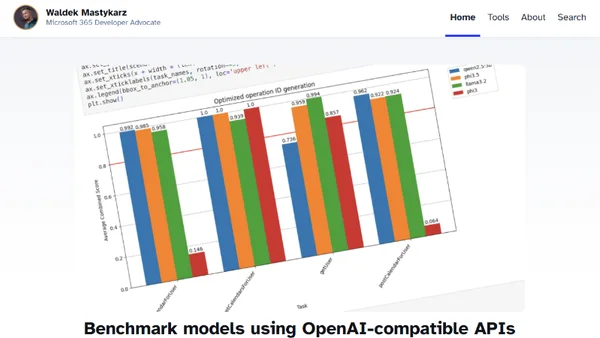
Waldek Mastykarz – Insights on Microsoft 365 Development and Community Practices Waldek Mastykarz is a Developer Advocate at Microsoft who helps developers get the most out of the Microsoft 365 platform. On his blog, he shares hands-on guidance, tips, and real-world examples for building apps, automations, and extensions for Microsoft 365. As a core contributor to Microsoft 365 Patterns & Practices, he collaborates with the global developer community to create open-source tools, reusable templates, and best-practice documentation that make extending Microsoft 365 easier and more consistent. Before joining Microsoft, Waldek spent years working with partners across the Microsoft ecosystem and earned the title of Microsoft MVP twelve times for his community work. His writing reflects both deep technical knowledge and a passion for sharing practical insights that help other developers succeed.

Michael Lynch
11/8/2025 EN

Michael Lynch

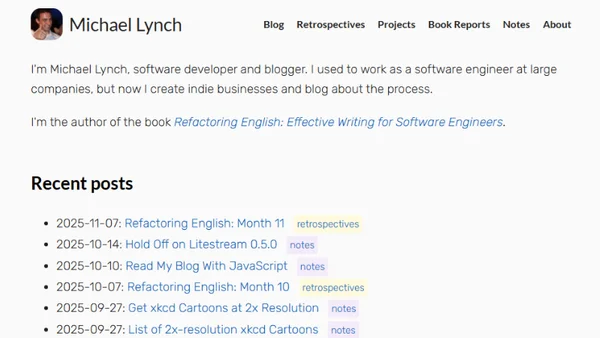
Michael Lynch – Developer, Indie Founder and Technical Writer Michael Lynch shares honest and detailed stories from his journey as a software engineer and indie founder. His blog covers topics like building sustainable businesses, code reviews, software craftsmanship, and lessons learned from running and selling his own startup, TinyPilot. Each post reflects a mix of engineering precision and real-world experience, written with clarity and humor. Readers can find tutorials, retrospectives, and essays that go beyond code to explore motivation, productivity, and the human side of software development. This blog is a must-read for developers, indie hackers, and anyone who enjoys thoughtful writing about technology and entrepreneurship.

Piotr Migdał
11/8/2025 EN

Piotr Migdał

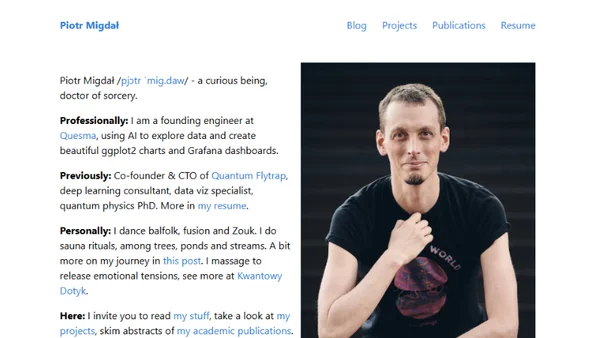
Piotr Migdał – Blog of a Data Explorer and Visual Storyteller This is the personal blog of Dr. Piotr Migdał, a technologist and visual storyteller with a strong background in quantum physics, deep learning, and data visualization. He is a founding engineer at Quesma, where he uses AI to turn complex datasets into clear visual insights through ggplot2 charts and Grafana dashboards. His posts combine technology, creativity, and personal reflection. You will find articles about machine learning, interactive data visualization, and projects that bridge science and art. Beyond his technical work, Piotr writes about dance, mindfulness, and the human side of creativity. This blog is a great read for developers, data scientists, and anyone interested in how technology and art can come together to explain the world in a meaningful way.

Marius Sandbu
11/8/2025 EN

Marius Sandbu

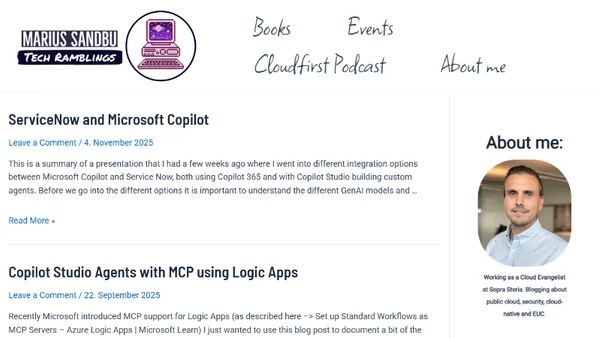
Marius Sandbu is a Norwegian cloud architect and technology evangelist, best known for his long-running blog msandbu.org, where he’s been sharing in-depth insights on cloud infrastructure, security, and end-user computing since 2012. He currently works as a Nordics Lead Cloud Architect at Sopra Steria, helping enterprises design and secure complex multi-cloud environments across Azure, AWS, and Google Cloud. A long-time Microsoft MVP (Azure) and conference speaker, Marius is also the author of several books on topics such as Citrix NetScaler and cloud security. Through his blog, talks, and the Cloudfirst podcast, he bridges the gap between enterprise IT and real-world implementation, offering clear, experience-driven guidance for cloud professionals who value depth over hype.

Matt Layman
11/3/2025 EN

Matt Layman

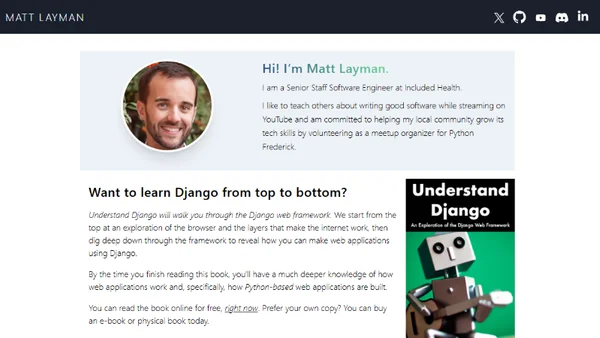
mattlayman.com is a blog by Matt Layman, a software engineer who focuses on building complex web applications, primarily using Django. He shares his expertise through regular live streams on YouTube, where he teaches others how to build advanced SaaS projects. Matt is also deeply involved in the tech community in Frederick, Maryland, where he founded Python Frederick and has helped organize local tech events. Currently, Matt is a Senior Staff Software Engineer at Included Health, working to enhance the patient experience through technology. His blog offers insights into web development, community involvement, and his career journey.

Ben McCormick
11/3/2025 EN

Ben McCormick

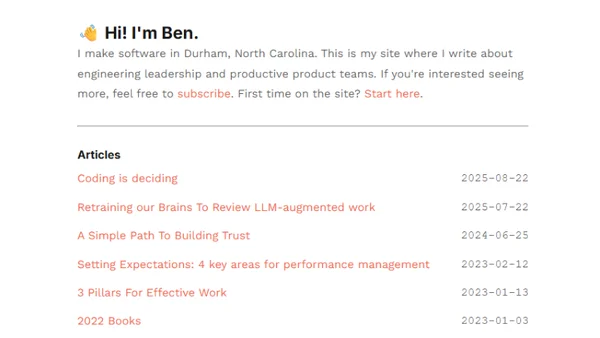
BenMcCormick.org is a blog authored by Ben McCormick, a seasoned software engineer, offering valuable insights on engineering leadership, front-end architecture, JavaScript, and productivity. Since 2012, Ben has written over 180 articles, covering key themes such as feedback loops, managing distributed teams, and front-end design. His posts explore practical, real-world challenges in software development, with a particular focus on JavaScript and React. Ben also shares advice on career development in the tech industry, making the blog a rich resource for both individual developers and engineering leaders.

Dan Luu
11/2/2025 EN

Dan Luu

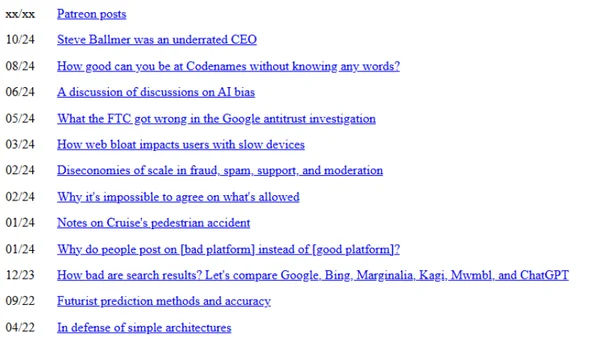
DanLuu.com is the personal blog of Dan Luu, known for long-form essays that mix systems thinking with careful measurement and clear writing. The topics range from computer latency and input lag, testing versus informal reasoning, and concurrency bugs, to industry pieces on developer compensation and curated lists of programming blogs worth reading. Many posts include data, historical context, and reproducible reasoning, which is why the site is often cited in courses and shared across the developer community. The design is intentionally minimal, which puts all attention on the ideas.

Martin Fowler
11/2/2025 EN

Martin Fowler

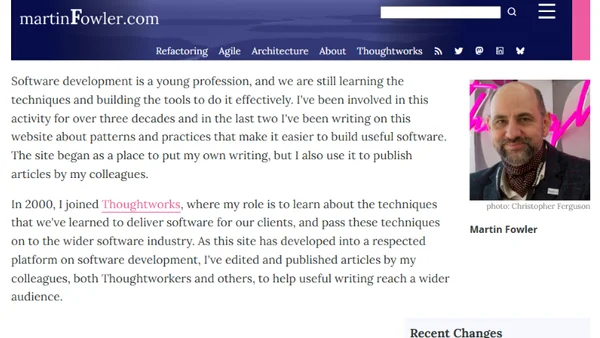
MartinFowler.com is the long-running technical blog of Martin Fowler, author, software architect, and Chief Scientist at ThoughtWorks. The site serves as a cornerstone for modern software engineering, featuring influential essays and guides on software architecture, refactoring, agile methodologies, design patterns, and continuous delivery. Martin’s writing combines deep technical expertise with a clear, educational tone, making complex ideas about domain-driven design, microservices, and testing strategies accessible to engineers of all levels. Classic works like Refactoring, Patterns of Enterprise Application Architecture, and Continuous Integration originated from concepts first explored on this blog. With over two decades of archives, MartinFowler.com remains one of the most authoritative and enduring resources in professional software development.

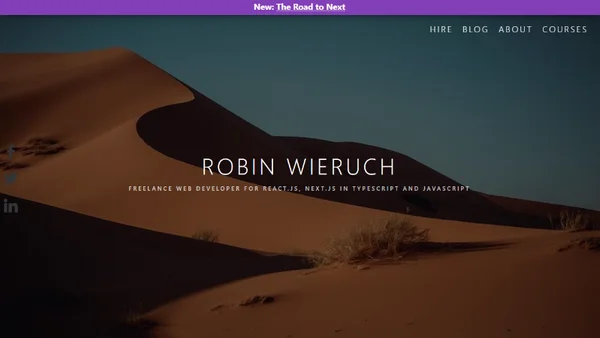
Robin Wieruch
11/2/2025 EN

Robin Wieruch

RobinWieruch.de is the personal site and blog of Robin Wieruch, a software engineer and educator known for clear, practical tutorials on React, TypeScript, Next.js, GraphQL, Node.js, and testing. The articles focus on real projects and common problems such as state management, authentication, data fetching, pagination, performance, and testing strategies. Robin is the author of The Road to React and other hands-on guides. He publishes step by step walkthroughs that pair code with explanations, so readers learn the concepts and the reasoning behind them.