Formal verification Blogs

Page 1 of 1 (8 Blogs)
Simon Willison
11/13/2025 EN

Simon Willison

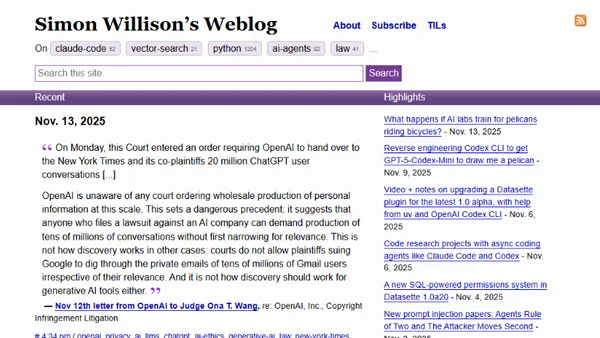
SimonWillison.net is the long-running blog of Simon Willison, a software engineer, open-source creator, and co-author of the original Django framework. He writes about Python, Django, Datasette, AI tooling, prompt engineering, search, databases, APIs, data journalism, and practical software architecture. The blog includes detailed notes from experiments, conference talks, and real projects. Readers will find clear explanations of topics such as LLM workflows, SQL patterns, data publishing, scraping, deployment, caching, and modern developer tooling. Simon also publishes frequent micro-posts and TIL entries that document small discoveries and tricks from day-to-day engineering work. The tone is practical and research oriented, making the site a valuable resource for anyone interested in serious engineering and open data.

Dan Abramov
11/2/2025 EN

Dan Abramov

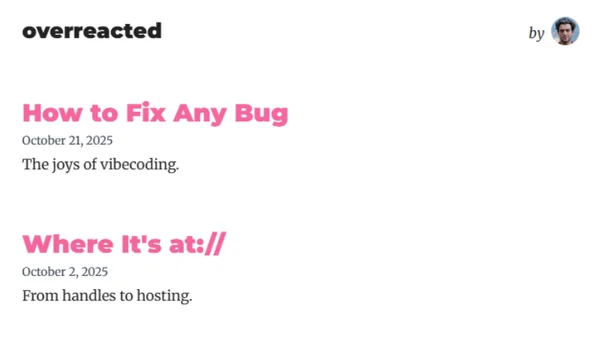
Overreacted.io is the personal blog of Dan Abramov, a software engineer best known for his work on React at Meta and as the creator of Redux. The blog explores ideas about JavaScript, React, functional programming, software design, and developer experience, often blending deep technical insight with personal reflection. Dan writes about topics like hooks, state management, debugging, performance, and the mental models behind React, helping readers understand not just how things work but why they were designed that way.

Dan Luu
11/2/2025 EN

Dan Luu

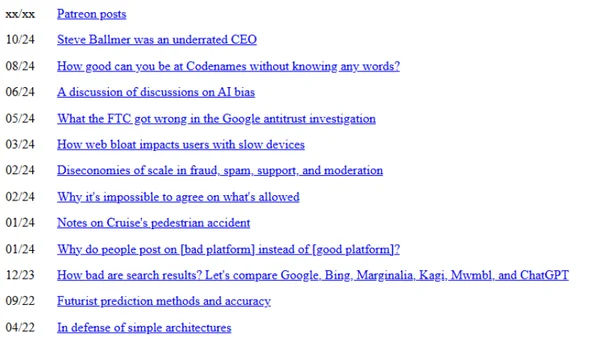
DanLuu.com is the personal blog of Dan Luu, known for long-form essays that mix systems thinking with careful measurement and clear writing. The topics range from computer latency and input lag, testing versus informal reasoning, and concurrency bugs, to industry pieces on developer compensation and curated lists of programming blogs worth reading. Many posts include data, historical context, and reproducible reasoning, which is why the site is often cited in courses and shared across the developer community. The design is intentionally minimal, which puts all attention on the ideas.