Copyleft licenses are not “restrictive”
Argues that copyleft software licenses are not inherently more restrictive than permissive ones, challenging a common misconception in open source.
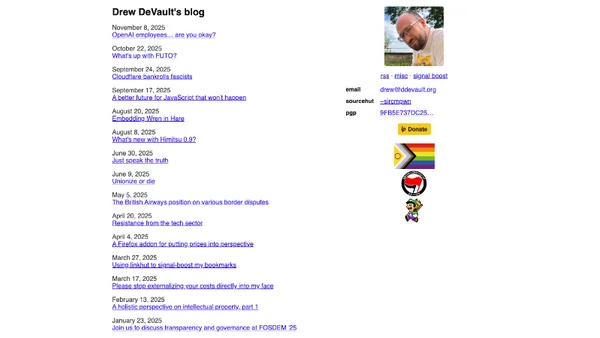
Drew DeVault’s blog features sharp commentary on open source, software engineering, programming languages, ethics in tech, and the social impact of technology.
354 articles from this blog
Argues that copyleft software licenses are not inherently more restrictive than permissive ones, challenging a common misconception in open source.
FDO bans Hyprland maintainer Vaxry for toxic behavior, sparking public debate about community conduct and enforcement in open-source projects.
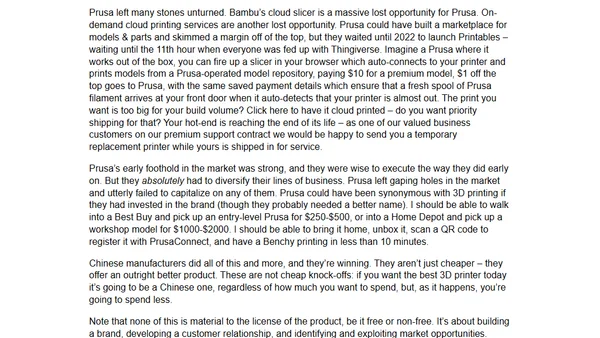
Analyzes Prusa's business struggles in the 3D printing market, arguing their issues stem from a lack of business model diversification, not open-source licensing changes.
A Hare programming language developer seeks podcast appearances to discuss Hare, the Ares OS, and Himitsu, promoting community-driven tech evangelism.
Examines the rationale and impact of 'real name' policies in open-source software projects, discussing legal accountability and community inclusivity.
A critique of the Hyprland Wayland compositor's toxic community culture, citing hateful behavior and lack of moderation.
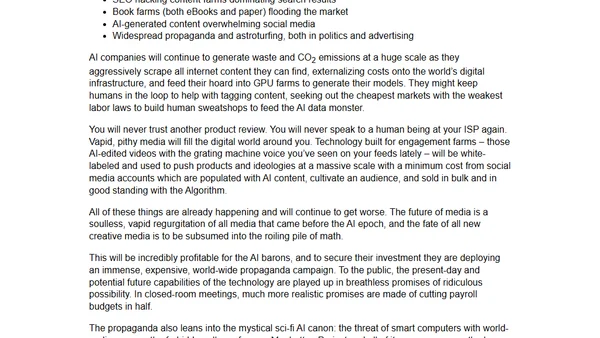
A critical analysis of the machine learning bubble, arguing its lasting impact will be a proliferation of low-quality, automated content and services, not true AGI.
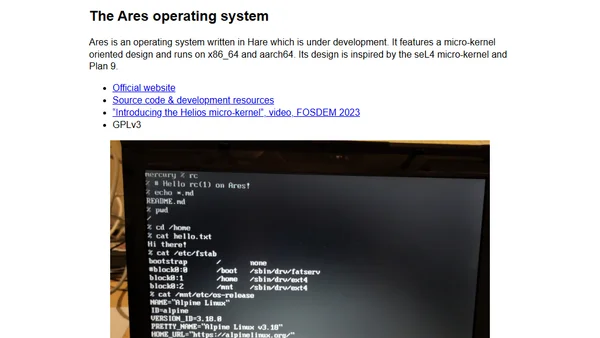
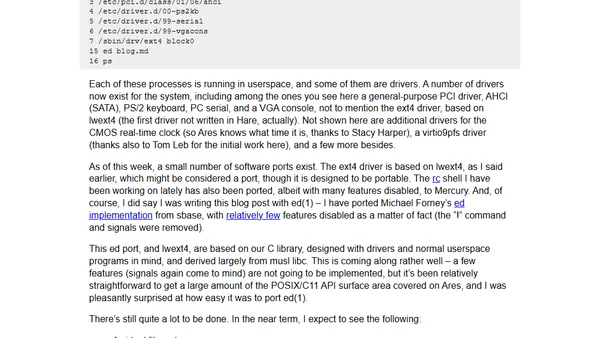
A developer shares progress on Ares OS, a new operating system with userspace processes, drivers, and initial software ports.
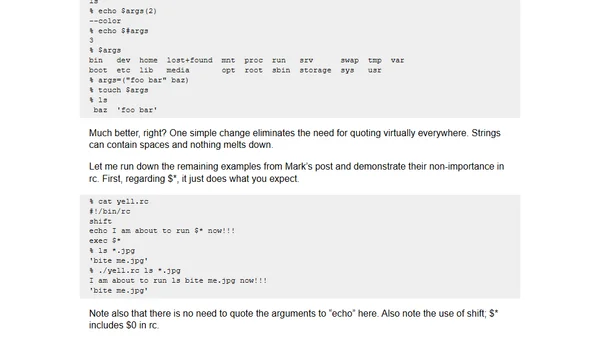
A technical analysis of the rc shell's superior handling of whitespace in filenames compared to traditional POSIX shells like bash.
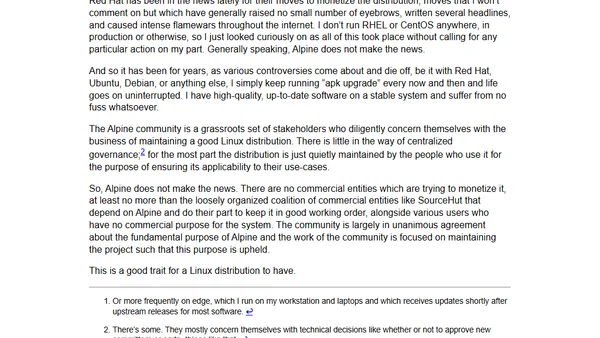
A developer praises Alpine Linux for its reliability, simplicity, and drama-free, community-focused maintenance, contrasting it with more controversial distributions.
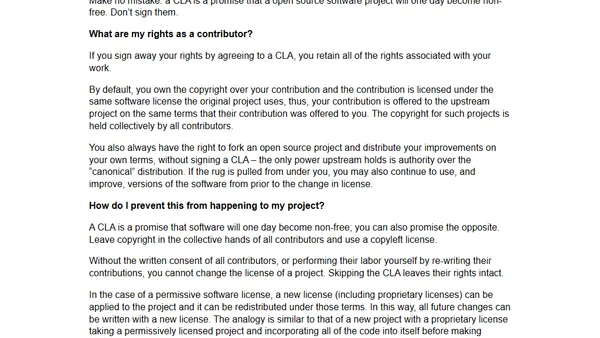
A critique of Contributor License Agreements (CLAs) in open source, arguing they allow companies to later make projects proprietary.
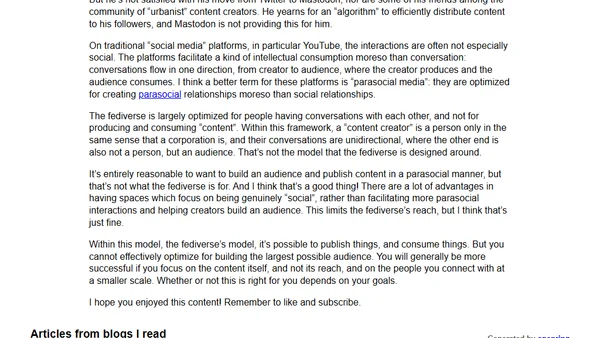
Explores the difference between traditional 'parasocial media' platforms and the fediverse, arguing the latter is designed for conversation, not audience-building.
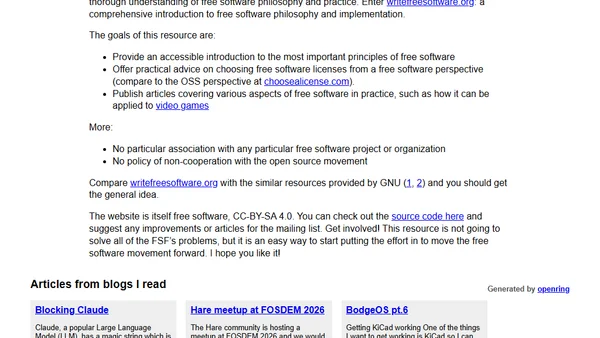
A new website aims to make free software philosophy more accessible and practical, offering an alternative to the FSF's complex messaging.
A developer shares their experience and reasons for abandoning mobile Linux as a daily driver, citing critical reliability issues with core phone functions.
A guide for tech professionals on strategically negotiating with employers by understanding financial leverage and corporate weak points.
An article discussing leadership in tech, challenging biases based on appearance by comparing two developers, and advocating for diversity in open-source communities.
Introducing rc, a new Unix shell inspired by Plan 9 rc, designed to fix quoting issues and improve on POSIX shells with better list and string handling.
An analysis of the Free Software Foundation's declining influence, ineffective messaging, and failure to adapt to the modern open source landscape.
A guide to writing device drivers for the Helios microkernel using the Mercury driver environment, focusing on capability-based security.
A developer argues for minimal, strategic code commenting, using examples to show how clear naming and structure can often replace verbose comments.