My answers to the questions I posed about porting open source code with LLMs
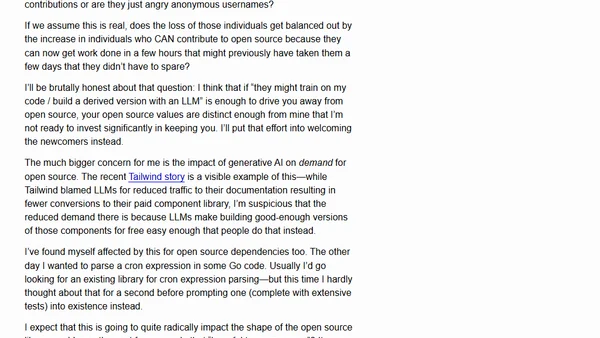
Author explores the legal and ethical implications of using LLMs to port open source code between programming languages, based on personal experiments.
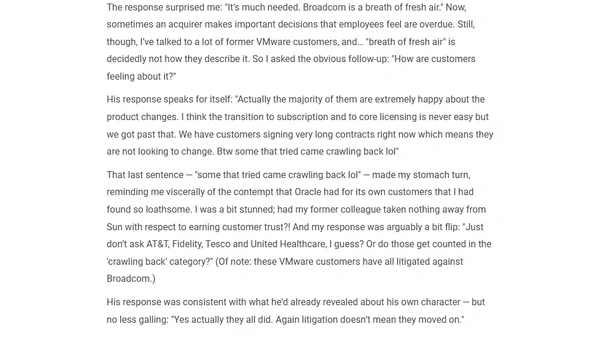
A critique of tech companies like Oracle and Broadcom that show disdain for customers, contrasting with a philosophy of loving and innovating for customers.
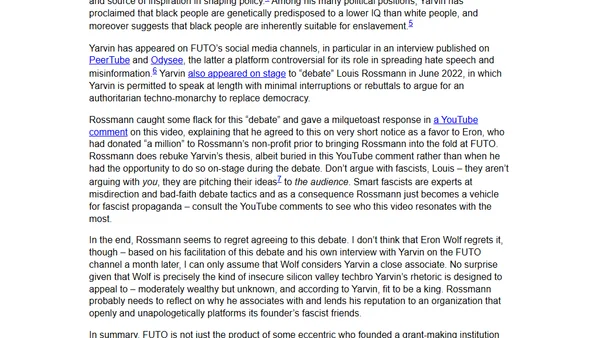
A critical analysis of FUTO's funding practices, questioning their use of 'open source' and alleged promotion of problematic figures.
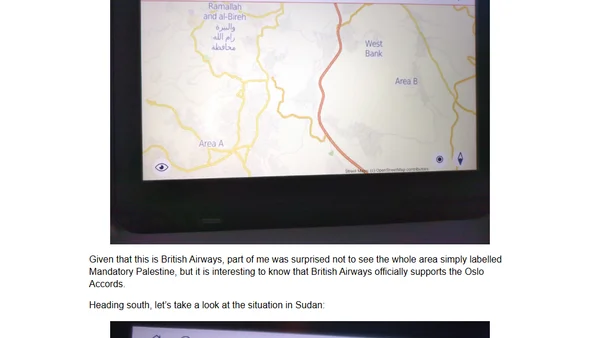
A developer analyzes the in-flight map software on British Airways, examining its technical implementation and how it displays international borders.
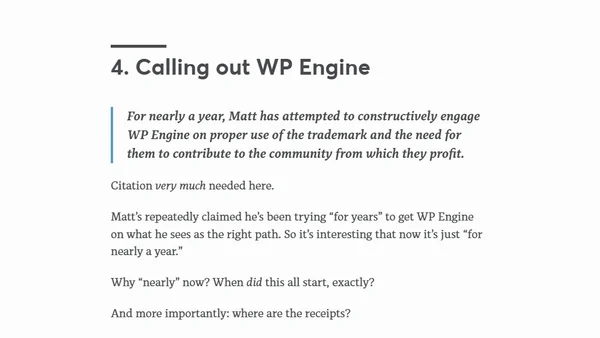
A critical analysis of Automattic's defense of WordPress's open-source future, focusing on the ongoing legal and trademark dispute with WP Engine.
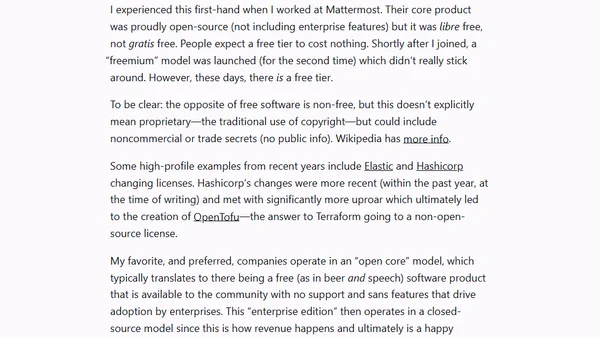
Explores the nuances of open-source licensing, the 'open core' model, and the distinction between 'free as in speech' vs. 'free as in beer'.
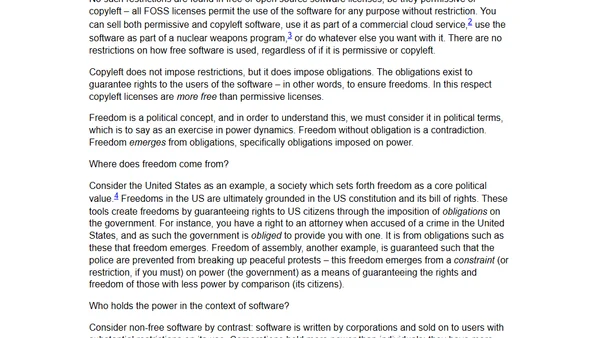
Argues that copyleft software licenses are not inherently more restrictive than permissive ones, challenging a common misconception in open source.
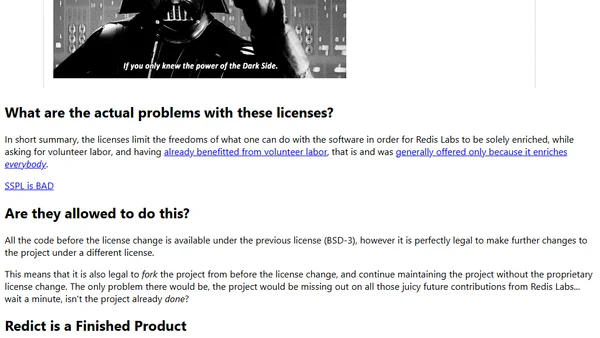
Redis has been renamed to Redict after a controversial license change, sparking a fork to preserve its open-source nature.
A developer reflects on the successful technical launch of KeyboardKit 8 but expresses disappointment over the lack of user traction and signups.
Introduces the Double It and Pass It On License (DIPOL), a novel software license requiring recipients to either accept the software or double its features.
A critique of Contributor License Agreements (CLAs) in open source, arguing they allow companies to later make projects proprietary.
A new website aims to make free software philosophy more accessible and practical, offering an alternative to the FSF's complex messaging.
The article argues that the term 'open source' has a specific, community-driven meaning that prevents commercial monopolization of software.
A monthly update on TinyPilot, a tech hardware/software project, covering revenue, software licensing, and development progress.
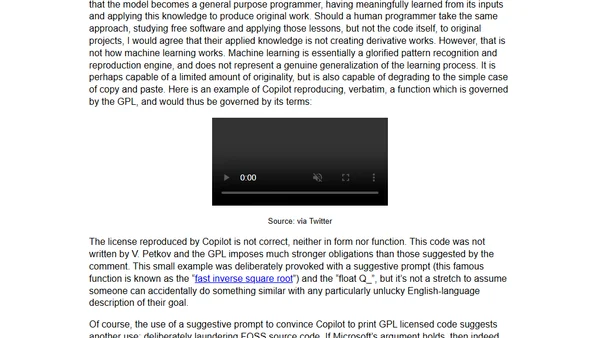
An analysis of GitHub Copilot's ethical and legal implications regarding open source licensing, arguing it facilitates the laundering of free software into proprietary code.
The article defends the OSI's Open Source Definition against attempts to dilute the term for commercial gain, arguing for its integrity.
Explains the MIT software license, its permissive nature, and what it means for developers using or distributing software under it.
Analyzes illegal commercial forks of FOSS projects like OBS Studio, exploring license violations and the clash between gaming industry IP views and free software values.
Analysis of Apollo Federation's license change from MIT to Elastic, arguing it's anti-FOSS and corporate gaslighting.