A look at the internals of 'boxing' in the CLR
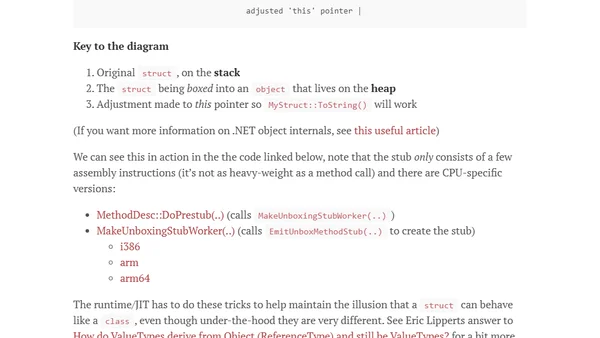
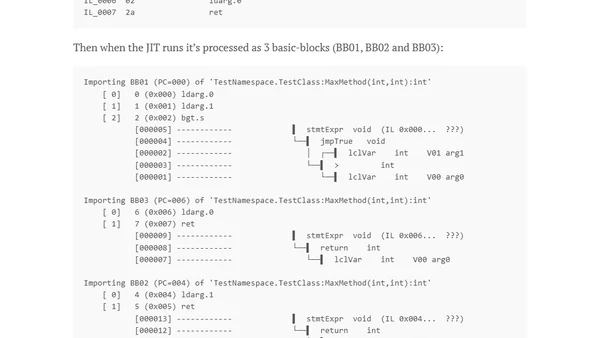
Explains how boxing works internally in the .NET CLR, covering type creation, IL code, and JIT compilation.
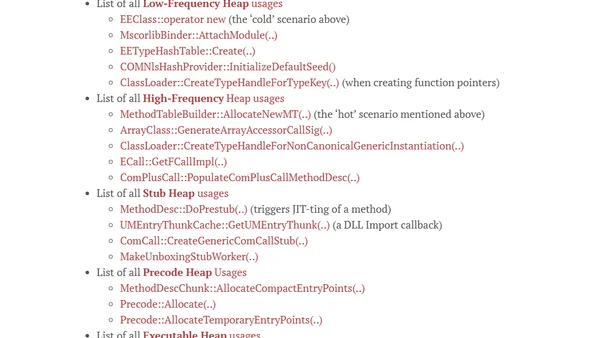
An in-depth look at how the .NET CLR allocates and uses internal memory, exploring its data structures beyond managed code.
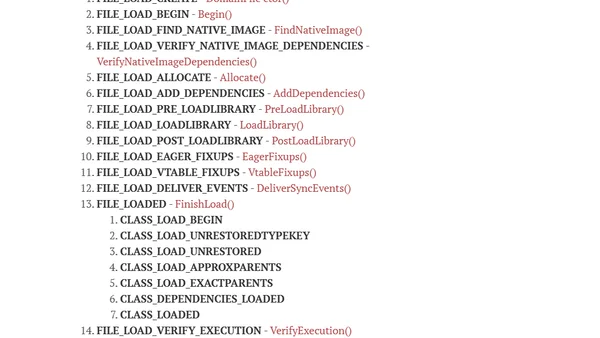
Explains the detailed, step-by-step process the .NET Runtime (CLR) uses to safely load and validate types, ensuring type safety.
A technical guide on adding a custom bytecode instruction (IL opcode) to the .NET CoreCLR runtime, including steps for the runtime, JIT, and Reflection.Emit.
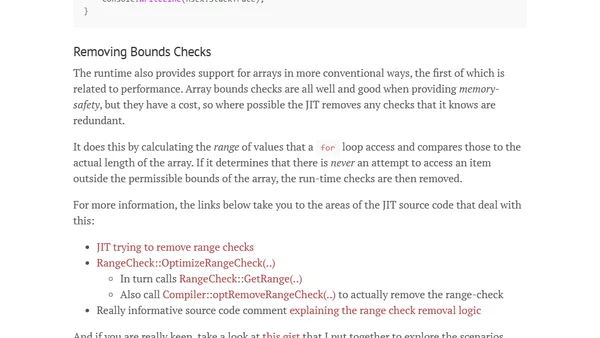
Explores the deep integration of arrays within the .NET CLR, covering their specification, IL instructions, and role in memory and type safety.
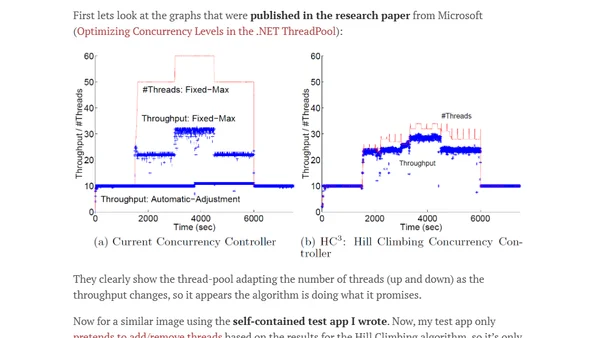
Explains the CLR Thread Pool's 'Hill Climbing' algorithm for dynamically managing and injecting threads to optimize throughput.
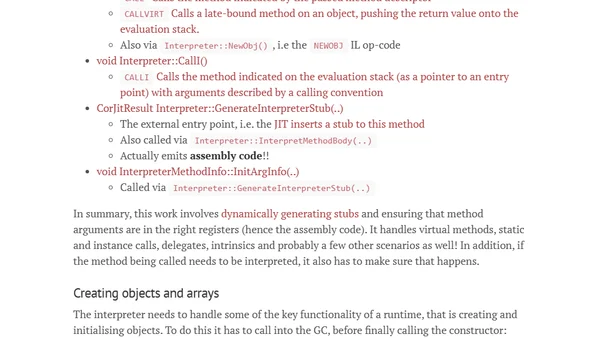
Explores the .NET IL Interpreter, its purpose for CLR bring-up and learning, and how to enable it in the CoreCLR source code.
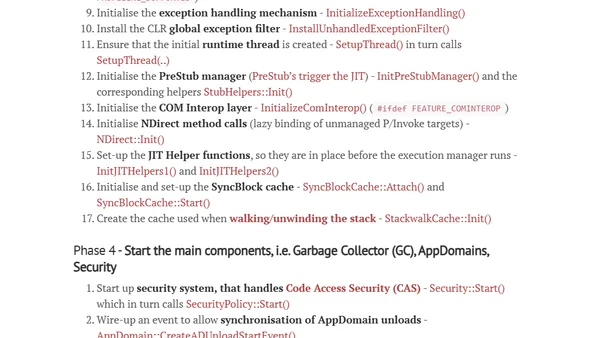
A deep dive into the 68 initialization steps the CLR's Execution Engine performs before running any .NET code, from infrastructure setup to component startup.
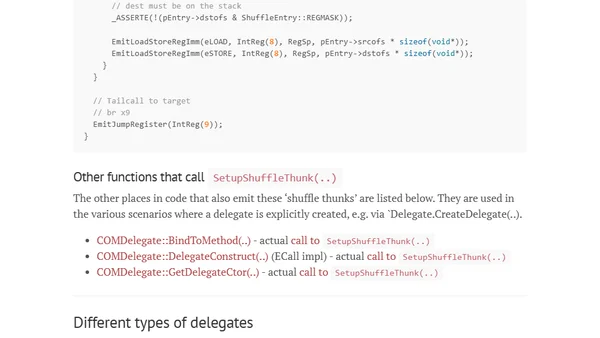
Explains how .NET delegates work internally, including their CLR implementation, IL representation, and runtime behavior.
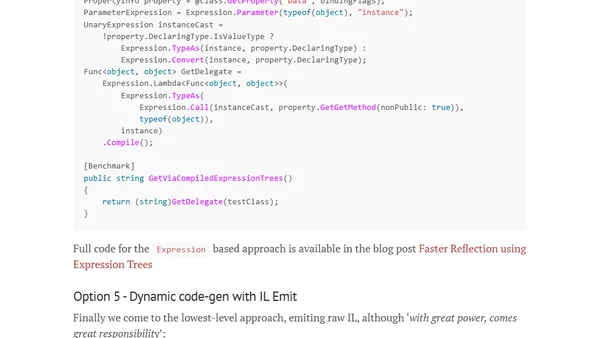
Explores why reflection in .NET is slow, examining CLR design goals, internal data structures, and the multi-step invocation process.
Explores the potential memory savings of storing strings in a more compact encoding like ASCII/Latin-1 within the .NET CLR, using real-world data from Stack Overflow.
Explores the unique memory layout and performance optimizations of the String type within the .NET Common Language Runtime (CLR).
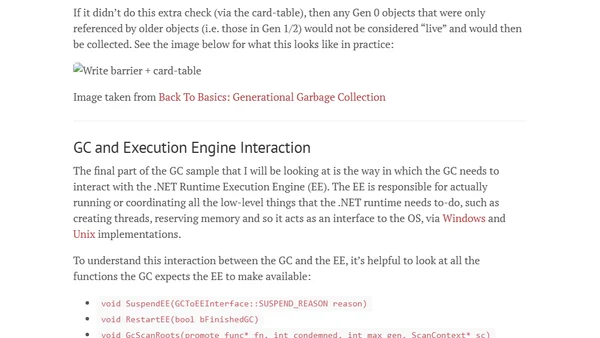
An in-depth exploration of how the .NET Garbage Collector works internally, focusing on its low-level mechanisms and design goals.