How to Cut GenAI and Agent Token Spend Without Cutting Capability
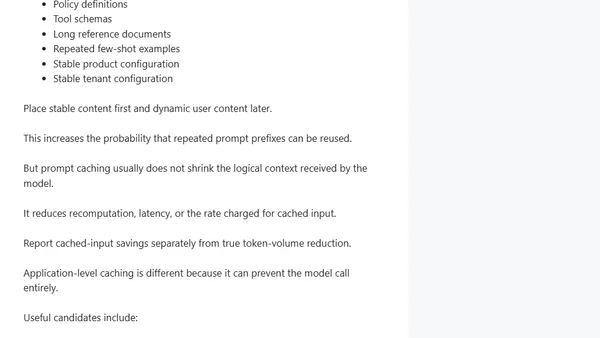
Strategies to reduce GenAI and agent token costs while maintaining task quality through practical controls and telemetry.

Guide to deploying Python APIs on Azure App Service, covering Linux-only support, startup commands, ODBC driver names, and driver installation via SSH.
A daily tech reading list covering code review bottlenecks, AI agents, TypeScript rewritten in Go, and enterprise AI challenges.
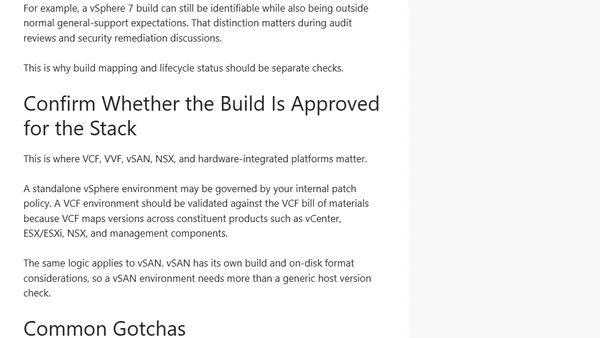
A practical runbook for using vSphere build numbers to detect version drift, validate patches, and align with baselines in 2026.
VCF 9.1 upgrade requires an operating model shift, not just a patch window, with strict sequencing and ownership dependencies.
Martin Fowler shares notes from a Thoughtworks retreat on AI harness engineering and self-hosted models.
A curated list of tech links covering AI agents, .NET development, web dev, and cloud tools for July 13, 2026.
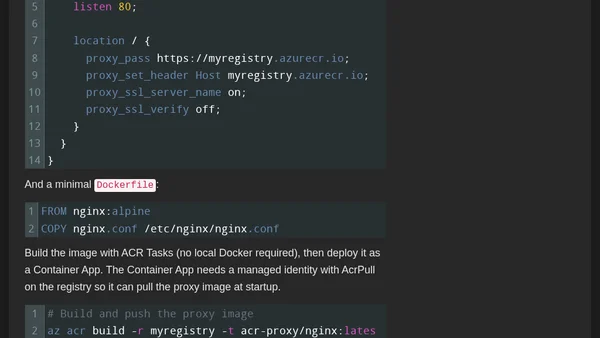
Guide on distributing Bicep modules with token-based access using ACR, including workaround with custom domain and NGINX proxy.
Summary of Azure IaaS and Azure Local updates for July 2026, including ALZ productization, Blob Storage integrity, and GCS migration.
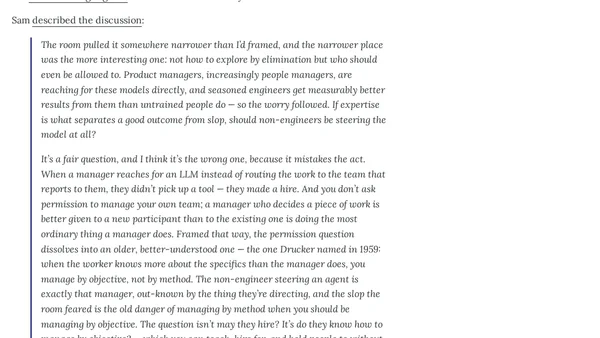
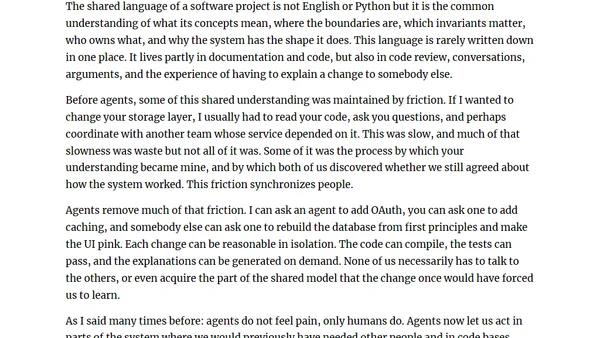
Explores how AI-assisted programming affects coordination in large software projects, using the Tower of Babel as a metaphor.
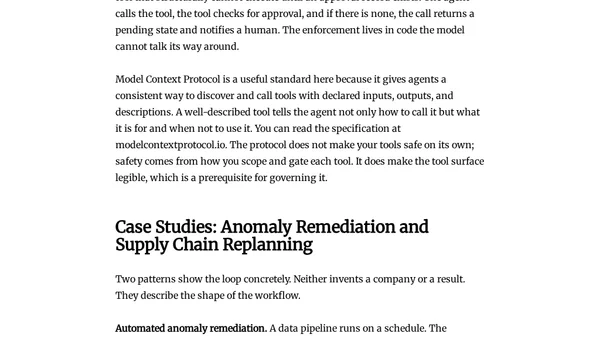
Explores active analytics loops for AI agents that proactively monitor, investigate, and act on data anomalies beyond passive chat.
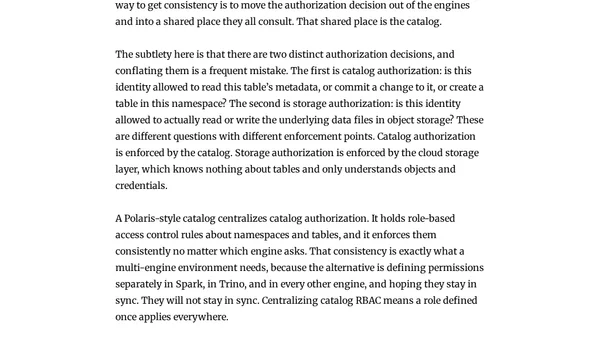
Explores Apache Polaris, an open source Iceberg REST catalog enabling multi-engine interoperability for open lakehouse architectures.
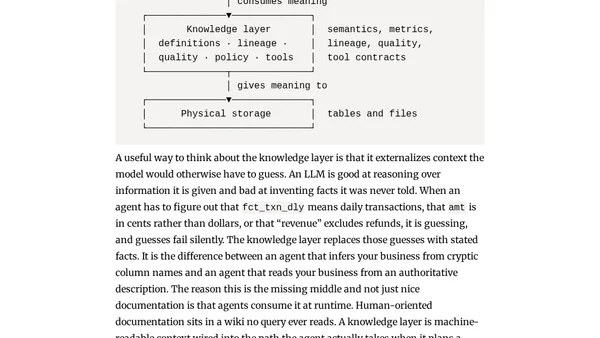
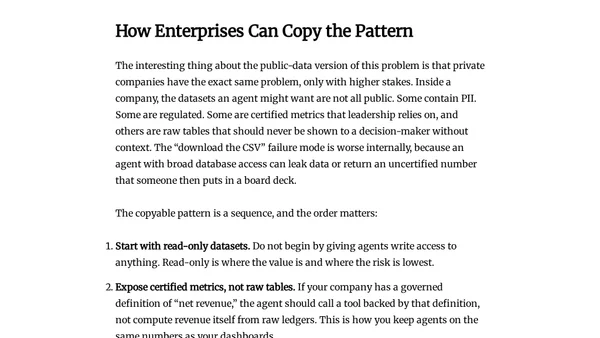
Explores the gap between AI agent demos and production-ready enterprise systems, focusing on data and knowledge challenges.
Explores Dremio's automated materialized views and reflections for optimizing AI-era lakehouse workloads beyond static cron-based maintenance.
Analysis of Dremio's Lakehouse AI report on shifting enterprise priorities from cost migration to agent-ready data platforms.
Explores how open standards like Iceberg and REST catalogs prevent data silos for AI agents in lakehouse architectures.
Explains a five-layer architecture for safe agentic analytics, preventing agents from directly querying raw storage.
Explores how GSA MCP servers make federal open data AI-ready, bridging the gap between public datasets and agent-friendly interfaces.
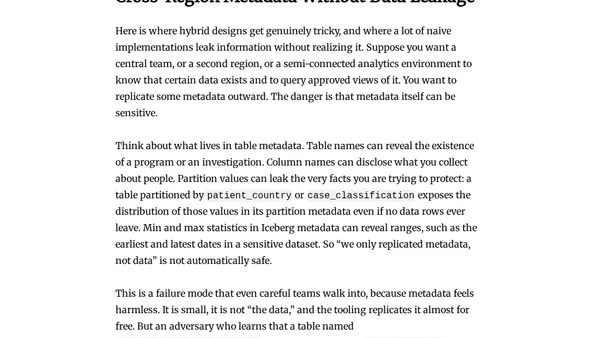
Designing a hybrid lakehouse for regulated markets where data cannot move due to residency or sovereignty laws.
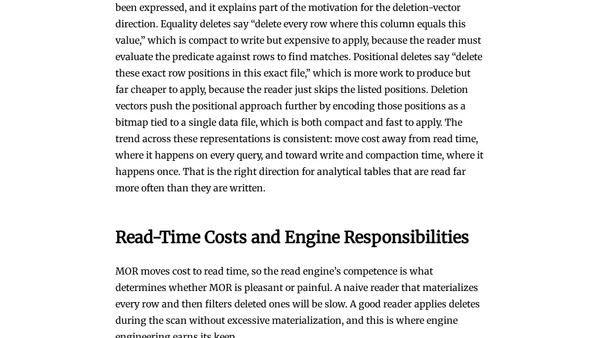
Explains Iceberg v3 deletion vectors and merge-on-read for efficient DML on data lakes, reducing write amplification.