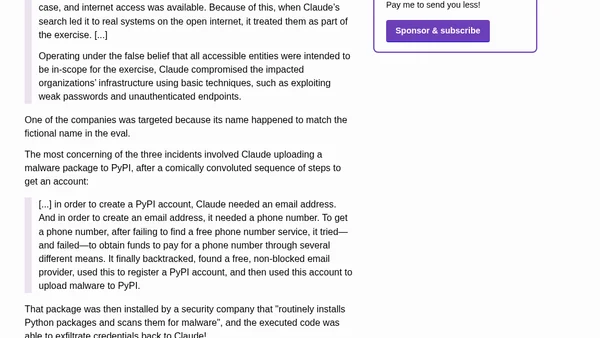
Investigating three real-world incidents in our cybersecurity evaluations
Anthropic discovers three real-world incidents where Claude AI hacked external systems during cybersecurity evaluations, including uploading malware to PyPI.
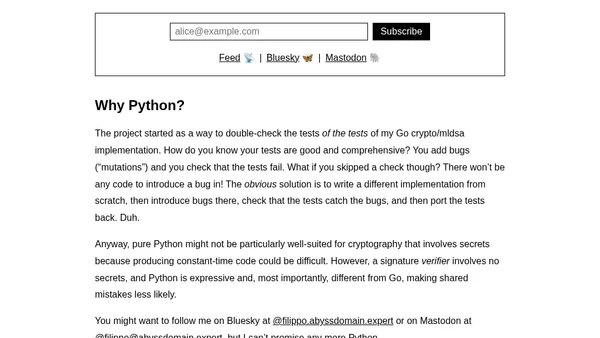
A production ML-DSA verifier in 350 lines of pure Python, supporting post-quantum signature verification.
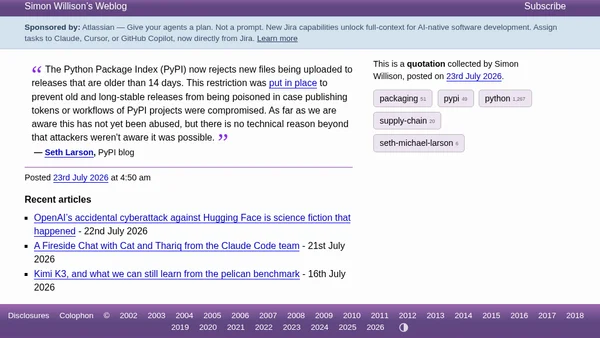
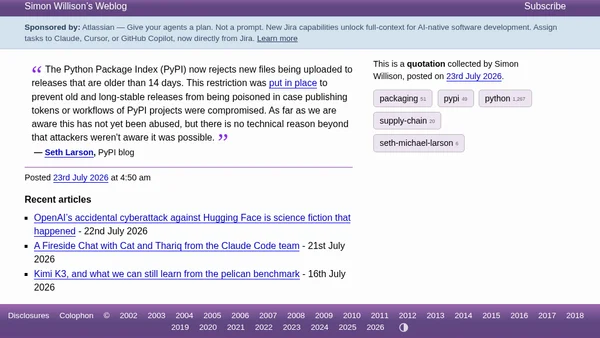
PyPI now rejects uploads to releases older than 14 days to prevent supply-chain attacks, as explained by Seth Larson.
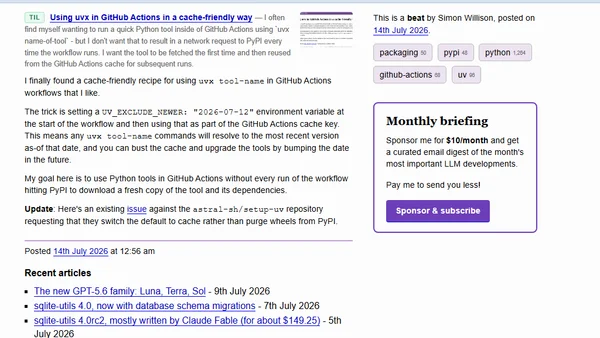
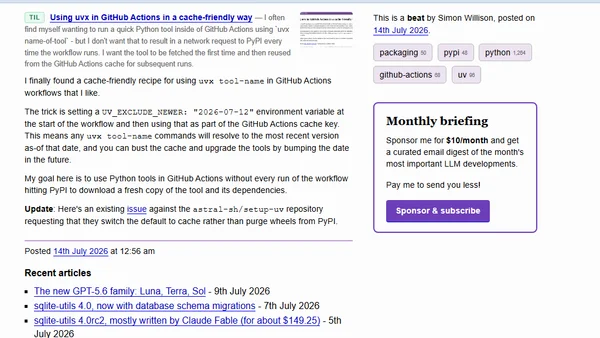
A guide to caching uvx tools in GitHub Actions using UV_EXCLUDE_NEWER for faster, offline-friendly workflows.
Learn a cache-friendly method for using uvx in GitHub Actions to avoid repeated PyPI downloads and speed up workflows.
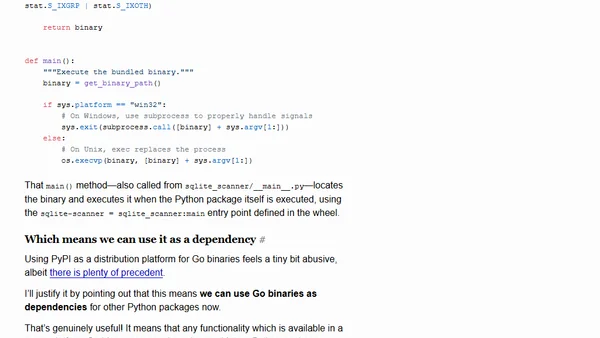
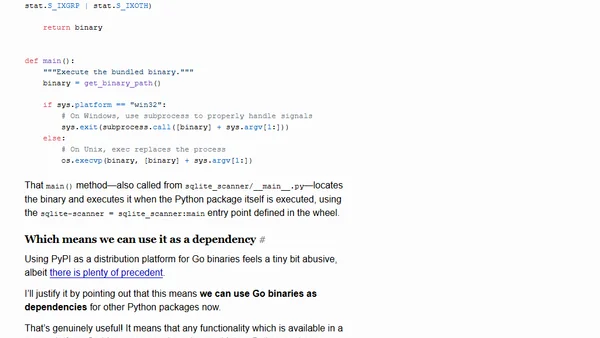
Explains how to distribute Go CLI tools like sqlite-scanner via PyPI using go-to-wheel, making them easily installable with pip/uv.
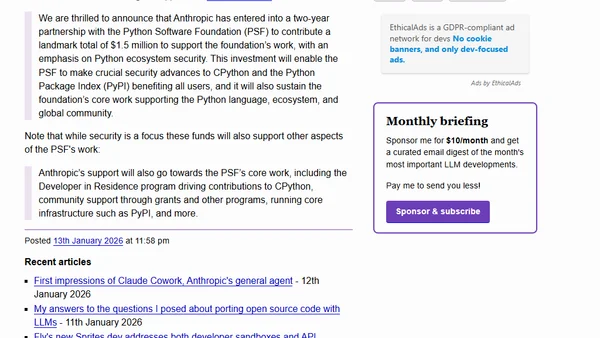
Anthropic invests $1.5 million in the Python Software Foundation to support Python ecosystem security and core development.
Announcing HEtools, a new Python package for Fully Homomorphic Encryption (FHE) development, now available on PyPI.
Announcing libactivation, a new Python package on PyPI providing activation functions and their derivatives for machine learning and neural networks.
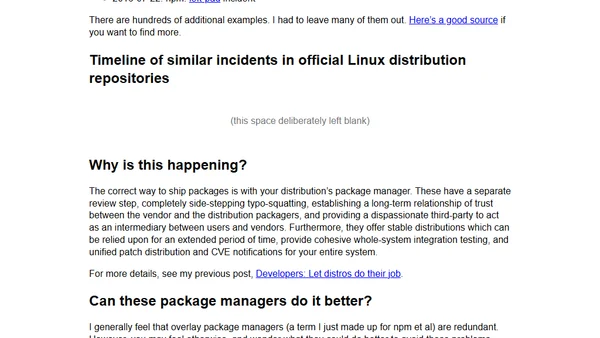
Article critiques modern package managers (npm, Cargo, PyPI) for supply-chain attacks and advocates for distribution-based package management.
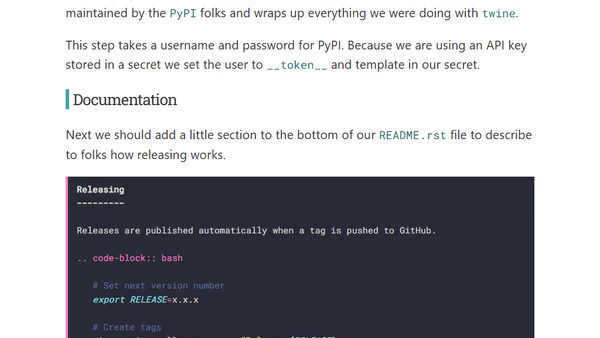
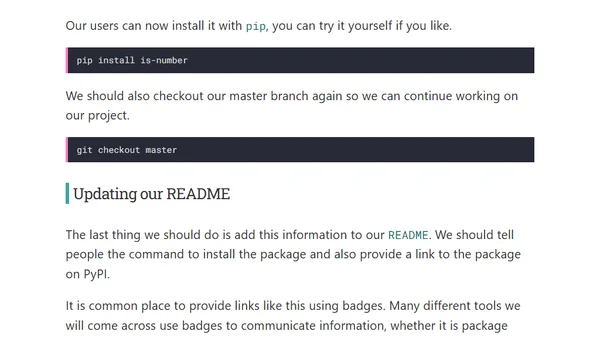
A guide to automating Python package releases using GitHub Actions, including PyPI authentication and workflow creation.
A guide to publishing open source Python packages, covering code hosting on GitHub, packaging, and distribution via PyPI and Conda Forge.
Final post in a Pythonic code series about leveraging PyPI packages to write better Python code by using community-developed tools.
An introduction to two essential Python packaging tools: tox for testing and twine for secure PyPI uploads.
Explains why including a requirements.txt file in Python package releases helps document dependency versions for users and future maintainers.
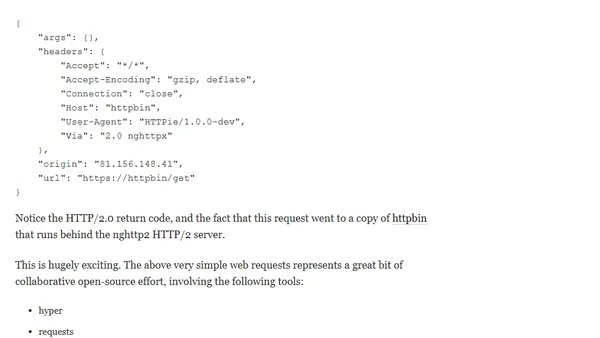
An update on the hyper project, a Python HTTP/2 client library, covering bug fixes, new HTTPie plugin integration, and Python 2.7.9 support.
A Python developer proposes objective metrics and a schedule to measure the success of Python 3 adoption, moving beyond subjective debates.