libtorrent adds support for the WebTorrent protocol
Libtorrent now supports the WebTorrent protocol, enabling browser-based torrent clients to connect with traditional desktop peers.
Feross Aboukhadijeh is a software engineer and open-source creator behind WebTorrent, Socket, BitMidi, and JavaScript Standard Style, writing influential articles on web development, security, and internet culture.
16 articles from this blog
Libtorrent now supports the WebTorrent protocol, enabling browser-based torrent clients to connect with traditional desktop peers.
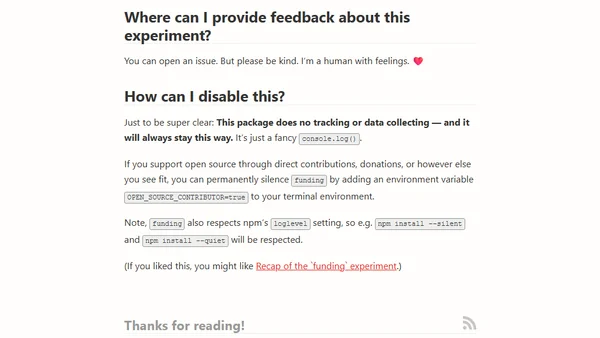
A developer ends an experiment to fund open source maintainers via sponsorship messages during software installation, discussing the challenges of open source sustainability.
An open source funding experiment that displays ethical ads in the console to support maintainer work on packages like StandardJS.
Announcing BitMidi, a web app for listening to free MIDI files, exploring the history and technical challenges of the format.
Introduces `thanks`, an npm tool to help developers discover and donate to open source maintainers of their project dependencies.
Explains why JavaScript's Automatic Semicolon Insertion (ASI) makes 'never use semicolons' a valid approach and why 'always use semicolons' is misleading.
An introduction to open source software, explaining its importance, how to learn from and contribute to projects, and the author's personal experience.
Feross announces his candidacy for the Node.js Board of Directors, highlighting his contributions to the ecosystem and his vision for the community.
A humorous proof-of-concept exploit using HTML5 localStorage to fill a user's hard disk, highlighting browser security flaws.
Explains how attackers can misuse the HTML5 Fullscreen API to create convincing phishing pages that mimic trusted websites like banks.
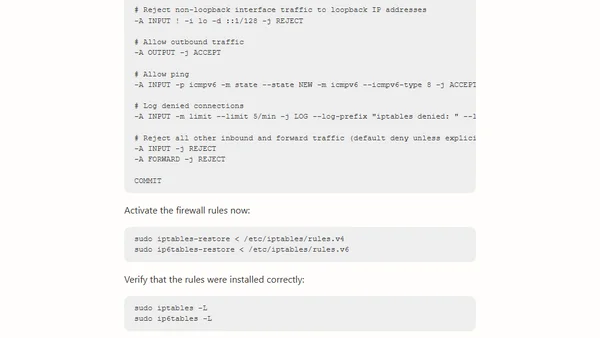
A tutorial on setting up and securing a new Ubuntu server on Linode, covering initial provisioning, SSH connection, and essential software installation.
A programmer uses a software function metaphor to argue against free will, based on neuroscience experiments showing brain activity precedes conscious decisions.
Developer open sources several past projects including Instant.fm, Fling, CMSploit, and WireSheep, encouraging others to release code.
Security flaw exposes database passwords on 1% of CMS sites due to text editor backup files being publicly accessible.
Explores Google Chrome's autoupdate feature as a key design philosophy, focusing on user simplicity and delivering content over browser complexity.
A security researcher details a clickjacking vulnerability in Adobe Flash that allowed websites to secretly activate users' webcams and microphones.