SQLAlchemy 2 In Practice - Solutions to the Exercises
Solutions to SQLAlchemy 2 exercises covering database queries, relationships, and async features.
Final chapter of SQLAlchemy 2 in Practice book covering integration with Flask and FastAPI for web applications.
Learn how to use SQLAlchemy 2 with asynchronous programming using asyncio for modern web applications like FastAPI.
Building a web traffic analytics solution with SQLAlchemy 2, covering blog articles and authors database models.
Advanced many-to-many relationships in SQLAlchemy 2, covering join tables with extra columns and order management.
Tutorial on implementing many-to-many relationships in SQLAlchemy 2, using products and countries as an example.
Tutorial on eliminating data duplication in SQLAlchemy 2 using one-to-many relationships in relational databases.
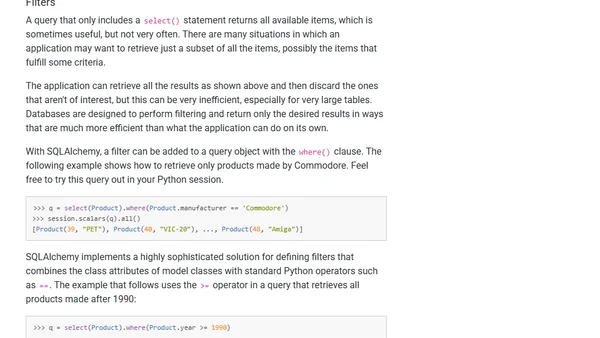
Learn how to create, update, and query database tables using SQLAlchemy 2, covering Core and ORM modules.
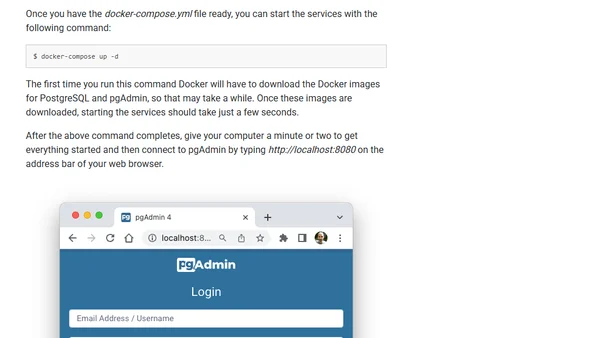
First chapter of a hands-on book on SQLAlchemy 2, guiding readers through initial Python project and database setup.
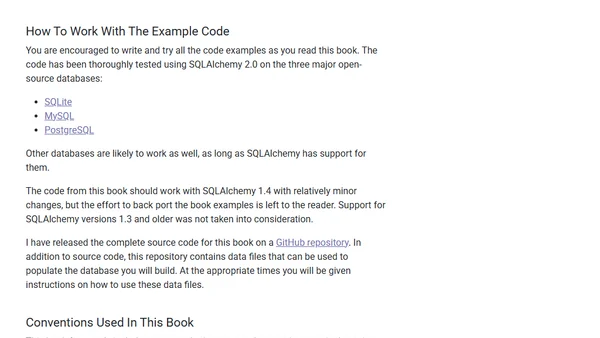
Author introduces his book 'SQLAlchemy 2 In Practice', sharing the preface and outlining chapters on the popular Python ORM.
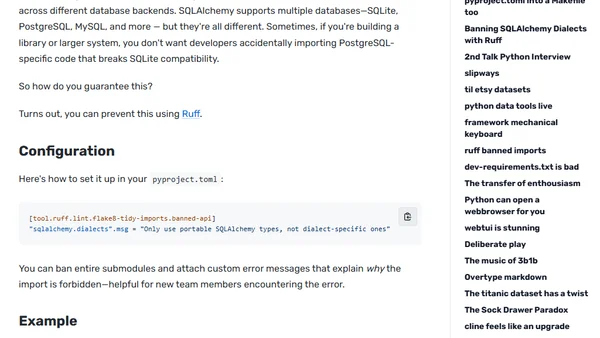
Using Ruff to ban SQLAlchemy dialect-specific imports, ensuring database portability in Python projects.
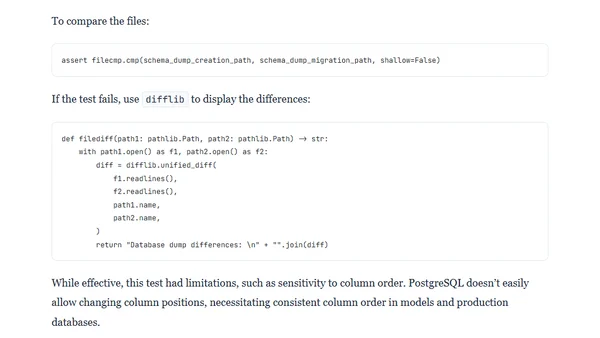
Introducing sql-compare, a tool for managing and testing SQL database migrations, born from the challenges of evolving PostgreSQL schemas at Mergify.
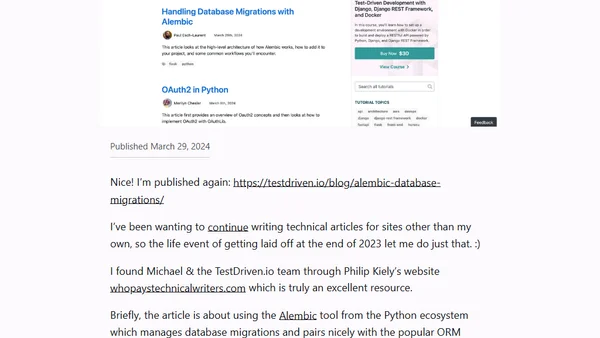
Author discusses writing a technical article on using Alembic for database migrations in Python, published on TestDriven.io.
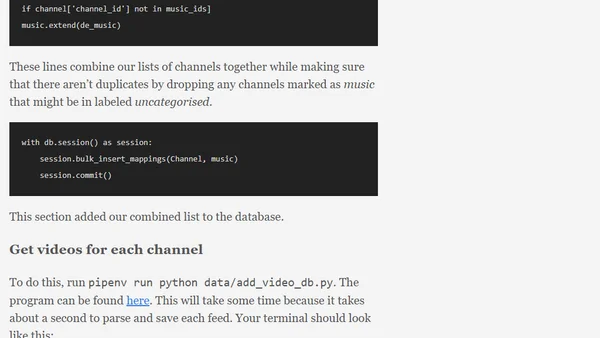
A technical guide on building a YouTube-to-Twitter bot, focusing on moving channel data into a database and extracting recent video uploads.
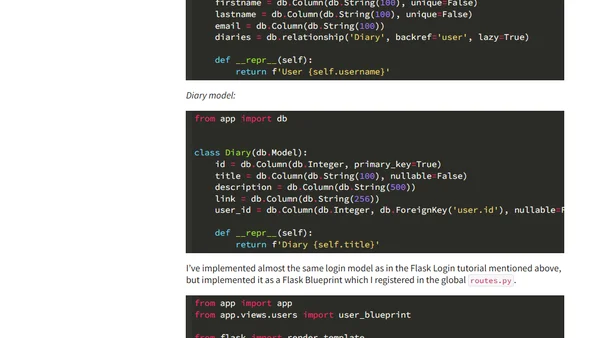
A developer documents building a Flask web app with user authentication and a code diary feature as part of the #100DaysOfCode challenge.
A developer shares a curated list of useful Python tutorials covering topics like memory leaks, Flask APIs, and command-line libraries.
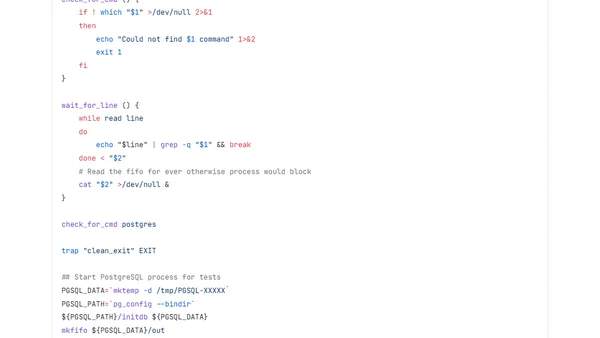
Strategies for writing integration tests in Python to validate database interactions with real backends like SQL and NoSQL.
Announcing a Google Moderator page for submitting and voting on questions for a Python ORM panel at PyCon 2009.