Testing Blogs

Page 7 of 7 (128 Blogs)
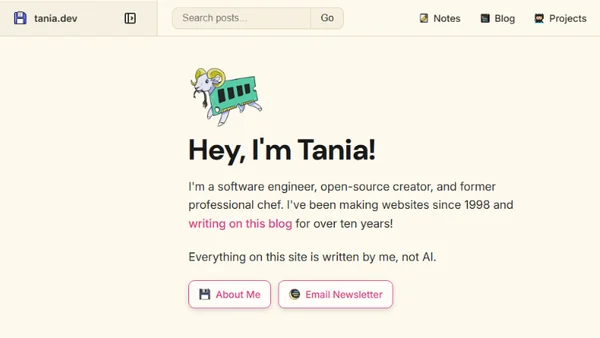
Daniel Feldroy
11/3/2025 EN

Daniel Feldroy

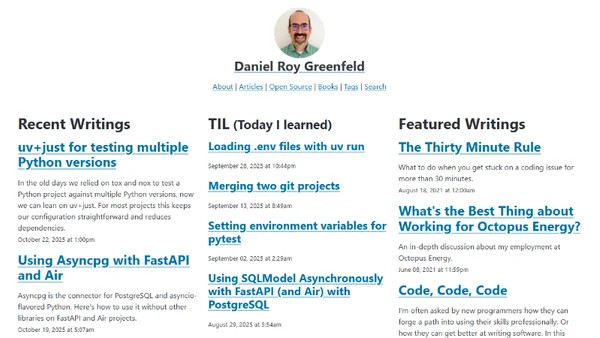
Daniel Feldroy’s blog, daniel.feldroy.com, is a personal site by coder, author, and speaker Daniel Feldroy, known in the tech community as "pydanny" and co-author of Two Scoops of Django. Based in London, Daniel shares insights about his life, including his work at Kraken Tech, a part of the Octopus Energy Group focused on tackling climate change. The blog, built using the FastHTML framework, covers various topics beyond Python, reflecting Daniel's broader interests in coding, writing, and Brazilian Jiu-Jitsu. His former site, pydanny.com, now redirects here to reflect his evolving focus beyond just Python.

David Walsh
11/2/2025 EN

David Walsh

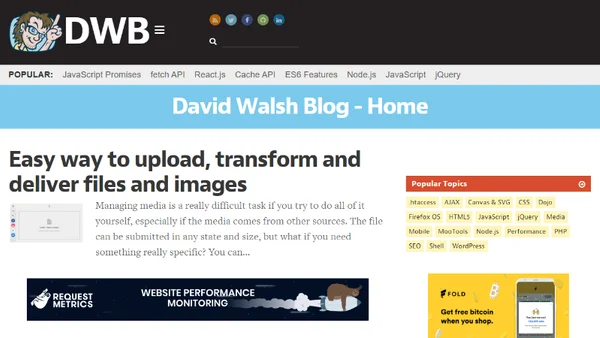
David Walsh Blog is a long-standing hub for web developers who want to grow through real-world code and honest experience. It features hands-on tutorials, deep dives, and opinion pieces on modern web technologies - from JavaScript, CSS, and HTML5 to frameworks, APIs, and performance techniques. With a focus on practicality and clarity, the blog helps developers of all levels write cleaner, faster, and smarter code while staying in tune with the evolving web.

Michał Miszczyszyn
11/2/2025 EN

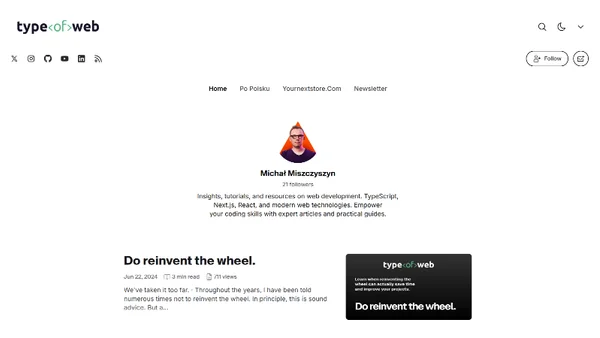
Michał Miszczyszyn

Type of the Web is a blog by Michał Miszczyszyn focused on modern web development. It offers in-depth tutorials, insights, and expert articles covering technologies like TypeScript, React, Next.js, and the broader JavaScript ecosystem. The site helps developers sharpen their skills and build better, more maintainable applications through clear explanations and real-world examples.

Dan Abramov
11/2/2025 EN

Dan Abramov

Overreacted.io is the personal blog of Dan Abramov, a software engineer best known for his work on React at Meta and as the creator of Redux. The blog explores ideas about JavaScript, React, functional programming, software design, and developer experience, often blending deep technical insight with personal reflection. Dan writes about topics like hooks, state management, debugging, performance, and the mental models behind React, helping readers understand not just how things work but why they were designed that way.

Kent C. Dodds
11/2/2025 EN

Kent C. Dodds

KentCDodds.com is the personal website and blog of Kent C. Dodds, a software engineer, educator, and open-source contributor known for his work in the React ecosystem. He writes about modern web development, testing, accessibility, performance, and developer experience, focusing on how to build reliable, maintainable, and scalable applications. Kent is the creator of popular libraries such as Testing Library and Remix, and his articles often highlight practical approaches to writing better React components, handling state, and improving user experience. Beyond tutorials, the site features courses, workshops, podcasts, and conference talks, all aimed at helping developers learn by doing. With his teaching-first philosophy and clear explanations, KentCDodds.com has become one of the most trusted learning resources in the React and JavaScript community.

Robin Wieruch
11/2/2025 EN

Robin Wieruch

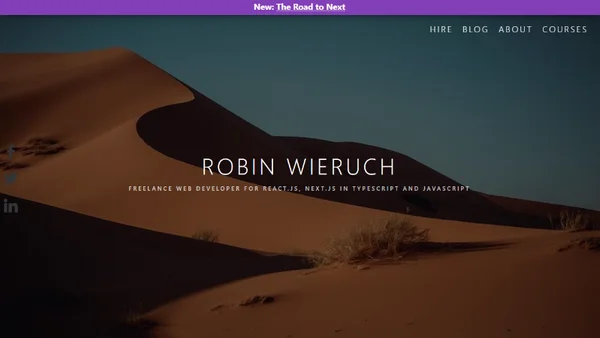
RobinWieruch.de is the personal site and blog of Robin Wieruch, a software engineer and educator known for clear, practical tutorials on React, TypeScript, Next.js, GraphQL, Node.js, and testing. The articles focus on real projects and common problems such as state management, authentication, data fetching, pagination, performance, and testing strategies. Robin is the author of The Road to React and other hands-on guides. He publishes step by step walkthroughs that pair code with explanations, so readers learn the concepts and the reasoning behind them.

Dan Luu
11/2/2025 EN

Dan Luu

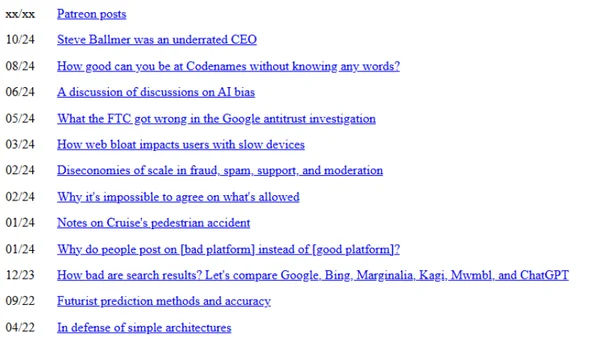
DanLuu.com is the personal blog of Dan Luu, known for long-form essays that mix systems thinking with careful measurement and clear writing. The topics range from computer latency and input lag, testing versus informal reasoning, and concurrency bugs, to industry pieces on developer compensation and curated lists of programming blogs worth reading. Many posts include data, historical context, and reproducible reasoning, which is why the site is often cited in courses and shared across the developer community. The design is intentionally minimal, which puts all attention on the ideas.