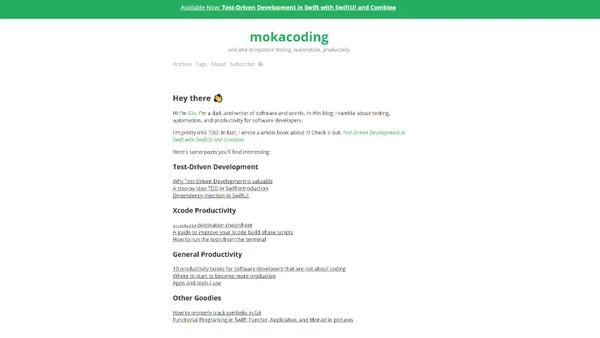
Gio Lodi
Gio Lodi is a software developer and author writing about Test-Driven Development, Swift, automation, and developer productivity. He is the author of Test-Driven Development in Swift with SwiftUI and Combine.
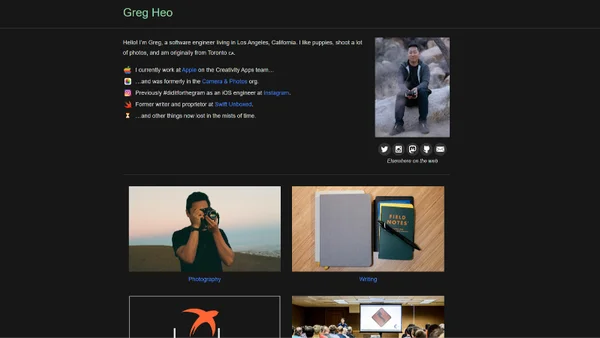
Greg Heo is a software engineer at Apple and former iOS engineer at Instagram. He writes about Swift, iOS development, and photography, blending technical depth with a strong design and creativity focus.
Michael Brown’s blog focuses on Swift and iOS development, covering topics like the Composable Architecture, ReactiveSwift, Xcode tooling, and Apple frameworks. The posts emphasize practical insights, pitfalls, and real-world solutions for iOS developers.
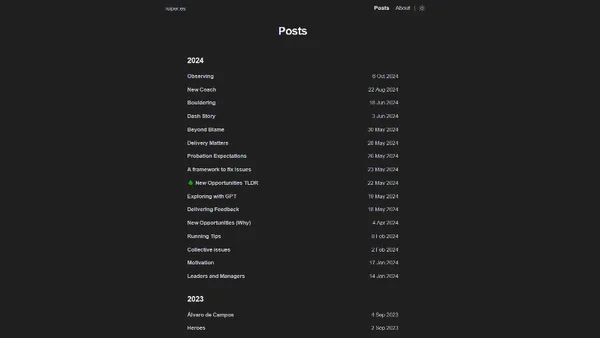
Rui Peres writes thoughtful, concise reflections on leadership, software engineering, delivery, and personal growth. His blog blends management insights, tech culture, and everyday observations with a calm, reflective tone.
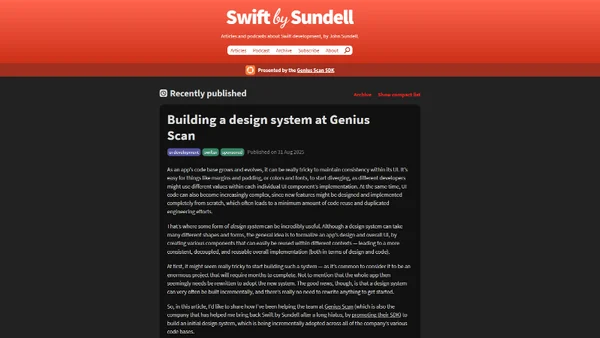
Sundell is an independently run site by John Sundell, featuring articles, podcasts, and videos about Swift, iOS, and Mac development. It offers high-quality, privacy-friendly content for developers of all skill levels, with a strong focus on performance and craftsmanship.
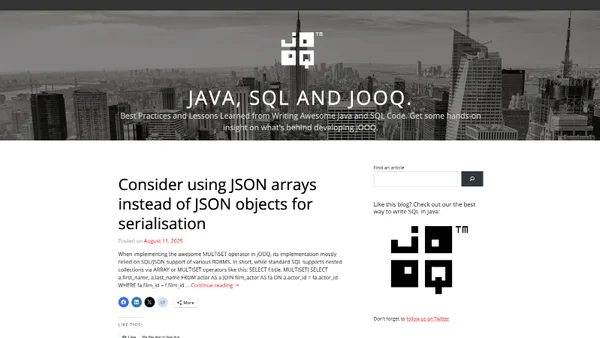
Lukas Eder is a SQL expert and creator of jOOQ who writes in-depth articles on SQL standards, database performance, and advanced query design. His blog focuses on practical and theoretical aspects of modern relational databases.
Sebastian Malaca is a software architect, trainer, and speaker specializing in Domain-Driven Design and scalable system architecture. He helps teams modernize legacy systems using microservices and event-driven patterns.
Tim Deschryver is a software developer and cloud architect specializing in Azure, DevOps, and web application security.
Surma writes in-depth articles on web technologies, systems programming, and developer tooling. His work explores JavaScript, Rust, WebAssembly, Nix, and workflow automation with a strong focus on understanding how things work under the hood.
Ben is a software engineer best known for his work on RxJS, with experience at Netflix and Google, sharing insights at the intersection of software development, creativity, and technology.
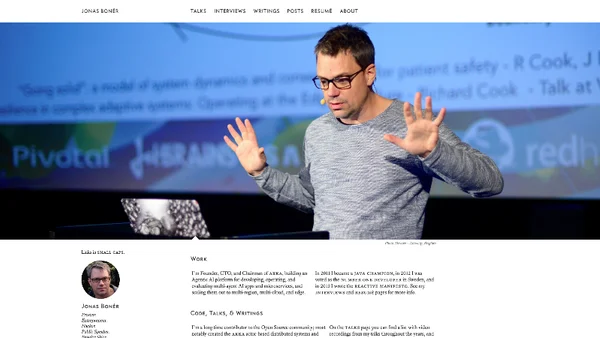
Jonas Bonér is an entrepreneur, public speaker, and open-source pioneer, best known as the creator of Akka and the Reactive Manifesto, and founder and CTO of Akka, building agentic AI platforms for distributed systems at scale.
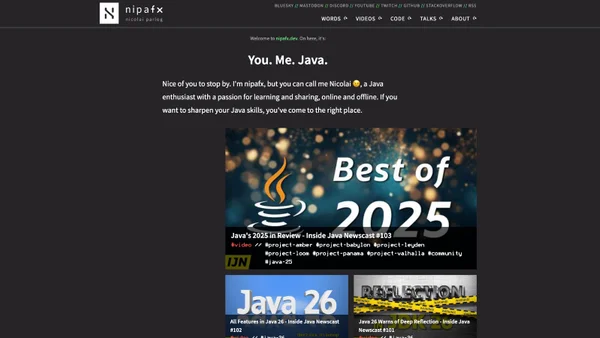
Nicolai Parlog (nipafx) is a Java Developer Advocate at Oracle who shares deep insights on Java through blogs, talks, books, videos, and open-source projects, helping developers learn and grow.
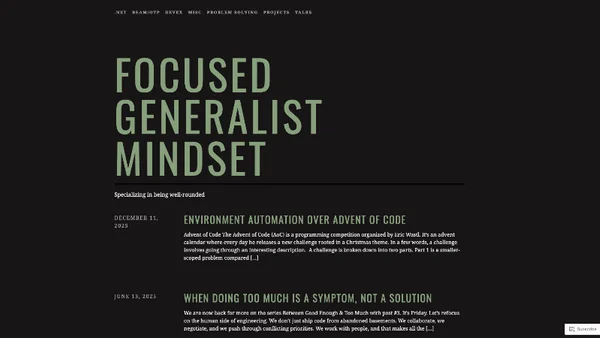
Kevin Avignon is a software engineer and writer embracing the focused generalist mindset, sharing thoughtful insights on engineering, developer productivity, performance, system design, and the human side of building software through in-depth articles and essays.
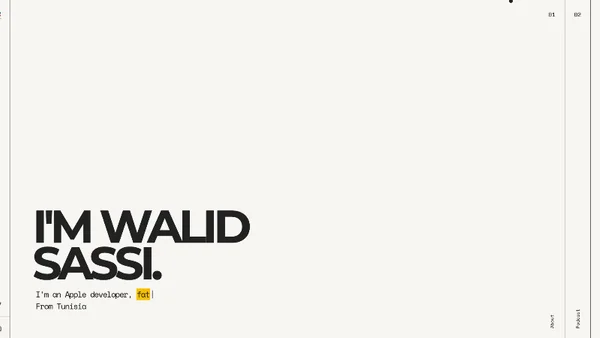
Walid Sassi is a passionate Lead Apple Developer specializing in iOS development with Swift and Objective-C, known for building innovative mobile solutions, leading teams, and delivering high-quality apps in retail and enterprise environments.
Blog.brecht.io is the personal blog of Brecht Billiet, a software architect and GenAI specialist formerly focused on Angular and front-end frameworks. He now helps organizations worldwide build intelligent AI agents, modern chatbots, and scalable GenAI solutions. With a long history of writing about Angular architecture, RxJS, large-scale single-page applications, and state management, Brecht blends deep front-end expertise with his current focus on GenAI and automation. His blog includes technical tutorials on building reactive web applications, designing scalable systems, adopting best practices for Angular, and now extends to AI solution design, agent development, and strategic consulting in advanced technologies. The style of writing is practical and experience-based. Brecht draws on his work training teams, architecture design, and mentoring developers, offering insights that both mid-level and senior engineers can apply directly in real business contexts.
Blog.mgechev.com is the personal blog of Minko Gechev, Lead for Web Frameworks at Google and a widely recognized engineer in the JavaScript and Angular ecosystem. Minko writes about Angular, JavaScript, TypeScript, frontend architecture, web performance, and AI assisted development, mixing clear code examples with insights gained from building frameworks at scale. He is the creator of influential open source projects and has been awarded by Google and the President of Bulgaria for the impact of his contributions. His articles often explore advanced topics such as LLM powered development, predictive prefetching, reactive rendering, framework design, and large scale JavaScript tooling. Beyond engineering, he shares lessons from giving over a hundred conference talks and from leading major web initiatives at Google. Minko is also the co founder of Rhyme.com, an EdTech platform offering hands on technical training. He built the platform and engineering team starting in 2015. In 2018 Rhyme became Coursera’s first acquisition, marking a significant milestone in his career.
David Boothe, a seasoned web-app engineer, shares observations from his craft: code architecture, frontend/back-end integration, productivity hacks, and reflections from his real-world development work. His posts aren’t purely theoretical, they’re grounded in building real applications and improving with each iteration.
RobinWieruch.de is the personal site and blog of Robin Wieruch, a software engineer and educator known for clear, practical tutorials on React, TypeScript, Next.js, GraphQL, Node.js, and testing. The articles focus on real projects and common problems such as state management, authentication, data fetching, pagination, performance, and testing strategies. Robin is the author of The Road to React and other hands-on guides. He publishes step by step walkthroughs that pair code with explanations, so readers learn the concepts and the reasoning behind them.