Nicolai Parlog
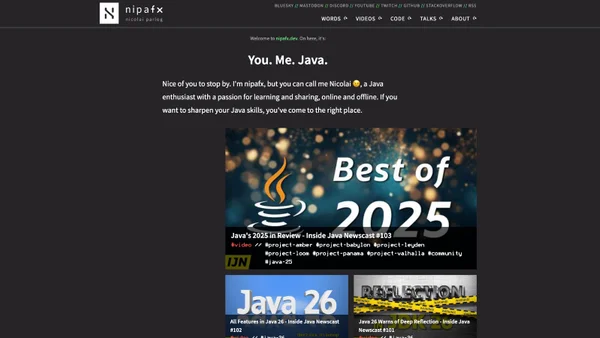
Nicolai Parlog (nipafx) is a Java Developer Advocate at Oracle who shares deep insights on Java through blogs, talks, books, videos, and open-source projects, helping developers learn and grow.
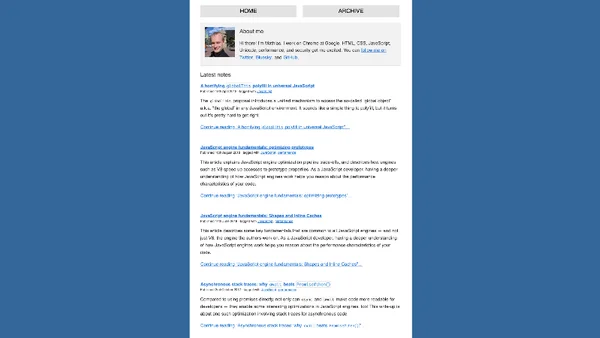
Mathias Bynens, a Chrome engineer at Google, explores JavaScript, HTML, CSS, Unicode, performance, and security, sharing deep insights into engine internals and web development best practices.
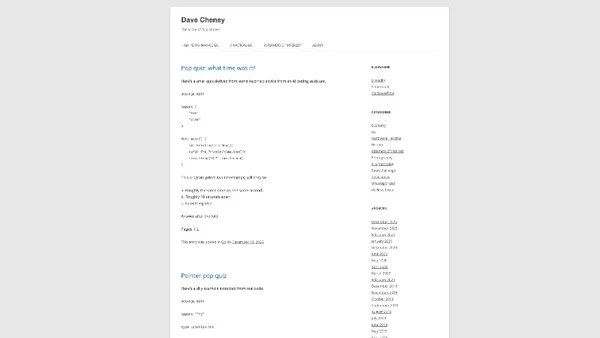
Dave Cheney explores Go programming with practical examples, pop quizzes, and deep dives into performance, correctness, and real-world pitfalls in software development.
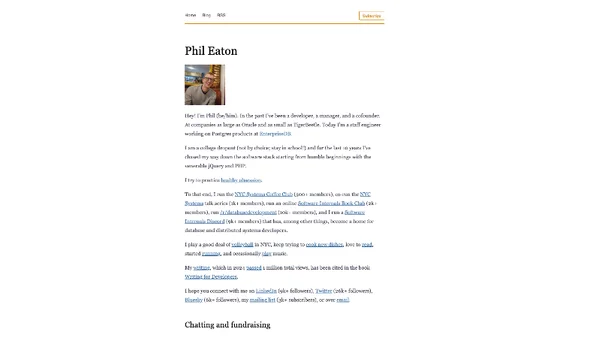
Phil Eaton is a staff engineer working on Postgres and software internals, sharing insights on databases, systems engineering, and life deep in the software stack.
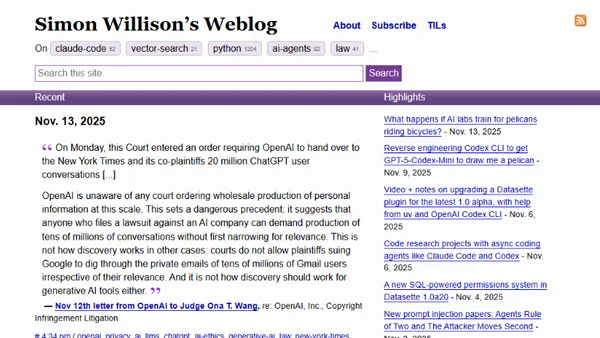
Simon Willison — Independent developer and writer documenting practical experiments, tools, and deep analysis around large language models, generative AI, web development, security, and emerging programming workflows through detailed posts and daily TILs.
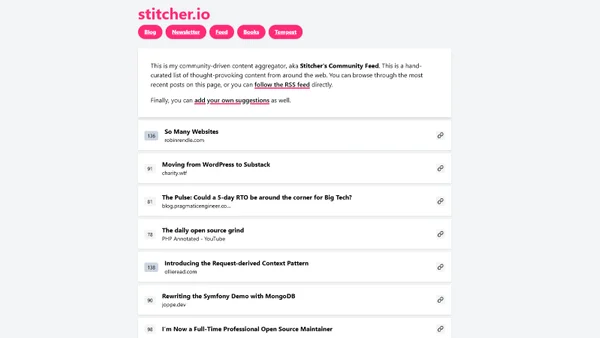
Brent — Curator of Stitcher’s Community Feed, a community-driven, hand-curated content aggregator highlighting thoughtful, high-quality writing from across the web. The feed focuses on software engineering, open source, web development, infrastructure, and the human side of building technology. Readers can browse recent picks, follow via RSS, or contribute their own suggestions.
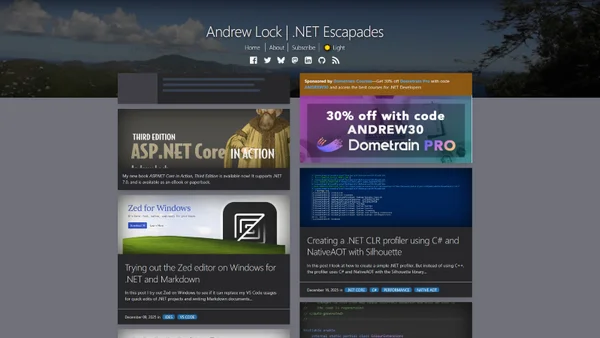
Andrew Lock — Full-stack ASP.NET developer and creator of .NET Escapades, sharing in-depth tutorials and practical insights on ASP.NET Core, C#, and modern .NET development, backed by a PhD and author of ASP.NET Core in Action.
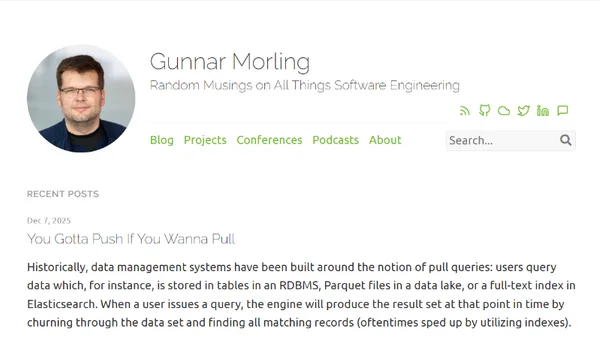
Morling.dev is the personal blog of Michael Morling, a software engineer and architect with deep expertise in Java, Spring, JVM internals, architecture, performance, and developer tooling. His writing focuses on practical and detailed explanations of topics such as Spring framework internals, microservices design, JVM garbage collection, performance tuning, clean architecture, Gradle builds, and language features that matter in real projects. Michael often breaks down subtle behaviors of the JVM and Spring ecosystem, helping developers understand why things work the way they do and how to improve reliability and efficiency in production systems.
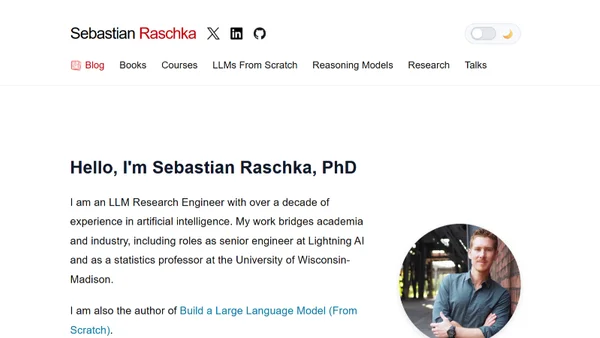
SebastianRaschka.com is the personal blog of Sebastian Raschka, PhD, an LLM research engineer whose work bridges academia and industry in AI and machine learning. On his blog and notes section he publishes deep, well-documented articles on topics such as LLMs (large language models), reasoning models, machine learning in Python, neural networks, data science workflows, and deep learning architecture. Recent posts explore advanced themes like “reasoning LLMs”, comparisons of modern open-weight transformer architectures, and guides for building, training, or analyzing neural networks and model internals.
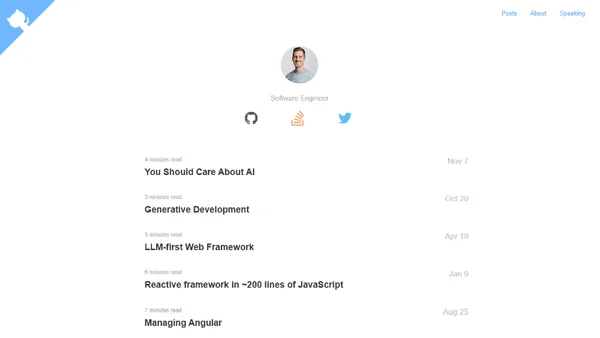
Blog.mgechev.com is the personal blog of Minko Gechev, Lead for Web Frameworks at Google and a widely recognized engineer in the JavaScript and Angular ecosystem. Minko writes about Angular, JavaScript, TypeScript, frontend architecture, web performance, and AI assisted development, mixing clear code examples with insights gained from building frameworks at scale. He is the creator of influential open source projects and has been awarded by Google and the President of Bulgaria for the impact of his contributions. His articles often explore advanced topics such as LLM powered development, predictive prefetching, reactive rendering, framework design, and large scale JavaScript tooling. Beyond engineering, he shares lessons from giving over a hundred conference talks and from leading major web initiatives at Google. Minko is also the co founder of Rhyme.com, an EdTech platform offering hands on technical training. He built the platform and engineering team starting in 2015. In 2018 Rhyme became Coursera’s first acquisition, marking a significant milestone in his career.
SimonWillison.net is the long-running blog of Simon Willison, a software engineer, open-source creator, and co-author of the original Django framework. He writes about Python, Django, Datasette, AI tooling, prompt engineering, search, databases, APIs, data journalism, and practical software architecture. The blog includes detailed notes from experiments, conference talks, and real projects. Readers will find clear explanations of topics such as LLM workflows, SQL patterns, data publishing, scraping, deployment, caching, and modern developer tooling. Simon also publishes frequent micro-posts and TIL entries that document small discoveries and tricks from day-to-day engineering work. The tone is practical and research oriented, making the site a valuable resource for anyone interested in serious engineering and open data.
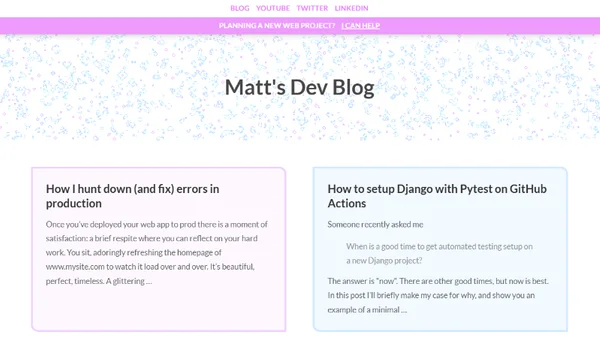
Matt Segal is a software engineer and tech lead who writes about software design, Python development, system architecture, and the craft of engineering teams. His blog focuses on practical approaches to building reliable, maintainable software - from dependency management and code reviews to continuous delivery and scalable system design.
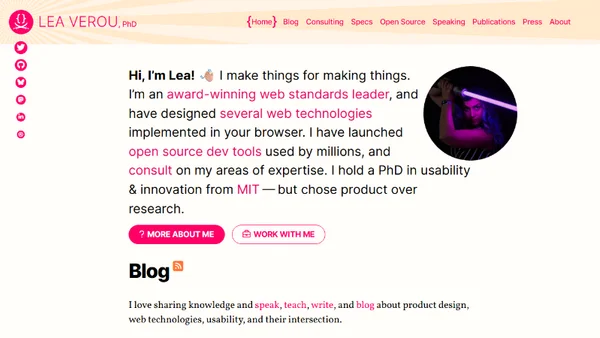
Lea Verou is a web standards expert, developer, and designer with a PhD from MIT in Human-Computer Interaction. She has worked as Product Lead at Font Awesome, helped shape the web as a member of the W3C Technical Architecture Group, and has been part of the CSS Working Group since 2012. Her open-source tools like PrismJS and Color.js are used by millions of developers worldwide. Lea is also the author of a bestselling CSS book, a frequent conference speaker, and an advocate for making technology simpler, more usable, and open for everyone.
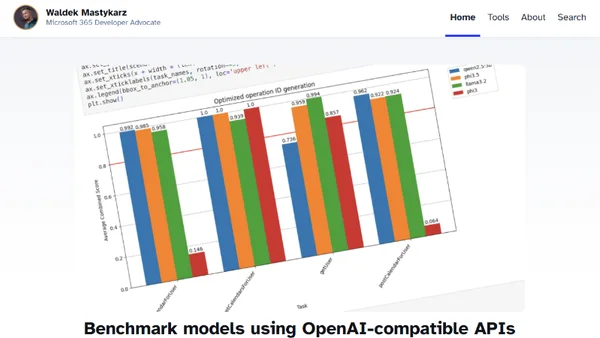
Waldek Mastykarz – Insights on Microsoft 365 Development and Community Practices Waldek Mastykarz is a Developer Advocate at Microsoft who helps developers get the most out of the Microsoft 365 platform. On his blog, he shares hands-on guidance, tips, and real-world examples for building apps, automations, and extensions for Microsoft 365. As a core contributor to Microsoft 365 Patterns & Practices, he collaborates with the global developer community to create open-source tools, reusable templates, and best-practice documentation that make extending Microsoft 365 easier and more consistent. Before joining Microsoft, Waldek spent years working with partners across the Microsoft ecosystem and earned the title of Microsoft MVP twelve times for his community work. His writing reflects both deep technical knowledge and a passion for sharing practical insights that help other developers succeed.
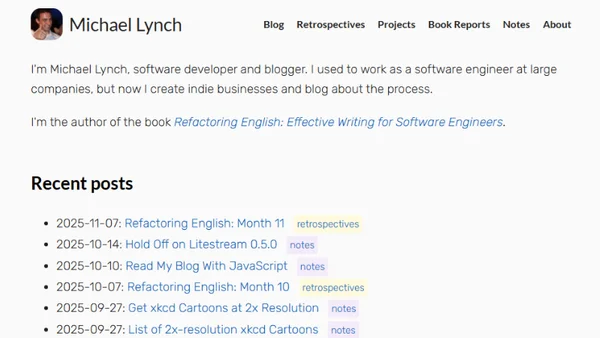
Michael Lynch – Developer, Indie Founder and Technical Writer Michael Lynch shares honest and detailed stories from his journey as a software engineer and indie founder. His blog covers topics like building sustainable businesses, code reviews, software craftsmanship, and lessons learned from running and selling his own startup, TinyPilot. Each post reflects a mix of engineering precision and real-world experience, written with clarity and humor. Readers can find tutorials, retrospectives, and essays that go beyond code to explore motivation, productivity, and the human side of software development. This blog is a must-read for developers, indie hackers, and anyone who enjoys thoughtful writing about technology and entrepreneurship.
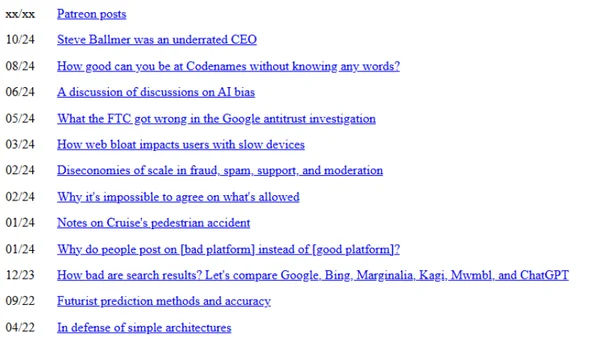
DanLuu.com is the personal blog of Dan Luu, known for long-form essays that mix systems thinking with careful measurement and clear writing. The topics range from computer latency and input lag, testing versus informal reasoning, and concurrency bugs, to industry pieces on developer compensation and curated lists of programming blogs worth reading. Many posts include data, historical context, and reproducible reasoning, which is why the site is often cited in courses and shared across the developer community. The design is intentionally minimal, which puts all attention on the ideas.
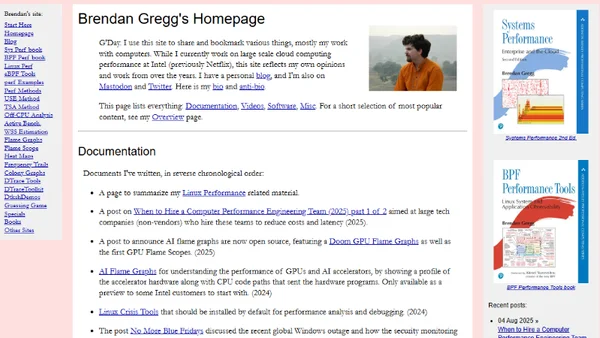
BrendanGregg.com is the blog of Brendan Gregg, a performance engineer and computer scientist who shares deep expertise in system performance, observability, and kernel-level insights. His content covers topics like eBPF, Linux performance tools (perf, ftrace), flame graphs, and large-scale cloud systems analytics. Brendan writes with clarity about how to analyze bottlenecks, profile production systems, and tune infrastructure for speed and efficiency. The blog features both conceptual discussions and hands-on examples aimed at engineers tackling real performance problems in modern environments. Whether you are interested in kernel internals or high-level system design, BrendanGregg.com offers authoritative material grounded in years of experience.