Validating an SQL query programmatically, with gotcha
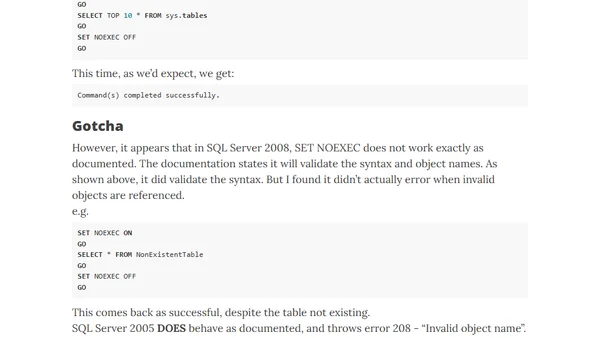
Explains using SET NOEXEC to validate SQL query syntax programmatically, noting a bug in SQL Server 2008 regarding object name validation.
Adrian Hills is a cloud developer who writes in-depth, practical guides on Azure Functions, serverless scaling, monitoring, and testing, with a strong focus on performance and real-world Azure workloads.
83 articles from this blog
Explains using SET NOEXEC to validate SQL query syntax programmatically, noting a bug in SQL Server 2008 regarding object name validation.
A detailed review of the SQL Server MasterClass 2010 event, covering sessions on DevOps, myth-busting, recovery, and GUID performance.
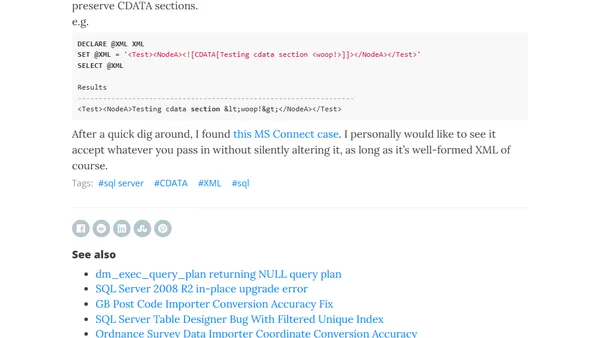
Explains how SQL Server's XML datatype does not preserve CDATA sections, converting them to escaped text instead.
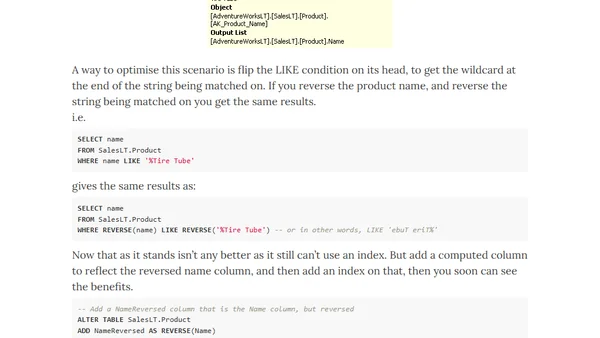
A technical guide on optimizing SQL queries with wildcard-prefixed LIKE conditions using indexed computed columns for better performance.
A collection of session videos from QCon London 2010, covering topics like .NET, testing, scaling, and software craftsmanship.
A personal recap of attending SQLBits VI, covering sessions on SQL Server performance tuning, parallel query execution, and the query optimizer.
A developer explains a case-sensitive ColumnMappings error in SqlBulkCopy and how to resolve it.
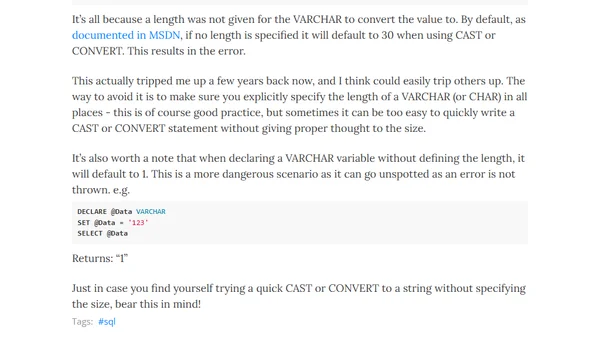
Explains why SQL CAST to VARCHAR without specifying a length can cause errors or truncation, and advises always defining the size.
A developer's personal experience and key takeaways from attending the QCon London 2010 technology conference, covering talks on architecture and .NET.
Explores the evolving role of the 'DevBA'—a database developer who incorporates DBA skills like performance tuning and using DMVs to build better systems.
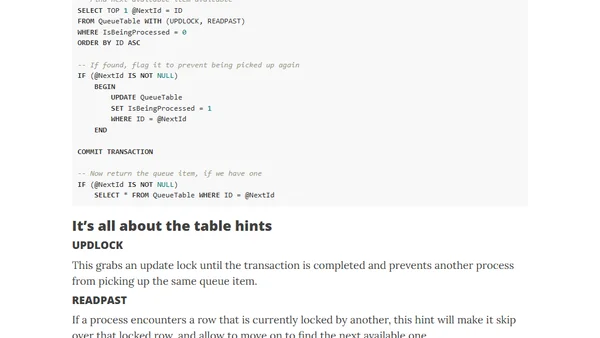
Explains how to implement a queue processing system in SQL Server using table hints like UPDLOCK and READPAST to ensure reliable, concurrent processing.
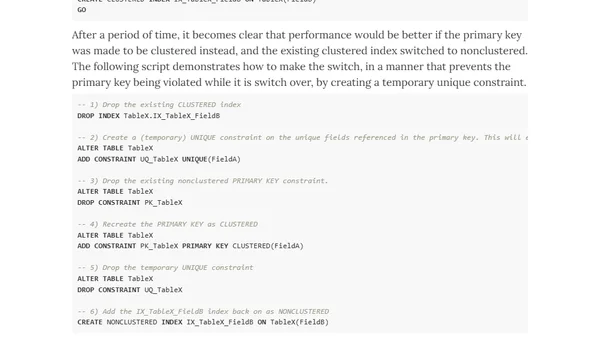
A technical guide on safely converting a SQL Server primary key index from nonclustered to clustered (or vice versa) using a temporary unique constraint.
Announcement and preview of SQLBits VI, a free SQL Server conference in London focused on performance and scalability.
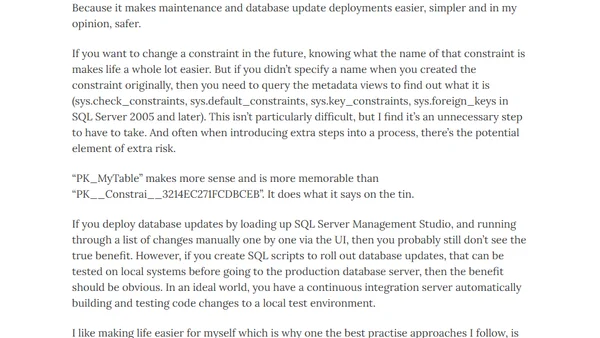
Explains why using explicit, meaningful names for SQL constraints is better than relying on autogenerated names for easier maintenance and safer deployments.
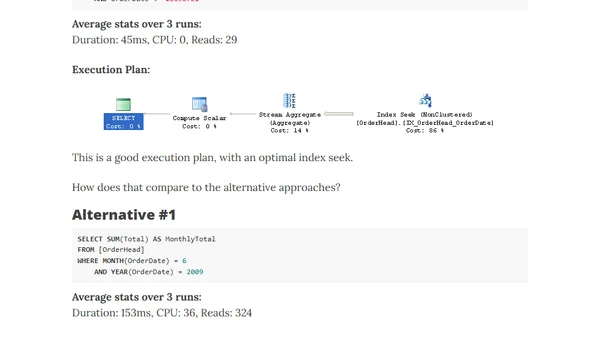
Explains how to optimize SQL query performance by avoiding functions in WHERE clauses, using date filtering as a key example.
Explains how to use the SP:StmtCompleted SQL Profiler event to identify slow individual statements within a stored procedure.
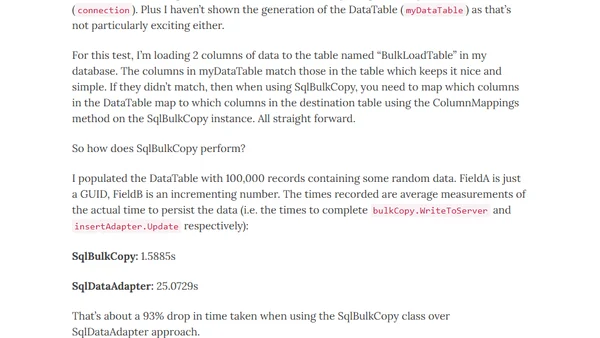
A technical guide comparing SqlBulkCopy vs. SqlDataAdapter for high-speed data loading into SQL Server, demonstrating significant performance gains.
A developer shares three key methods for improving technical skills: learning by doing, participating in communities, and sharing knowledge through blogging.
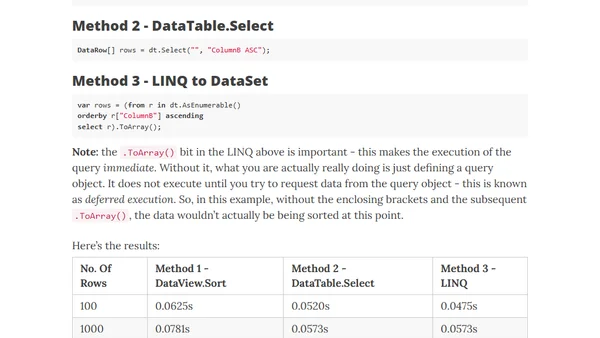
Performance comparison of three methods for sorting in-memory DataTables in C#/.NET, with LINQ to DataSet emerging as the fastest.
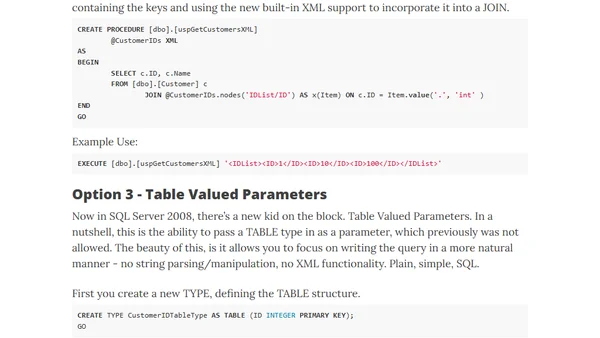
Compares three methods for passing multiple IDs to a SQL Server stored procedure: CSV lists, XML, and Table Valued Parameters.