Python Packaging Metadata
Explores the complexities of Python package metadata, comparing runtime introspection with packaging tools and discussing modern solutions.
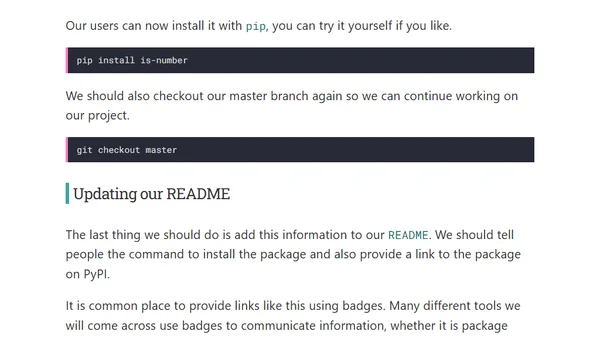
A step-by-step guide to building, testing, documenting, and publishing an open-source Python package from scratch, using a simple library as an example.
Learn how to bundle a Python app and its dependencies into a single executable using Shiv, a tool from LinkedIn.
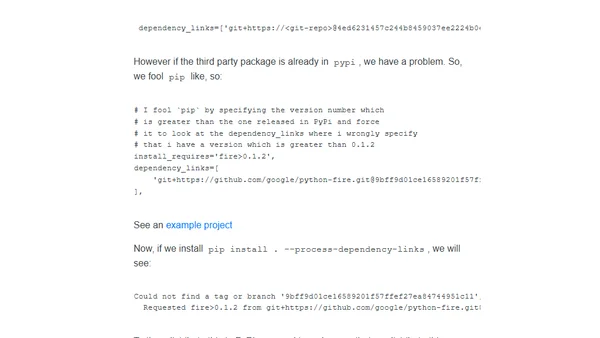
A guide on how to use specific git commits of third-party packages in Python projects, covering setup.py and requirements.txt configurations.
Explains the benefits of using Pipfile over requirements.txt for managing Python dependencies and how to get started.
An introduction to two essential Python packaging tools: tox for testing and twine for secure PyPI uploads.
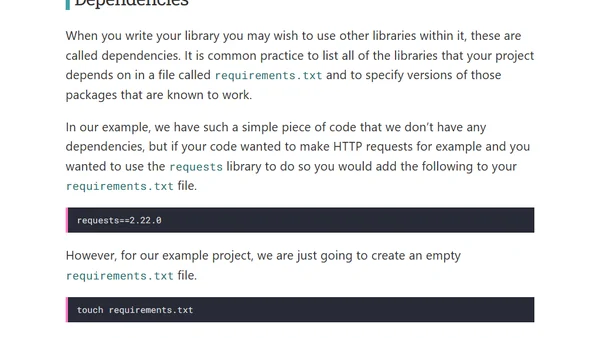
Explains why including a requirements.txt file in Python package releases helps document dependency versions for users and future maintainers.
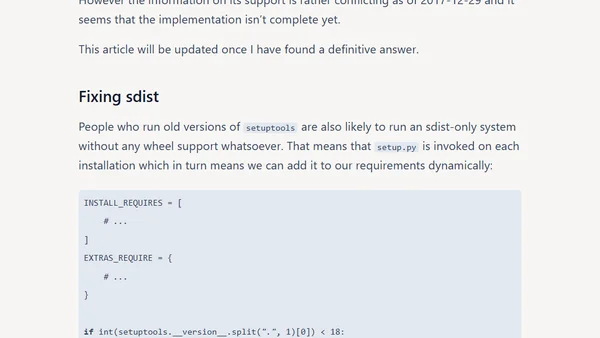
Explains how to handle conditional Python package dependencies based on Python version, covering PEP 508, setuptools versions, and workarounds.
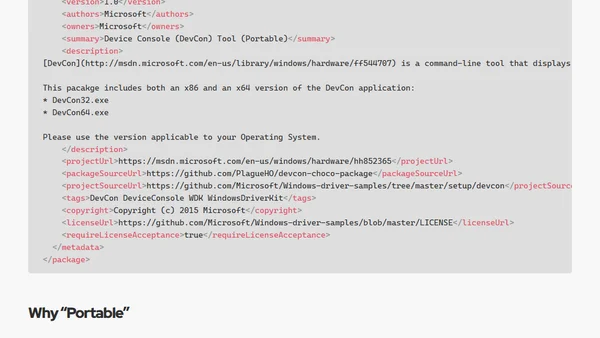
A guide to creating and publishing a Chocolatey package for DevCon.exe using AppVeyor CI, focusing on DevOps and automation.
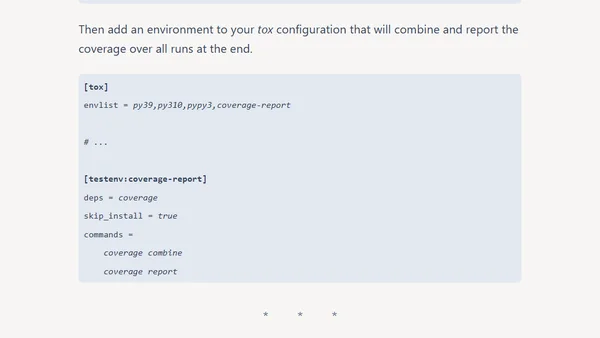
Explains the benefits of using a `src` directory in Python projects for accurate testing and packaging, and how to measure combined test coverage across multiple Python versions.
A developer's frustration with the complexity of Microsoft Installer (.msi) XML for a simple task, highlighting the challenge of creating simple software.
A positive review of the book 'Python 101' by Mike Driscoll, covering its structure and recommending it for Python beginners.
A guide to solving common errors when using py2exe to compile Python scripts into Windows executables, focusing on PyQt projects.
A developer explains how broken software packaging led to user issues and how they automated testing with Travis CI and Tox to prevent future errors.
Python 3.4 will include the pip package manager by default, following the acceptance of PEP 453.
A developer compares manual Python package release steps to OpenStack's automated process, advocating for better release automation.
A guide on packaging, distributing, and publishing Python libraries to the Python Package Index (PyPI).
A guide to packaging Python scripts using setuptools for distribution on PyPI, including basic setup examples.
A practical guide to packaging and uploading a Python module to PyPI, covering modern tools and best practices.