Enforcing Best Practices with Static Code Analysis of Angular 2 Projects
Explores using static code analysis to enforce Angular 2 best practices from a community-driven style guide, covering patterns and benefits.
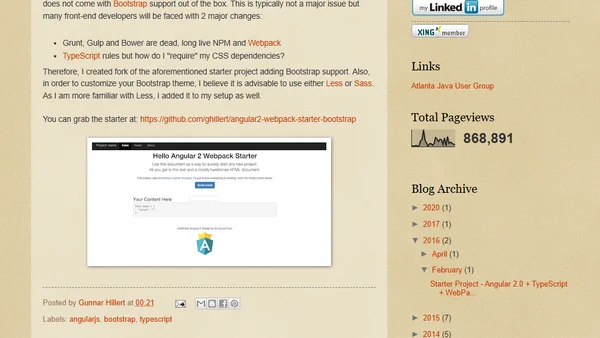
A guide to setting up an Angular 2.0 starter project with TypeScript, Webpack, and Bootstrap, including Less/Sass for theming.
Explains the difference between ViewChildren and ContentChildren in Angular, including how to access them and the viewProviders property.
Explains how to dynamically configure Angular's router to load routes from a remote service, addressing runtime registration and navigation.
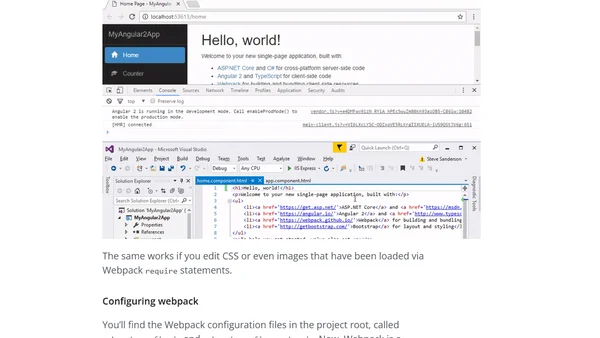
A developer builds a prototype hot loader for Angular 2, inspired by React, to update components without a full page refresh.
Explains how to implement lazy loading for route components in Angular 2 to improve application performance by reducing initial bundle size.
A software engineer reflects on legacy, inspiration, and meeting a pioneering software architecture researcher at a tech conference.
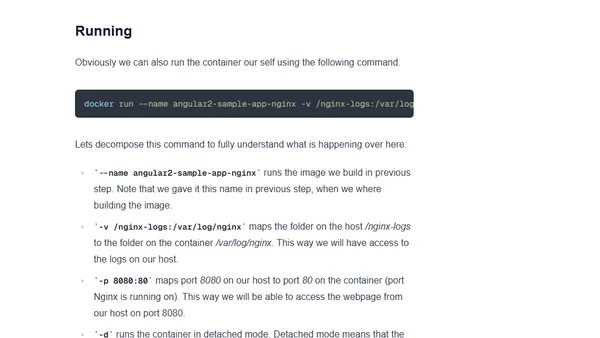
Part 9 of a Docker series: Creating a Docker container for an nginx web server hosting an Angular 2 frontend application.
A technical guide on resolving blocked PUT/PATCH/DELETE requests in Angular/Laravel/Symfony APIs using X-HTTP-Method-Override and HTTPS.
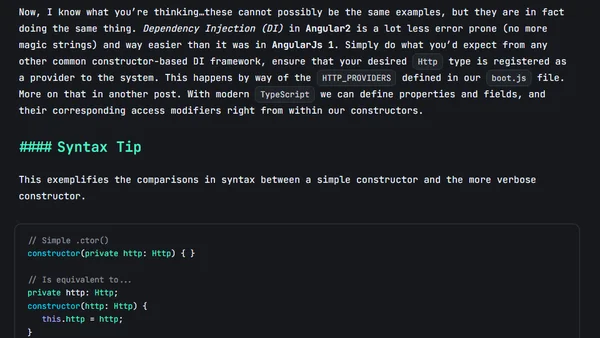
A developer's first impressions of Angular 2.0, exploring its TypeScript foundation, design patterns, and initial features.
A tutorial on creating reusable D3.js chart components within Angular directives, demonstrating composition with a line chart and scatter plot.
A developer shares key takeaways from the CSUN 2015 conference, focusing on web accessibility, user testing, and emerging assistive technologies.
A developer details creating an accessibility testing plugin for the Protractor end-to-end testing framework, integrating tools like Chrome Accessibility Developer Tools.
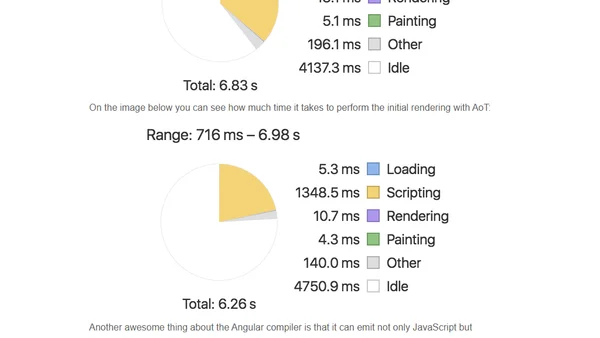
Analyzes performance bottlenecks of client-side MVC frameworks like Angular, advocating for server-side rendering to improve initial page load times.
AngularAOP v0.1.0 introduces a new declarative way to annotate services, eliminating coupling with the framework for better reusability.