Inlining and structs in C#
Explores how inlining and structs in C# interact to optimize performance, focusing on method call overhead and struct copying.
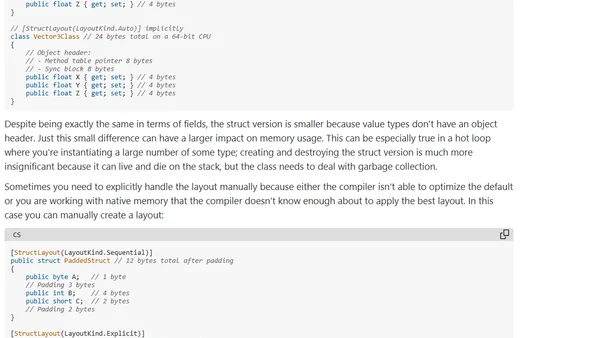
Explains the differences between structs and classes in C#, focusing on value vs. reference types, performance, and language comparisons.
Explores the pitfalls of mutable value types in C#/.NET, explaining why they are often avoided and the performance reasons for their limited use.
Explores new low-level C# 11 features allowing ref fields in structs for high-performance scenarios like custom collections and frugal objects.
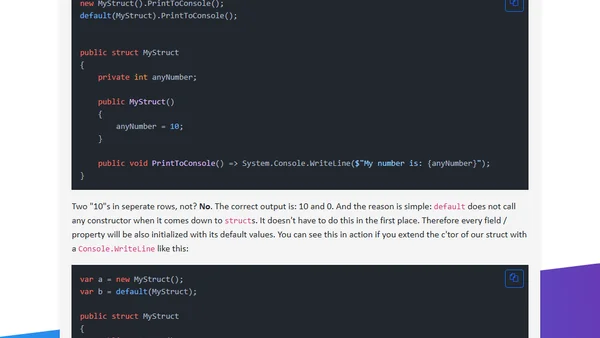
Explains the difference between default(MyStruct) and new MyStruct() in C# 10, highlighting that default bypasses parameterless constructors.
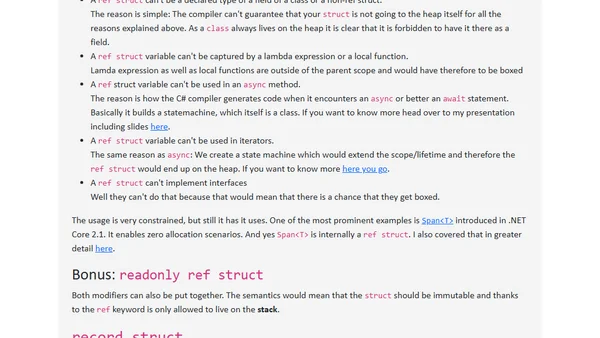
Explains the differences between struct, readonly struct, ref struct, and record struct in C#, focusing on usage, limitations, and memory management.
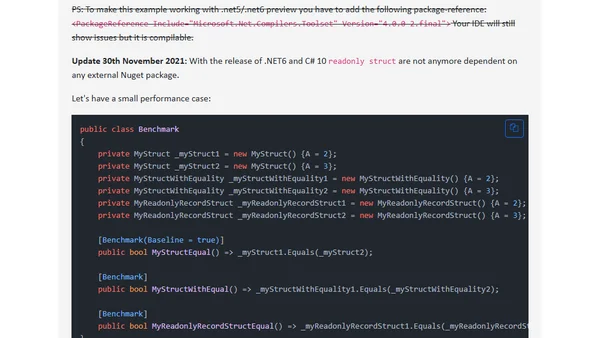
Analyzes C# struct equality performance, comparing default structs, IEquatable implementations, and C# 10 record structs.
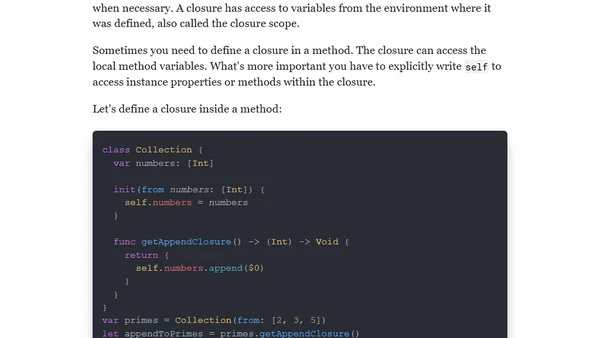
A guide explaining when and how to use the 'self' keyword in Swift programming, covering clarity, brevity, and mandatory vs. optional usage.
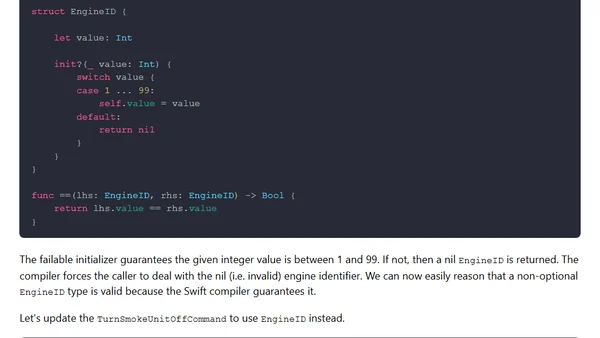
A Swift developer explains how wrapping primitive types like Int in structs improves type safety and eliminates runtime bugs in a toy train control app.
A technical tutorial using Swift code to model and calculate caloric needs for fitness goals, explaining BMR and activity factors.