The XML serialization of HTML5, aka ‘XHTML5’
A technical guide explaining the three steps required to trigger HTML5's XML serialization mode, commonly called XHTML5.
Mathias Bynens, a Chrome engineer at Google, explores JavaScript, HTML, CSS, Unicode, performance, and security, sharing deep insights into engine internals and web development best practices.
48 articles from this blog
A technical guide explaining the three steps required to trigger HTML5's XML serialization mode, commonly called XHTML5.
Analyzes the HTML and CSS generated by Safari's Reader mode, exploring its structure and how developers can interact with it.
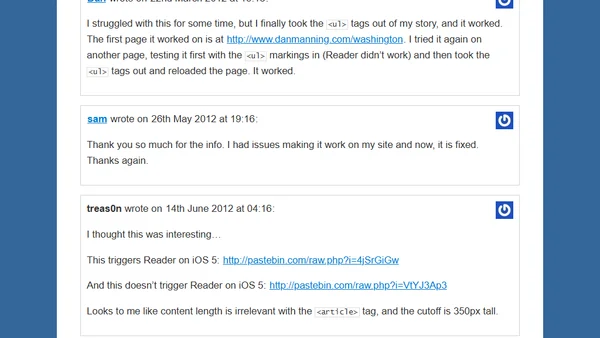
Explores the technical criteria and markup required for Safari Reader to activate on a webpage, based on community testing and analysis.
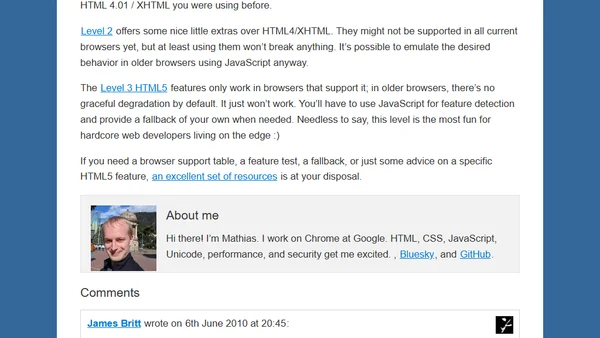
Explains three levels of adopting HTML5, from simple syntax changes to advanced features, for web developers.
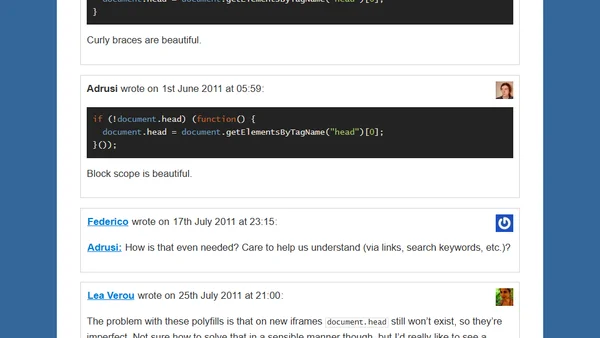
Explains the HTML5 `document.head` property, its benefits over traditional DOM access, and provides polyfill code for cross-browser support.
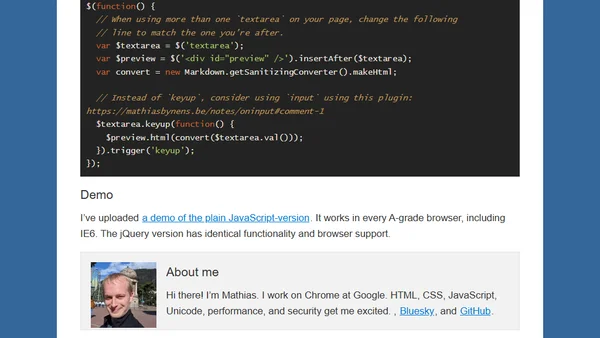
A tutorial on implementing the Showdown/PageDown Markdown parser in JavaScript, with examples for both plain JS and jQuery integration.
A technical guide on using CSS and JavaScript to override browser defaults and display hidden HTML elements like <head>, <title>, and <meta> tags.
Explores the size threshold for using inline scripts/styles vs. external files, considering HTTP overhead, caching, and performance trade-offs.