A New Year
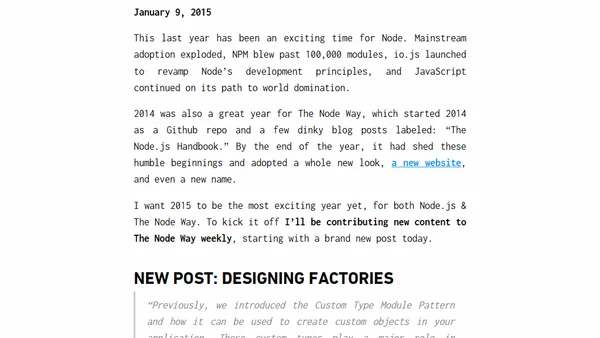
A look back at Node.js's growth in 2014 and an introduction to a new weekly series on JavaScript design patterns, starting with the Factory pattern.
Fred Schott is a Software Engineer based in San Francisco, specializing in modern web technologies and JavaScript. He has worked at Google on Web Components tooling, led platform engineering efforts at WorkLife (Cisco) to dramatically improve performance and reliability, and helped Box transition from a PHP monolith to a modular Node.js architecture. He’s an experienced speaker, writer, and advocate for high-quality web engineering.
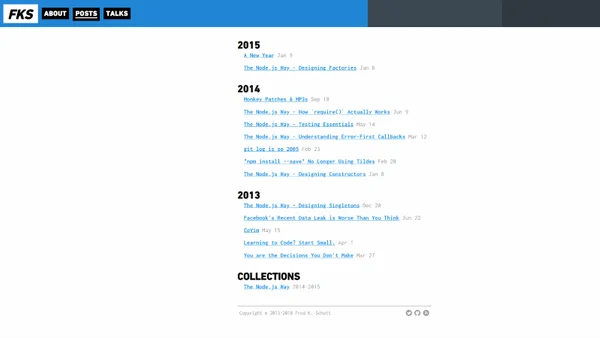
14 articles from this blog
A look back at Node.js's growth in 2014 and an introduction to a new weekly series on JavaScript design patterns, starting with the Factory pattern.
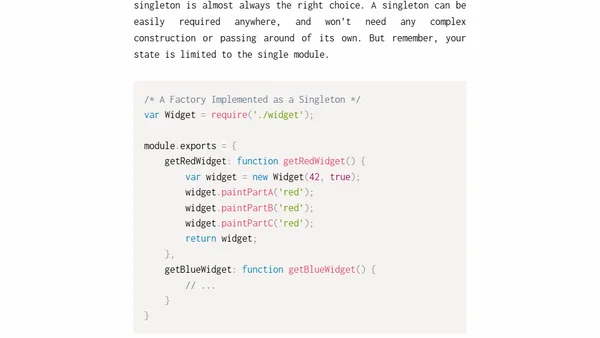
Explains the Factory design pattern in Node.js for simplifying and centralizing complex object creation in JavaScript applications.
Explores JavaScript monkey patching, a powerful but dangerous technique for modifying objects and classes, with warnings and practical examples.
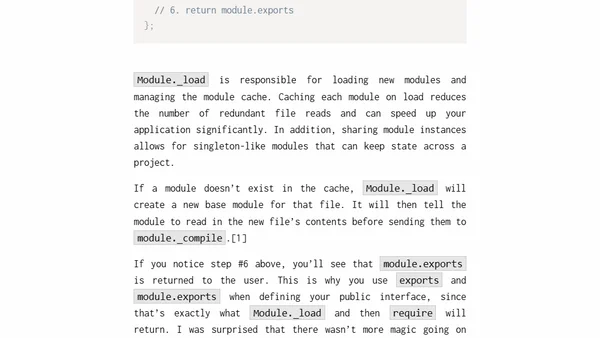
A deep dive into the inner workings of Node.js's `require()` function, exploring the module loading, caching, and compilation process.
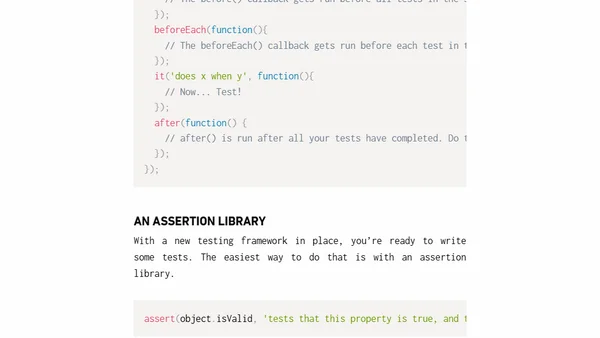
A guide to essential testing tools and principles for Node.js, focusing on clarity and confidence over cleverness.
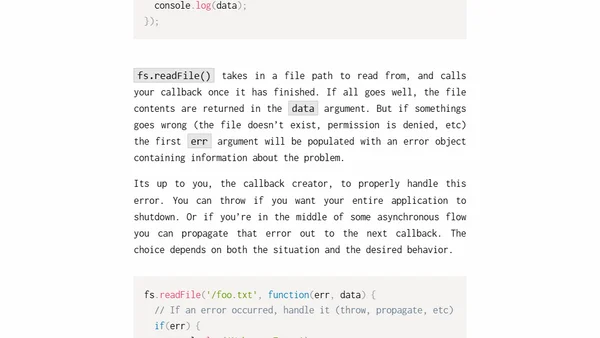
Explains the Node.js error-first callback pattern, its standardization, and best practices for handling asynchronous operations.
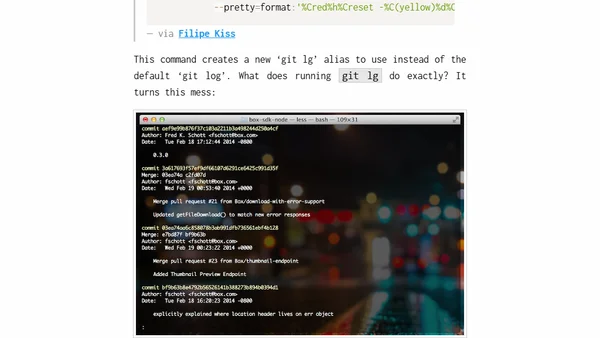
A guide to creating a custom 'git lg' alias for a more visual and informative Git commit history graph.
Explains npm's change from tilde (~) to caret (^) for '--save' and the semantic versioning implications for dependency updates.
Explains how to design and export reusable constructors in Node.js modules, covering prototypes, private properties, and module patterns.
Explains how Node.js modules are singletons by default and provides patterns for designing clean, clear singleton modules with proper public/private separation.
An analysis of Medium's declining content quality, exploring the platform's lack of incentives for writers and the dilution of its exclusive brand.
A 2013 Facebook bug leaked 6 million users' contact info, revealing the platform collects data from friends' contacts without user consent.
A response to elitist coding advice, advocating for an inclusive, fundamentals-first approach to learning programming for anyone interested.